Sudan’s War Economy: How Gold Sustains a Hidden Conflict
Editor:
Halimatou HAMADOU DJIBO


Illicit trade networks and resource exploitation are fueling prolonged violence amid state collapse.

The conflict in Sudan has evolved beyond traditional warfare, increasingly driven by economic forces and the erosion of state authority. Analysts, including Roula Merhej, warn that the absence of effective governance has left civilians unprotected while enabling parallel economies to thrive.
At the center of this dynamic is gold, one of Sudan’s most valuable resources. Rather than being traded through formal systems, gold is now extracted in conflict zones controlled by militias, notably the Rapid Support Forces, and funneled through informal and opaque networks.
The process typically unfolds in stages: extraction in militia-held areas, followed by cross-border smuggling through regional routes—often via Chad and Libya—before reaching international markets. The Dubai has become a key destination in this trade, frequently linked to transactions outside official channels.
These economic flows extend beyond smuggling, feeding into broader systems of influence, infrastructure investment, and arms supply. Profits generated from gold are reinvested through complex networks involving front companies, helping sustain both logistics operations and the conflict itself.
Experts also highlight the limited global attention given to Sudan, noting that the crisis is often overshadowed by more geopolitically prominent conflicts. This lack of scrutiny allows illicit systems to operate with relative impunity.
As modern conflicts become less visible, Sudan illustrates how war can be sustained through hidden economic mechanisms. The interconnection of gold, weapons, and financial networks has created a self-perpetuating cycle, where the conflict continues to fuel itself.
Source: Newstimehub



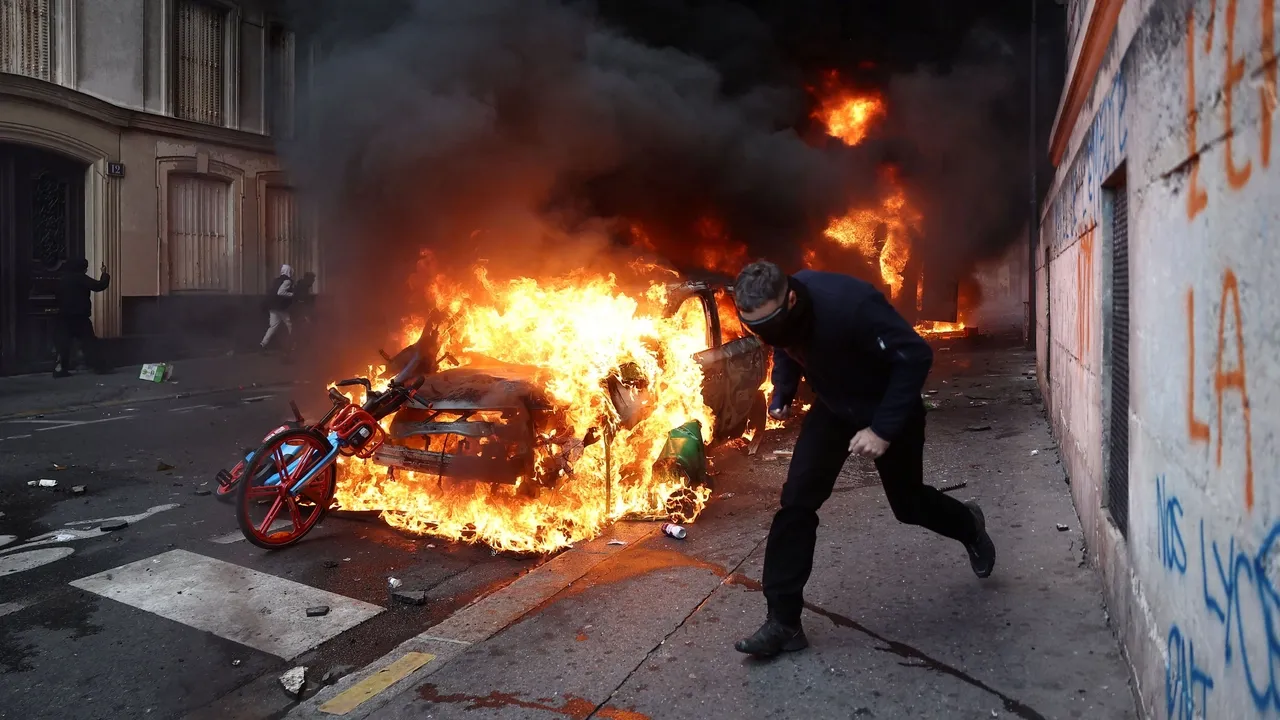
France rocked by nationwide clashes, fires and looting as cost-of-living protests turn violent
Clashes between police and protesters left streets devastated, shops looted and public buildings ablaze, with 1,200 people arrested and 150 officers injured as anger over rising living costs spills onto the streets.
Africa Finance Corporation eyes iron ore and uranium investments
The Africa Finance Corporation is looking for investments in iron ore and uranium as it seeks to expand its reach in critical minerals projects on the continent.
Saudi Arabia intercepts Houthi missiles as two pilots die in helicopter crash
The coalition blamed a technical fault for the crash and said it intercepted two ballistic missiles targeting southwestern Saudi Arabia.




All rights reserved. Newstimetr © 2026