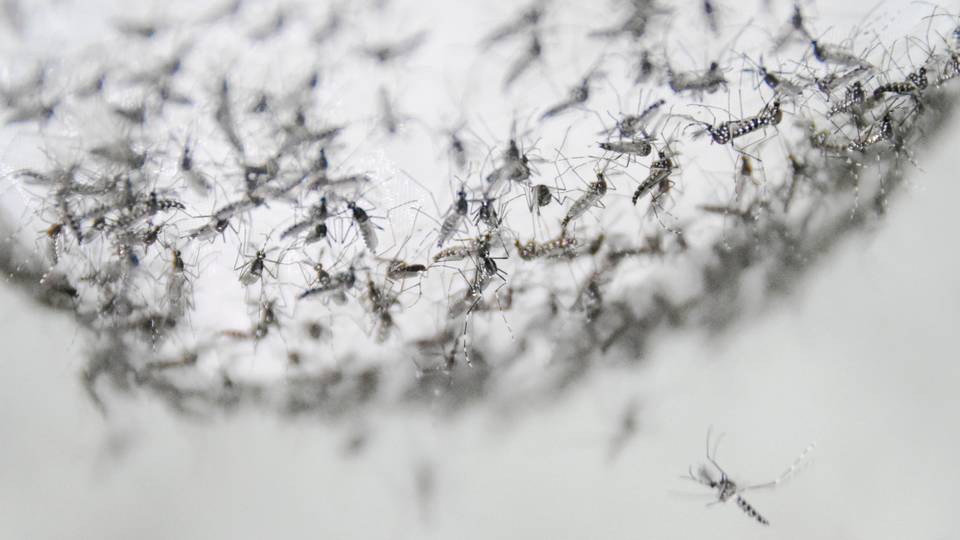
WHO has called for heightened surveillance and response to prevent the spread of a mosquito species that transmits two malaria causing parasites.
By Sylvia Chebet
A deadly mosquito species that can transmit two parasites been found in two northern Kenya counties of bordering Ethiopia,
The Centres for Disease Control (CDC) is concerned that it could spread even further, having been found in Turkana County's Lodwar town, which is on a major land transport corridor. The species has also been detected in Marsabit county.
The cargo containers atop the long-distance trucks provide a perfect breeding ground for the mosquito species.
At a glance
The species, scientifically known as Anopheles stephensi (An. Stephensi), is capable of transmitting both Plasmodium falciparum and P. vivax malaria parasites.
While Plasmodium falciparum is responsible for more deaths, Plasmodium vivax is the most widespread of all of the malaria species and can cause severe, even fatal infections according to the World Health Organization (WHO).
Unlike the other main mosquito vectors of malaria, An. Stephensi mosquitoes thrive in human-made containers in clean or contaminated water.
Those traits have enabled the species to colonize urban settings in addition to their native rural habitats. Poor drainage and waste disposal systems also create conducive larval habitats.
Origins
Originally native to parts of South Asia and the Arabian Peninsula, An. stephensi has been detected, to date, in 7 countries in the African continent.
The An. stephensi mosquito was first reported in Djibouti in the Horn of Africa in 2012. Since then, it has been reported in multiple urban and rural settings in Ethiopia, Sudan, Somalia, Nigeria, Ghana and Kenya, and could be responsible for sustaining malaria transmission in Ethiopia.

WHO has called on countries in Africa to increase surveillance efforts to detect and report this vector and institute control mechanisms.
In Kenya, current surveillance efforts are aimed at the collection of both larval and adult mosquito samples for study at the Kenya Medical Research Institute (KEMRI) to understand their arrival.
“The An. stephensi isolated in Kenya matched closely with isolates from India, Iraq, Yemen, Iran and Nigeria, but were more distant from the isolates from Ethiopia,” the Division of National Malaria Program and Kenya Medical Research Institute (Kemri) said.
Malaria burden
Since 2012, An. stephensi mosquito is thought to have contributed to a resurgence of malaria in Djibouti City since 2012 and at least one outbreak of the disease in Ethiopia according to WHO.
The species has also been found to be resistant to many of the insecticides used in public health, posing an added challenge to its control.
While the overall contribution of the species to malaria transmission in the region is unclear, health experts are concerned that the rapid growth of many African cities, coupled with the invasion and spread of the highly adaptable malaria vector, could undermine the gains made in reducing the burden of the disease.
The invasion of An. stephensi in Sub-Saharan Africa, where the burden of malaria is highest, is particularly worrying.
In 2021, the vast majority of all malaria cases (95%) and deaths (96%) were found in the WHO African Region. nearly 80% of all malaria deaths in the region are among African children under the age of 5.