The summit due in December will bring together African leaders and Turkish officials, as the two sides seek to deepen cooperation.
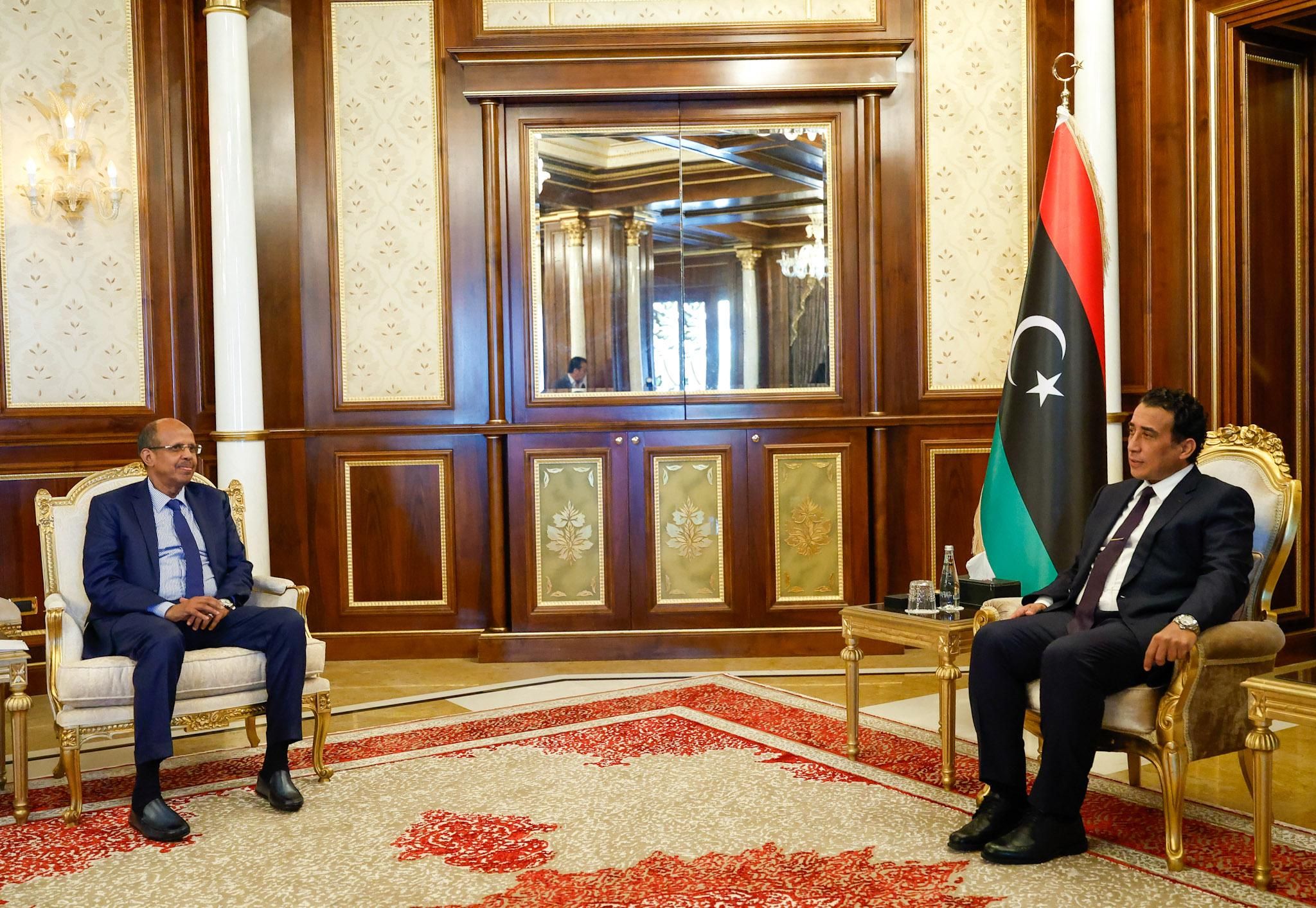
Libyan officials have held talks with African Union Commission (AUC) chairperson, Mahmoud Ali Youssouf, on the preparations for the upcoming fourth Africa-Türkiye summit that is due to be held in Tripoli in December.
The summit will bring together African leaders and Turkish officials, as the two sides seek to deepen cooperation across trade, investment, security, infrastructure and diplomacy.
Youssouf visited Libya this week where he held talks with acting Foreign Minister El-Taher El-Baour and other senior Libyan officials.
They discussed ways to strengthen coordination with the AU Commission to ensure success of the two-day summit scheduled to start on December 8, the Libyan foreign ministry said.
The talks also covered Libya’s relations with the African Union, developments across the continent and cooperation at regional and international forums.
Youssouf’s visit also underlined Libya’s efforts to strengthen its institutional ties with the continental body.
During the trip, the AUC chief formally reopened its liaison office in Tripoli, while Youssouf also visited premises allocated for a national office of the AU development agency (Nepad).
The AU said the liaison office would support closer cooperation with Libya in areas including peace and security, governance, youth and women’s empowerment, counterterrorism and efforts against transnational organised crime.
The Libyan government has portrayed the renewed AU presence as part of a broader effort to increase the country’s engagement in African affairs and strengthen direct coordination with continental institutions.
El-Baour and Youssouf also discussed preparations for Libya to host a meeting of the African Union’s Committee of Ten, or C10, on reform of the United Nations Security Council in Tripoli on 10 and 11 October.
Three editions of the Africa-Türkiye summit have been held to date, with Türkiye hosting the inaugural summit in Istanbul in 2008 and the third in 2021, while the second took place in Malabo, Equatorial Guinea, in 2014.
Three ministerial conferences have also been convened, with Istanbul hosting the first two in 2011 and 2018, followed by Djibouti in 2024.
The Tripoli summit will mark an important stage in the institutional development of Türkiye-Africa relations.
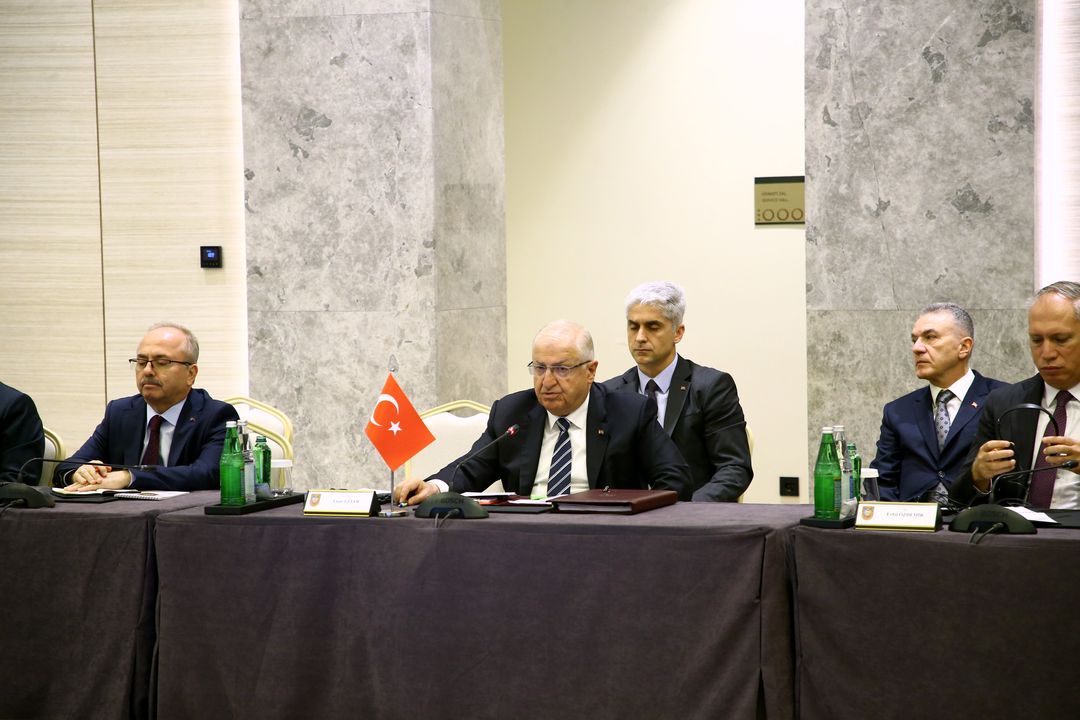
Turkish Foreign Minister Hakan Fidan earlier this year said the Tripoli summit would represent the next major milestone in Türkiye’s partnership with Africa.
Türkiye expands footprint in Africa
The summit comes after more than two decades of rapid growth in Türkiye’s political and economic engagement with Africa.
Ankara’s presence on the continent accelerated after Türkiye adopted its Africa Action Plan in the late 1990s and deepened further after the African Union recognised Türkiye as a strategic partner in 2008. The first Türkiye-Africa Summit was held in Istanbul that year.
Türkiye now operates 44 embassies across Africa, compared with 12 in 2002, while 38 African countries maintain embassies in Ankara, according to the Turkish foreign ministry.
The relationship has also expanded well beyond diplomacy.
Turkish Foreign Minister Hakan Fidan said in April that bilateral trade with Africa had grown to $36.6 billion and that Turkish Airlines served 64 destinations across the continent. Türkiye’s Cooperation and Coordination Agency, TİKA, meanwhile, operates 22 offices in Africa.
Other Turkish institutions, including the Disaster and Emergency Management Presidency, the Turkish Red Crescent and the Maarif Foundation, have also expanded activities in humanitarian aid, development and education.
Economic ties have been reinforced through platforms such as the fifth Türkiye-Africa Business and Economic Forum, held in Istanbul in October 2025, which brought together government and business representatives from Türkiye and African countries.
Security and diplomacy
Security and diplomatic cooperation have also become increasingly important elements of Türkiye’s Africa policy.
Ankara has expanded defence cooperation with several African states through training, capacity building and defence-sector partnerships, while also seeking a role as a diplomatic facilitator in regional disputes.
One of the most prominent examples has been Türkiye’s mediation between Somalia and Ethiopia after tensions between the two Horn of Africa neighbours.
The process culminated in the Ankara Declaration of December 2024, when Somali President Hassan Sheikh Mohamud and Ethiopian Prime Minister Abiy Ahmed agreed, with Turkish facilitation, to reaffirm respect for each other’s sovereignty and pursue negotiations over Ethiopia’s access to the sea under Somali sovereign authority.
Technical talks continued under Turkish facilitation in 2025.
That diplomatic role, alongside growing trade, development assistance and security ties, has helped make Africa one of the more prominent areas of Türkiye’s foreign policy.
For Libya, meanwhile, hosting the December summit offers an opportunity to reinforce its own ties with the African Union and reassert its place in continental diplomacy at a time when Tripoli is seeking greater engagement with African institutions.
The reopening of the AU Liaison Office, preparations for the C10 meeting on UN Security Council reform and the forthcoming Türkiye-Africa Partnership Summit all point in the same direction: a renewed Libyan push to position itself more actively within Africa’s diplomatic architecture.