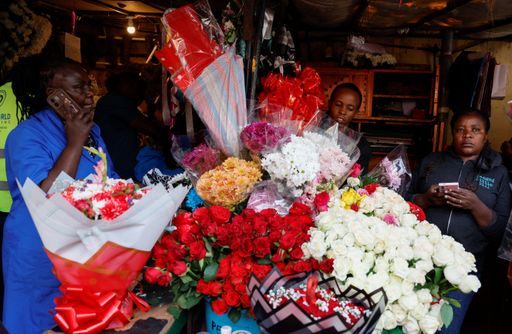
Couples face a dilemma as they search for new ways to show appreciation to loved ones on Valentine's Day.
“Money can’t buy love,” the old saying goes.
Yet with Valentine’s Day merely hours away, a quiet contest is unfolding in markets and online shops between the traditional flower bouquet — long regarded as a gentle symbol of love and affection — and a modern rival: bouquets made from folded banknotes.
The trend leaves many couples facing a dilemma: should one give the timeless beauty of fresh flowers, or follow the growing fashion of cash bouquets that promise both style and substance?
Across African cities, Valentine’s Day gift sellers are reporting a rising demand for so-called “cash bouquets,” where currency notes are rolled, folded, and pinned into floral arrangements.
The trend, widely promoted on social media platforms such as TikTok, has turned money itself into part of the gift presentation, especially among younger couples seeking something both decorative and practical.
Love in new ways
Comments across social media suggest people are increasingly looking for new ways to show appreciation to loved ones, which is essentially what Valentine’s Day is all about.
Some argue the combination of flowers and money adds practical financial support to romantic gestures, particularly in challenging economic times seen across many African countries.
Still, many buyers continue to prefer fresh flowers, seeing them as a modest and timeless expression of care rather than a display of spending.
For conservative families and faith communities, love is often understood less as extravagance and more as commitment, kindness, and responsibility — values flowers have long represented.
The new trend of cash bouquets is, however, not without complications.
Clamp down
Authorities in several African countries have warned that turning banknotes into decorations damages currency and disrupts financial systems.
In Kenya, the Central Bank of Kenya has declared that folding, stapling or gluing notes into bouquets amounts to defacing money, an offence that can carry heavy penalties.
Nigeria’s Federal Government also issued a ban on using Naira notes for decorative purposes ahead of the 2026 Valentine’s Day celebrations.
Similar warnings have come from Uganda, where the Bank of Uganda says damaged notes create problems for ATM and cash-counting systems.
In Rwanda, the National Bank of Rwanda has also prohibited decorative use of currency, while the Bank of Namibia in Namibia warns vendors risk fines or imprisonment for altering banknotes.
But in the spirit of love, these regulations do not forbid giving cash as a gift. Authorities simply urge that money be presented respectfully, without damaging the notes.
UEFA appointed a disciplinary inspector over an alleged half-time tunnel incident as tensions between Ireland and Israel spill over into Nations League matches.
White House Communications Director Steven Cheung says President Trump's comments at a rally have been misunderstood and misrepresented in "media freakout" that is "not rooted in reality."