Thirty-seven Nigerian detainees faced torment before their deaths in custody
Editor:
Halimatou HAMADOU DJIBO


Thirty-seven detainees, including 14 children, who died in an overcrowded cell at Nigeria’s civil defence headquarters in Niger State, drank urine and sweat because of a lack of drinking water.
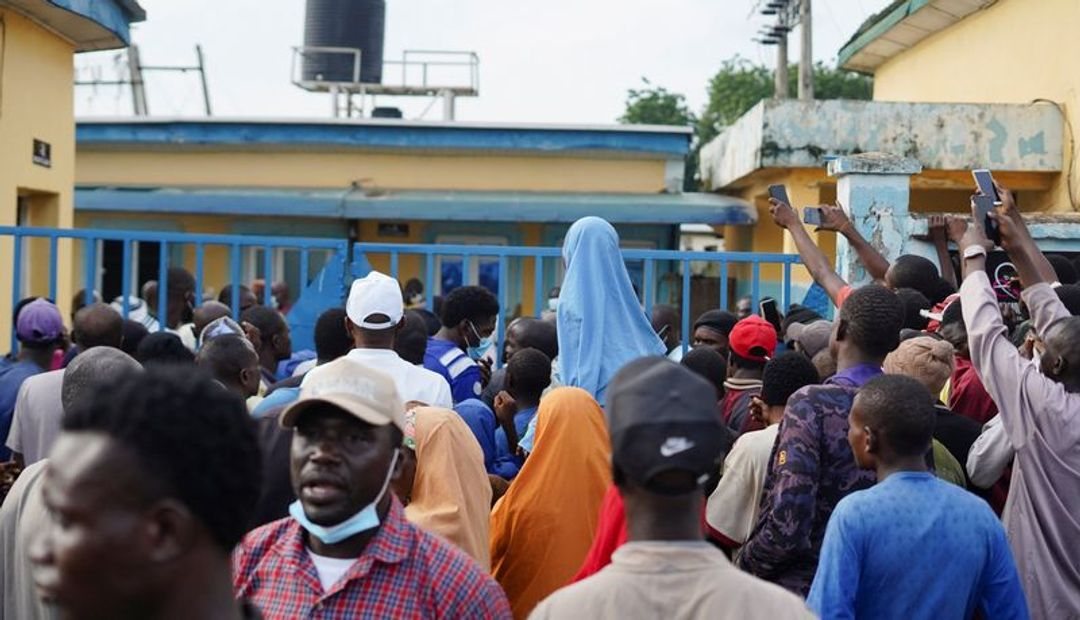
Thirty-seven detainees, including 14 children, who died in an overcrowded cell at Nigeria’s civil defence headquarters in Niger State, drank urine and sweat because of a lack of drinking water and a nonfunctioning toilet, according to a detailed investigative panel report.
The investigation accused the suspended Niger State commandant of the Nigeria Security and Civil Defence Corps (NSCDC), Siyaka Suberu, of fabricating a disease outbreak to conceal the deaths, saying his explanation was unsupported by medical and forensic evidence.
About 50 male detainees, including minors, were held in a cell measuring approximately 12 square metres (128 square feet) at the NSCDC state command in Minna, according to the investigative committee's report.
The deaths occurred between the evening of September 16 and the morning of September 17.
Severe overcrowding
The committee, chaired by Jonathan Kure, said detainees were exposed to severe overcrowding, poor ventilation and inadequate sanitation, with the cell's toilet reportedly not functioning.
The report detailed how detainees repeatedly cried for help as they struggled to breathe, complained of intense thirst, and experienced excessive sweating, but officers allegedly ignored their warnings.
An NSCDC medical staff member, Mariam Nelson, told the panel that she warned cell guards about the risk of suffocation and advised them to leave the metal door unlocked to improve ventilation. The guards allegedly ignored her advice.
An armoury guard, Ahmed Abubakar Wushishi, also told investigators that he heard detainees screaming and banging on the cell door between 1 am and 2 am (0000GMT and 0100GMT) on September 17.
Alleged cover-up
He said he urged the night guard to open the cell, but the officer refused, citing instructions from a superior not to unlock it without armed backup for fear that detainees might escape. The screaming reportedly stopped around 2.30 am (0130GMT). The cell was eventually opened at about 7 am (0600GMT), when the bodies were discovered.
The committee accused Suberu of authoring and releasing a statement claiming that a disease outbreak had caused the deaths.
But investigators said the explanation was not supported by medical and forensic evidence, describing it as an attempt to mislead the public and conceal the circumstances surrounding the incident.
The panel noted that post-mortem examinations were conducted on only three victims because the remaining bodies had been buried before the medical team arrived. It added that toxicology results were still pending.
Investigators recommend prosecution
The committee recommended the prosecution of officers found responsible for offences, including murder, criminal negligence, torture and inhuman treatment, where applicable.
It also proposed 30 million naira ($22,280) in compensation for each of the 33 bereaved families and 10 million naira ($7,326) for each of the 41 survivors, amounting to 1.4 billion naira, a little more than $1 million.
Other recommendations included full educational scholarships for the children of deceased detainees, medical rehabilitation for survivors and psychological support for affected families.
The panel also urged reforms within the NSCDC, including improved detention facilities, stronger staff supervision, independent inspections and the installation of surveillance cameras in detention centres.
The federal government said it would forward the report to the Attorney-General's office for further judicial action.
TRT Afrika / Anadolu Agency — TRT Afrika / Anadolu Agency
Photo: Reuters





Trump may consider major Iran strike if Republicans lose ground in midterms: report
As Qatari mediators push to revive US-Iran negotiations, Washington signals to Tehran that its best chance for a deal may be before next week's midterm elections.
'It's like being in an unlisted war' — Economy turns US midterms into a patience test for voters
Voters are making the economy their top priority this midterm cycle, and most US polls are ranking it above every other issue.
Türkiye puts forward Feridun Sinirlioglu for top UN post
Sinirlioglu, the veteran diplomat who once served as Türkiye's foreign minister and UN envoy currently leads the OSCE. Ankara's nomination makes him the 8th candidate for the top job.




All rights reserved. Newstimetr © 2026