
The Ghana-Zambia agreement on visa-free travel acknowledges that the fluid movement of people is the lifeblood of commerce, culture and intellectual cross-pollination.
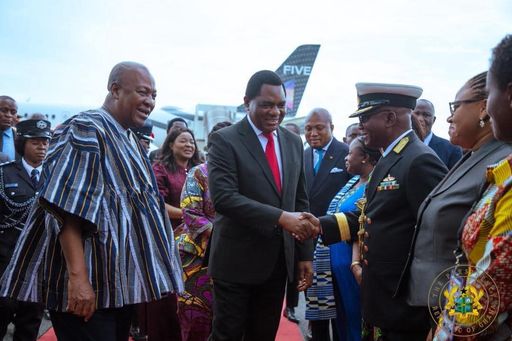
This week, as President John Dramani Mahama of Ghana walks the red carpets of Lusaka, engaging in the well-choreographed rituals of a state visit, a seemingly simple agreement has been struck: Ghana and Zambia will scrap visa requirements for each other’s citizens.
To the cynical eye, it is a minor diplomatic footnote. Yet, I argue it is a profound, radical, and deeply political act. It is not merely about travel; it is a direct assault on one of the most enduring and humiliating legacies of colonialism in Africa: the institutionalised suspicion of our own people.
For decades, the greatest barrier to Pan-Africanism has not been language, distance, or culture. It has been the immigration officer at our own airports. The very first encounter a Ghanaian businesswoman or a Zambian academic has with a sister nation is often one of interrogation, scepticism, and the implicit message that you are a potential problem, not a potential partner.
We erected these bureaucratic barriers in the name of security and sovereignty, yet we left the gates wide open for exploitation by others. The bitter irony is stark: a European tourist can often traverse our continent with greater ease than an African entrepreneur.
We designed a system that treats our own kin as threats, while rolling out the red carpet for interests that have historically extracted our wealth.
Building organic networks
The Ghana-Zambia agreement, therefore, is more than a policy shift. It is a philosophical reorientation. It declares that a citizen of the Commonwealth of Africa is not a security risk by default. It acknowledges that the fluid movement of people is the lifeblood of commerce, culture, and intellectual cross-pollination.
Imagine the catalytic potential: a tech innovator from Accra can seamlessly collaborate with a clean-energy specialist in Lusaka. A filmmaker from Kitwe can gather crew from Tamale without the soul-crushing wait for a travel permit.
This is about building networks that are organic, resilient, and free from the permission of former colonial powers.
However, to laud this move without context is to miss its revolutionary weight. We must remember that both Ghana and Zambia are nations forged in the fire of anti-colonial struggle.
Kwame Nkrumah and Kenneth Kaunda did not fight for independence so that their grandchildren would need a visa to share ideas across the continent. They dreamt of an Africa unbounded, a truly liberated zone where its people could claim their entire heritage.
This visa abolition is a small, tangible step towards reclaiming that stolen dream. It is a rejection of the Balkanized mental map imposed at the Berlin Conference of 1884, a map we have internalised and policed for ourselves.
Conditions for success
Yet, the true test lies ahead. Scrapping visas is the easy part. The harder, more necessary work is to build the economic and social infrastructure that gives this freedom meaning.
What is the value of open borders if our currencies are non-convertible, if our trade routes are dilapidated, and if our markets are protected against each other but vulnerable to dumped foreign goods?
This diplomatic move must be the spark that ignites a frenzy of complementary action:
Harmonised commercial frameworks: We need mutual recognition of professional qualifications, simplified business registration, and double taxation avoidance treaties that make cross-border ventures effortless.
Investment in connectivity: Not just flights, but seamless digital payment systems and affordable regional broadband to enable the collaborations this visa-free movement will inspire.
A narrative shift: Our media and educational curricula must actively celebrate intra-African success stories, moving beyond a paradigm that only validates partnerships and education from the Global North.
President Mahama and President Hichilema have done something significant. They have changed a rule. But the greater challenge is to change a reality.
The dream of a Pan-African passport
They have removed a padlock; we must now build the thriving metropolis on the other side of the gate. This is about transforming our conception of security from one based on keeping people out to one based on the prosperity and integration that comes from letting our people in.
Let this be a positive contagious precedent. May it spread from the Zambia-Ghana corridor to every corner of our continent.
For when an African can wake up in Lagos, have a midday meeting in Nairobi, and close a deal in Johannesburg, all on a single passport and without a hint of bureaucratic indignity, we will have begun to construct a new architecture of dignity.
That is the Africa we were meant to inherit. That is the Africa we must, with both courage and deliberate policy, finally build.
The author, Kennedy Chileshe, is the Executive Director of Jubilee Leaders Network, a policy and leadership advocacy organisation.
Disclaimer: The views expressed by the author do not necessarily reflect the opinions, viewpoints and editorial policies of TRT Afrika.