Israel’s genocidal war on Gaza has failed to restore a sense of security at home while deepening political divisions and damaging its international standing.
The Hamas resistance group’s October 7 blitz exposed a profound failure at the heart of Israel’s security model, shattering the long-held belief that military superiority, intelligence and deterrence could guarantee the security of its citizens.In response, Israel launched a genocidal war in Gaza, presenting it as necessary to restore security and prevent another such attack.Three years of genocide have insteadwidened the crisis, deepening political divisions inside Israel and damaging its standing abroad.It has raised broader questions about Israel’s political leadership, its decades-long mistreatment of Palestinians, and the future of a state built on the continued occupation of Palestinian land.Over the same period, the Israeli public has moved further to the right, according to Alon Liel, former director general of the Israeli Foreign Ministry and an expert on Israeli politics.“The October 7 attack was deeply traumatic, and the government's response to it was a huge failure.
The scale of the damage and the embarrassment of the government were channelled into a more nationalistic sentiment and a desire for revenge,” Liel tellsTRT World.“The media, in the years since, has focused overwhelmingly, perhaps 95 percent of the time, on our suffering, the casualties, the hostages, the destruction inside Israel and so on.
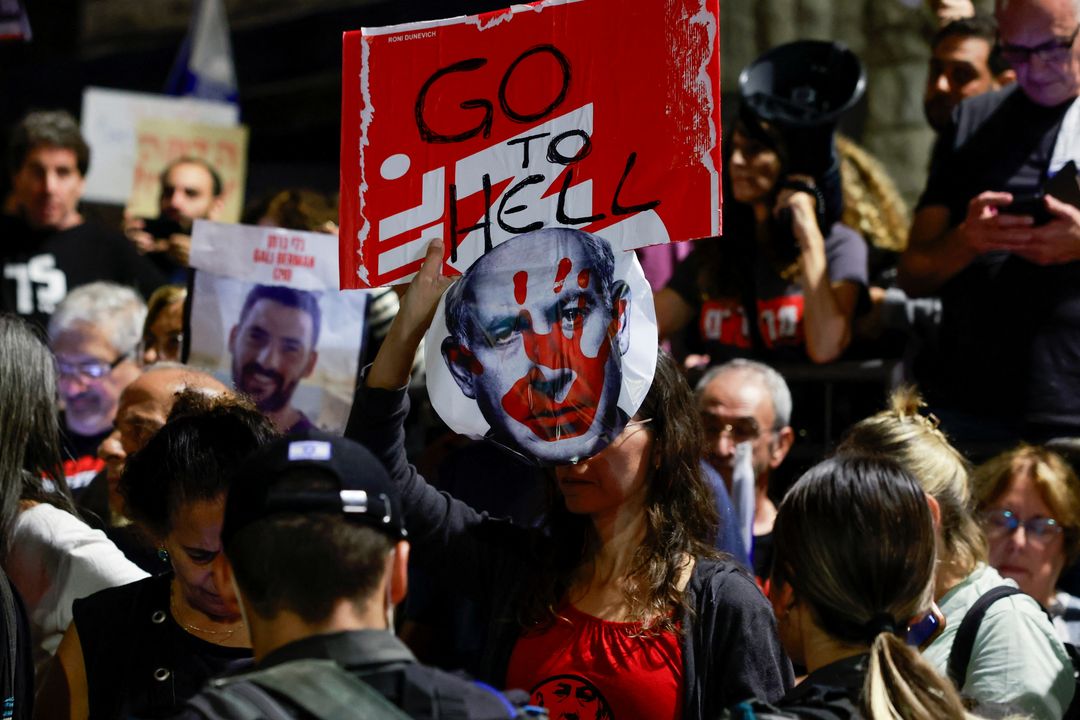
As a result, the public has become very angry and nationalistic, strengthening right-wing political parties.”According to Liel, the result is not only an ideological shift towards more anti-Palestinian and anti-Arab positions, but also an erosion of democratic norms.“We have 20 percent Arab citizens, and hostility towards them has grown, leaving them increasingly isolated,” she says.“When you intensify pressure on Palestinians in Gaza, the West Bank and, in some ways, inside Israel itself, you also become less democratic.”A crisis of political trustThe political fallout from October 7 has continued well beyond the initial failure of Benjamin Netanyahu's government to prevent the attack.The attack exposed serious failures across Israel's political and security establishment, while the absence of a state commission of inquiry has prolonged the dispute over responsibility.Netanyahu has resisted calls for such an inquiry, while victims' families and opposition figures have continued to demand accountability.For Palestinian scientist and author Professor Mazin Qumsiyeh, who was nominated for the 2025 Nobel Peace Prize, the war has exposed deeper problems within Israel's political system.“The period following October 7 has shown how fragile and unsustainable the pre-existing status quo since 1948 has been, and the systemic inequalities and limitations of relying on military might to maintain a colonial, racist occupation,” Qumsiyeh tellsTRT World.“It has made clear that lasting stability cannot be achieved without addressing the root causes, including self-determination, human rights, and equal justice for all people in the region.”“Rather than enhancing security, the three years of genocide have brought the end of this racist regime closer,” Qumsiyeh adds.Public dissatisfaction with the government's handling of the war has also remained high.According to an INSSsurveyconducted for the third anniversary, only 34 percent of Israelis were satisfied with the government's management of the war on Gaza.Meanwhile, 75 percent supported establishing a state commission of inquiry into the failures surrounding October 7.“I think Israel is safer militarily because we have inflicted significant damage on Iran [during US-Israeli offensives] and the Syrian military [during and after the fall of Assad regime].
But the problem we are facing is political and societal,” Liel says.“Israeli society is more divided than it was before; particularly over democracy, corruption and the way the country is governed.”“The opposition is deeply worried about the erosion of democratic institutions, the media and the country's bureaucracy, as well as attacks on state institutions,” Liel adds.The security doctrine exposedThree years of war have exposed the limits of a security doctrine heavily reliant on military force and inflicted unprecedented destruction on Palestinians in Gaza.The massdisplacementof Palestinians anddestructionof homes and civilian infrastructure have meant that Palestinians have borne the overwhelming human cost of Israel’s military offensive.For many Israelis, meanwhile, the war has failed to restore a sense of security.The same INSS survey found that 59 percent of Israelis believed an attack similar to October 7 could happen again in the coming years from the Gaza border.Only 38 percentconsideredIsrael's security situation better than before the attack, while 32 percent said it was worse.The figures expose a contradiction within Israel's security narrative: overwhelming military force has not restored a sense of security among much of the population, while Palestinians bear the catastrophic consequences.“The carpet bombing of Gaza and the lies perpetrated around it have shown the true nature of the Israeli regime: genocide and ethnic cleansing as central features of its artificial and fragile system of hegemony,” Qumsiyeh says.“Sustainable security can only come from justice, the right of refugees to return, and adherence to international law,” he adds.Liel also questions whether Israel's military response can provide lasting security, pointing instead to its longer-term political and moral consequences.“The Israeli public has largely adopted the narrative that we are fighting barbaric Islamic extremists,” Liel says.“I see what we have done in Gaza as an overreaction driven by Israeli Jewish fears and feelings of revenge.
We have killed 74,000 Palestinians, destroyed Gaza and carried out numerous aggressive actions against civilians in the [occupied] West Bank,” he tellsTRT World.“I see this as a moral problem.
We have overreacted and violated international law, and I consider this a long-term problem for Israel and perhaps for the Jewish people, who will have to carry these crimes on their shoulders.”Reputation irreversibly tarnishedBefore October 7, Israel maintained extensive diplomatic, economic and security relationships, particularly with Western governments.Its international image was already contested because of its occupation of Palestinian territory, settlement expansion and treatment of Palestinians.But the genocide in Gaza has brought those issues into sharper international focus.The shift is reflected in polling.A June 2026 Pew Research Center survey across 36 countriesfoundthat a median of 67 percent of respondents held an unfavourable view of Israel, compared with 25 percent who viewed it favourably.In the United States, unfavourable views reached 60 percent, while in the United Kingdom they stood at 69 percent.Israel's international standing has deteriorated dramatically over the past few years, according to Liel.“Years ago, we were very close to establishing diplomatic relations with Saudi Arabia.
The main goal was to normalise relations with the Saudis without paying any price on the Palestinian issue.”“Then came the attack, followed by what I see as our overreaction, the destruction in Gaza and the enormous number of casualties.
Israel is now seen as a trigger-happy, colonialist and aggressive country,” Liel explains.The deterioration in public perceptions has unfolded alongside significant international legal developments.In July 2024, the International Court of Justice found Israel's continued presence in the occupied Palestinian territory unlawful and said it must end as rapidly as possible.The International Criminal Courtissuedarrest warrants for Netanyahu and former defence minister Yoav Gallant in November 2024 over alleged war crimes and crimes against humanity.The warrant for Netanyahu remains in force, potentially exposing him to arrest if he travels to a country that enforces it.“The shift in global public opinion, diplomatic relations, and international legal scrutiny has put enormous pressure on Israel's standing in the world,” Qumsiyeh says.“This growing isolation is unfortunately not affecting Israeli politics or its institutions.
Most Israelis live in this self-created Zionist bubble.”“It is an inferiority-superiority complex: ‘We are a chosen, superior people, but we are also always persecuted and hated, yet we do not care’,” he adds.Three years on, the consequences of October 7 continue to reshape Israel both at home and abroad.