The decline in half-year earnings was the group's steepest since COVID-19 travel restrictions hit aviation in 2020.
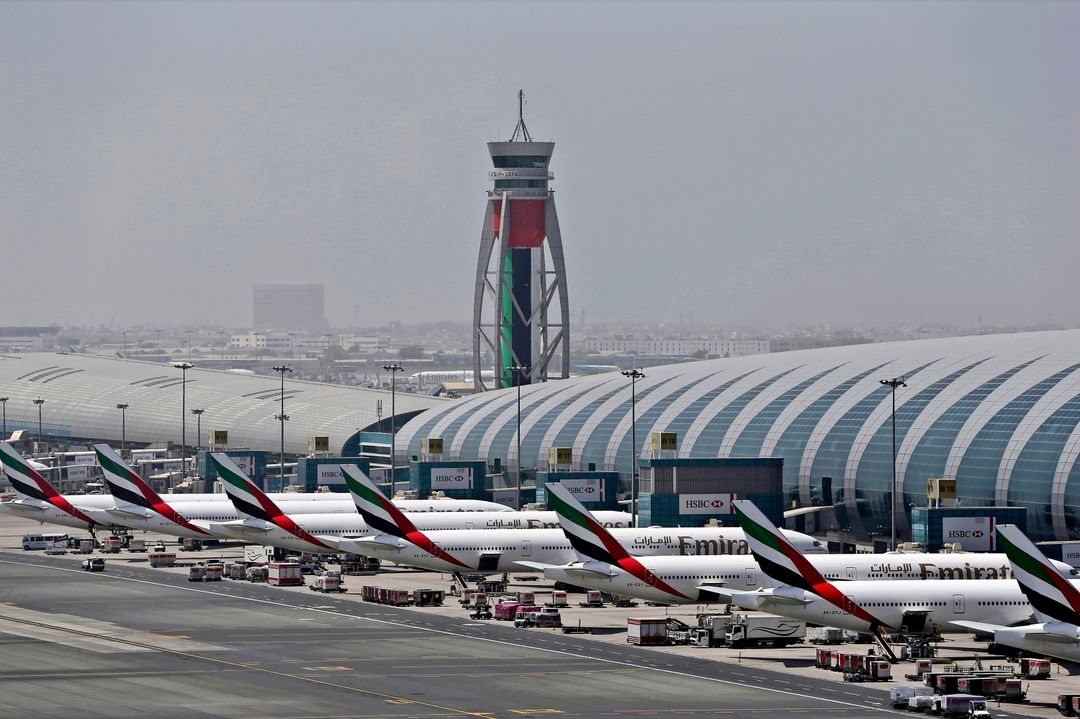
The UAE's Emirates Group on Thursday said its profits in the first half of the financial year fell 66 percent year-on-year, as the regional war and high fuel costs hit aviation.
Half-year profit after tax stood at 3.6 billion AED ($1 billion), the group said in a statement.
The Dubai-based group, which owns the largest airline in the Middle East, said its Emirates airline saw half-year profit before tax fall 68 percent to AED 3.7 billion, eroded by high fuel prices.
Since the Middle East war began in late February, energy prices have soared as Iran's blockade on ships in the vital Strait of Hormuz disrupted supply.
The decline in half-year earnings was the group's steepest since COVID-19 travel restrictions hit aviation in 2020.
The wider group's revenues were less affected, down 12 percent to 66.2 billion AED, it said, buoyed by a strong performance in its cargo business.
During the early months of the war, the United Arab Emirates bore the brunt of Iranian drone and missile attacks, disrupting flights and putting off visitors to Dubai, which has become a tourist hub in recent decades.
Passenger traffic between April and September was down by 22 percent compared with the same period last year, at 21.8 million passengers.
"The first six months of 2026-27 brought significant challenges to Emirates' operations as intermittent airspace restrictions and closures across the region tested the airline's operational agility, while government travel advisories reshaped consumer choices and travel flows," the group said.
The airline, one of the world's largest by international passenger traffic, said its performance was "remarkable" in light of the war.
The group was able to tap strong cash reserves to support its business needs, including pre-delivery payments for aircraft and servicing debt obligations, it said.
"It has been a demanding six months, and once again our business model and our people stood up to the test," said Chairman and Chief Executive Sheikh Ahmed bin Saeed Al Maktoum.
He called the challenges of the period "unprecedented" and said the group had not paused investments despite the headwinds.
The group said Emirates airline had launched initiatives to boost customer confidence following the outbreak of war, including an industry-first comprehensive travel insurance that is unrestricted by government travel advisories, free date changes on booked tickets, and generous refund policies.
It also broke ground in May on a $5.1 billion engineering and maintenance facility at Al Maktoum International Airport in Dubai, with completion expected in the mid-2030s.
Republican Michael Alfonso, 26, becomes the youngest member of the House of Representatives, while Melat Kiros, 29, becomes the first Gen Z woman elected to Congress.