Democratic figures, including Kamala Harris and Nancy Pelosi, close ranks behind Abdul El-Sayed after Haley Stevens backs Republican Mike Rogers, triggering a fierce party backlash days before the vote.
A bitter Democratic primary in Michigan has returned to haunt the party just days before Americans vote in the midterm elections, after Congresswoman Haley Stevens stunned her party by endorsing Republican Senate candidate Mike Rogers over the man who defeated her for the Democratic nomination.
Abdul El-Sayed has received support from senior Democratic figures in the final stretch of his campaign, as party leaders seek to contain the fallout from Stevens' extraordinary break with her own side.
Former vice president Kamala Harris, former House Speaker Nancy Pelosi and Michigan Congresswoman Debbie Dingell, among others, have backed El-Sayed and publicly condemned Stevens' decision, turning an already fiercely contested Senate race into a test of Democratic unity.
The political rupture came on Sunday, barely two days before the election, when Stevens released a video announcing her support for Rogers while insisting she remained a Democrat.
“I’m just letting you know where I am,” she said.
For Michigan Democrats, the explanation offered little comfort.
Within little more than an hour, state party chairman Curtis Hertel announced that Stevens would no longer have a place in the organisation.
“Congresswoman Stevens is not a current member of the Michigan Democratic Party, nor will she be in the future,” Hertel wrote on X.
The swift response underscored the stakes for Democrats, who see Michigan as central to their hopes of winning control of the US Senate.
The race is considered competitive, with polling suggesting El-Sayed faces a tougher contest than some other Democratic candidates running statewide.
A defeat in Michigan could complicate the party's already difficult path to a Senate majority.
Democrats respond
Harris has sought to reinforce El-Sayed's campaign in the closing days, recording a telephone message urging Michigan voters to support him.
“Abdul El-Sayed is as Michigan as it gets,” Harris says in the robocall.
“Abdul is for the people. I’m Kamala Harris, and I endorse Dr Abdul El Sayed for United States Senate.”
Pelosi delivered a considerably sharper response to Stevens, accusing her Democratic colleague of abandoning the interests of Michigan voters.
“Haley Stevens has chosen to dangerously betray Michigan families’ healthcare, freedoms and future with her horrific endorsement of Mike Rogers,” Pelosi wrote on X.
“@AbdulElSayed must win — because Michigan and our country deserve better. -NP.”
Dingell, another influential Michigan Democrat, expressed astonishment at Stevens' decision, saying she had received assurances only hours earlier that such an endorsement would not happen.
“I was stunned since she had told me she wasn’t doing that last night at midnight,” Dingell told CNN on Sunday.
Asked whether Stevens still had a political future within the Democratic Party, Dingell offered a pointed assessment.
“Unfortunately, she seriously hurt herself,” she said.
El-Sayed shrugs off political storm
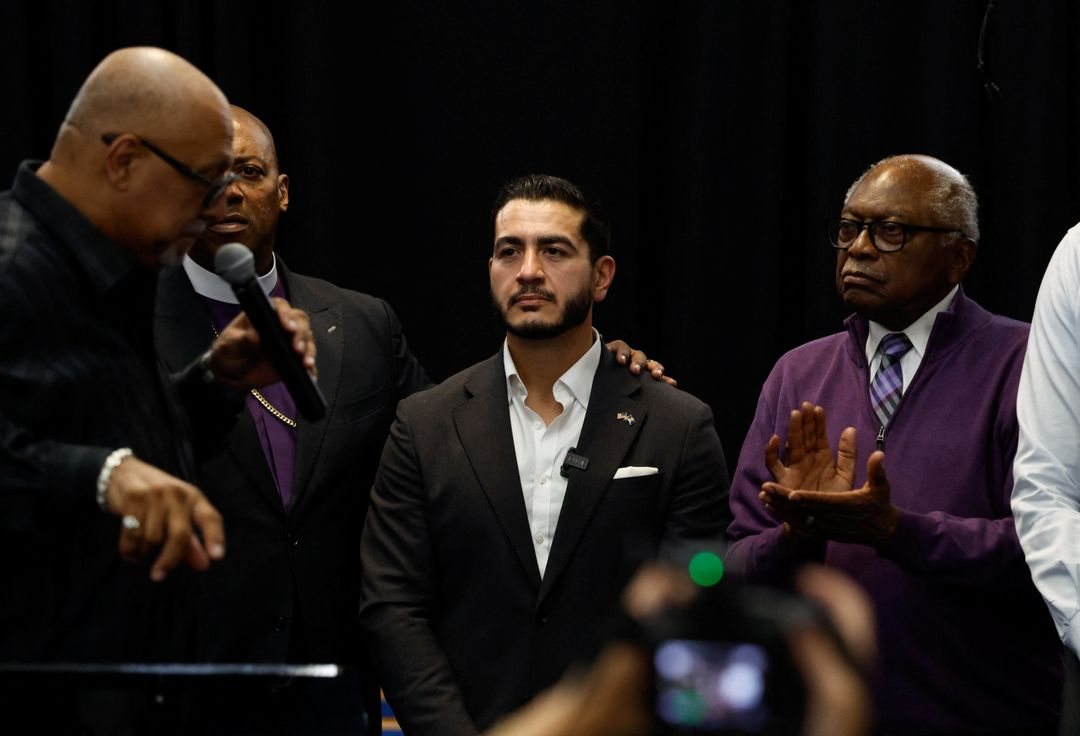
Speaking to reporters outside a Detroit church during Sunday's early-voting drive, El-Sayed dismissed the controversy and sought to shift attention back to the economic pressures facing Michigan families.
“None of this matters,” he said, referring to the dispute with Stevens.
The former public health official, who could become the first Muslim elected to the US Senate, has made affordability and healthcare central to his campaign.
His rival, Rogers, is a former Republican congressman.
The two are competing to replace retiring Democratic Senator Gary Peters, in a state whose political and demographic divisions have made it a crucial battleground for both parties.
Israel dispute reopens old wounds
Behind the public rupture lies a disagreement that has shadowed Michigan's Democratic campaign for months.
Stevens is a staunch supporter of Israel, while El-Sayed has been sharply critical of Tel Aviv.
The dispute intensified last week over an advertisement produced by an independent progressive group linking American support for Israel to rising grocery prices.
Stevens demanded that El-Sayed condemn the advertisement, arguing that its message was unacceptable.
El-Sayed said his campaign had not produced the advertisement, while accusing Stevens of reopening arguments settled during the August primary.
Their differences ultimately derailed plans for a joint appearance at a Detroit church on Sunday, which Democratic organisers had hoped would demonstrate unity.
Instead, Stevens appeared alongside Rogers at another church, offering the Republican a politically valuable endorsement in the final hours of the campaign.
Rogers said he was “honoured” by her support.
The consequences extended into Stevens' own office, with her longtime chief of staff resigning and other departures expected, according to reports.
A party racing against the clock
For Democratic strategists, the concern is not simply that Stevens has endorsed a Republican.
More than 1.8 million Michigan voters had already cast ballots by Friday, according to the Associated Press, meaning much of the electorate had made its choice before the latest dispute erupted.
Yet with voting continuing until Tuesday, the question remains whether Democrats can prevent their internal disagreements from affecting the final result.
TRT World and Agencies — TRT World and Agencies
Photo: reuters