Why African MMA fighters back safety changes in pursuit of Olympic dream
Source:
TRT Afrika English


The MMA is seeking to adapt its rules, address longstanding safety concerns and make itself more compatible with international multi-sport competition.
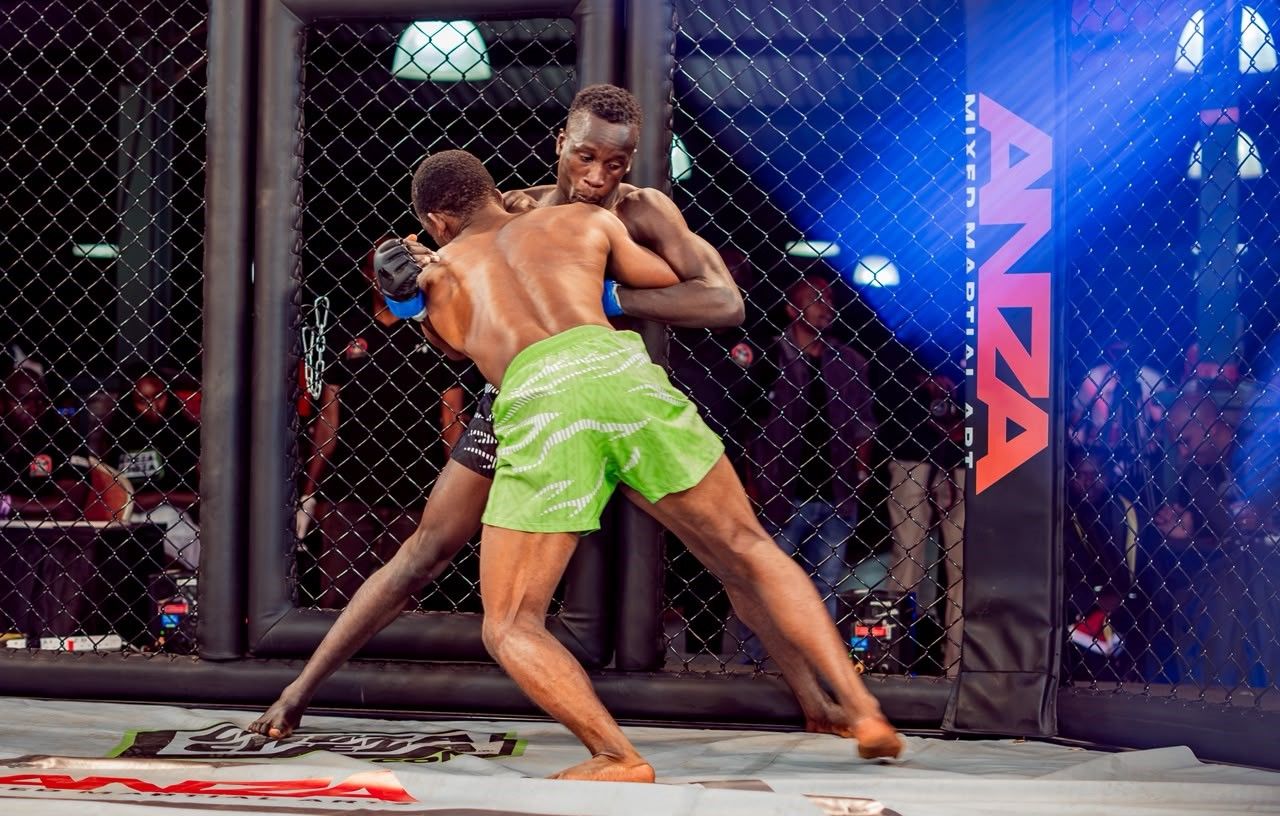
Mixed martial arts has spent years battling concerns over the violence within its sport. But as it makes its debut at the Asian Games, its international governing body for amateur fighters says it has redesigned the rules to address those concerns and bring MMA closer to the standards expected of major multi-sport competitions.
These changes made by the Federation of International Mixed Martial Arts (FIMMA) have helped open the door to the sport's first appearance at the Asian Games, which runs from September 19 to October 4 in Aichi-Nagoya, Japan, and could strengthen MMA's campaign for eventual Olympic recognition.
It is a significant step for a sport that has largely developed outside the mainstream multi-sport system.
What has changed?
In the new FIMMA rules, the wire cage long associated with professional MMA has been removed. Fighters compete on an open mat, while elbow strikes are prohibited, shin guards are worn, and knees or kicks to the head of a grounded opponent are banned.
The aim, FIMMA officials say, is not to strip MMA of its striking and grappling identity, but to reduce unnecessary bodily damage to fighters while preserving the sport’s competitive character.
“We have developed a rule set specifically focused on the safety and well-being of athletes, and aligned with Olympic values. The introduction of MMA at the Asian Games is an important step in that journey,” FIMMA President Gordon Tang told AP News Agency.
Galastein Tan, director general of FIMMA, said the changes could also help reshape perceptions of a sport often associated with its most violent moments.
“We think without the cage we will have a better alignment with the Olympic values and hopefully recognition from the IOC,” Tan told AP.
“It takes time to change a perception. We hope to be able to share that there is a new form of MMA, and this form is more aligned with the Olympics.”
African opportunities
For African fighters who have spent years competing in the sport, the changes represent another step in MMA's evolution — making it safer and more compatible with major international competitions without taking away its defining characteristics.
Tanzanian MMA fighter Chris Tibenda says the new rules mark a defining moment for the sport.
Tibenda only recently emerged from an MMA battle after his victory inside the first round at the ANZA MMA Pro Nights 3 competition in Nairobi on September 19, subduing his opponent in under one minute in the flyweight division.
“Padding doesn't 100% protect the fighter from blows so the sport has not lost its feel as an intense contact sport. But these new rules definitely protect competitors from deep gashes and dangerous cuts,” Tibenda tells TRT Afrika.
Serious injuries have long featured among concerns raised by critics of MMA, who question whether a sport built around striking, submissions and incapacitating an opponent can be reconciled with the emphasis on athlete welfare and safe competition in major sporting events.
Other concerns have centred on head and bodily injuries, the accumulation of punishment during bouts and the perception that the sport can reward sustained violence.
MMA has also faced institutional hurdles on its path to Olympic recognition, including questions over international governance and the compatibility of its professional format with the requirements of the Olympic movement.
Still, Tibenda argues that MMA already has an important safety mechanism built into its rules: referees can stop a fight when a competitor can no longer intelligently defend themselves.
He contrasts that with boxing, where a fighter who has been knocked down can receive a count and continue.
“If you get hit hard, you don't need to take any more damage,” Tibenda says. “The referee can see that you're not responding to the strikes and stop the fight.”
For him, that ability to end a contest before a fighter absorbs further punishment is an important part of making the sport safer.
MMA in Olympics?
The Asian Games format is therefore not being presented as the end point for MMA modifications but as another step in a longer progression — from specialist combat-sports competitions towards the wider international sporting arena.
The International Olympic Committee has yet to recognise MMA as an Olympic sport, meaning the Asian Games debut does not amount to Olympic recognition. But the event, according to FIMMA, allows MMA to demonstrate that its combination of striking, grappling, throws and submissions can be conducted within a format designed with greater emphasis on athlete safety.
For African MMA fighters who spoke to TRT Afrika, that progression could have consequences well beyond the Asian Games.
Tanzanian fighter Rashid Mlegelo, who also won his clash inside the first round at ANZA MMA Pro Nights 3, believes greater international exposure could help African fighters overcome one of the continent's biggest obstacles: limited access to the sport's biggest stages.
“There are so many organisations in Africa really trying their best to give MMA fighters the best platforms possible. Knowing that our sport has now progressed to the Asian games is very encouraging. These are the platforms African fighters need,” Mlegelo tells TRT Afrika.
That access is gradually expanding as MMA develops across Africa, with organisations such as East Africa's ANZA MMA, the African Knockout (AKO) promotion and PFL Africa creating more opportunities for fighters to compete and build professional careers.
“Five to 10 years ago, there wasn't like a scene,” Tibenda says. “There was only EFC [Extreme Fighting Championship] that was pushing MMA.”
Now, he says, each new competition, organisation and international opportunity adds another piece to the sport's developing potential for international acceptance.
For Mlegelo, the next step is to build the grassroots structure needed to produce more fighters and create a pathway from amateur competition into the professional ranks.
FIMMA says its appearance in Aichi-Nagoya shows how MMA is seeking to adapt its rules, address longstanding safety concerns and make itself more compatible with international multi-sport competition.





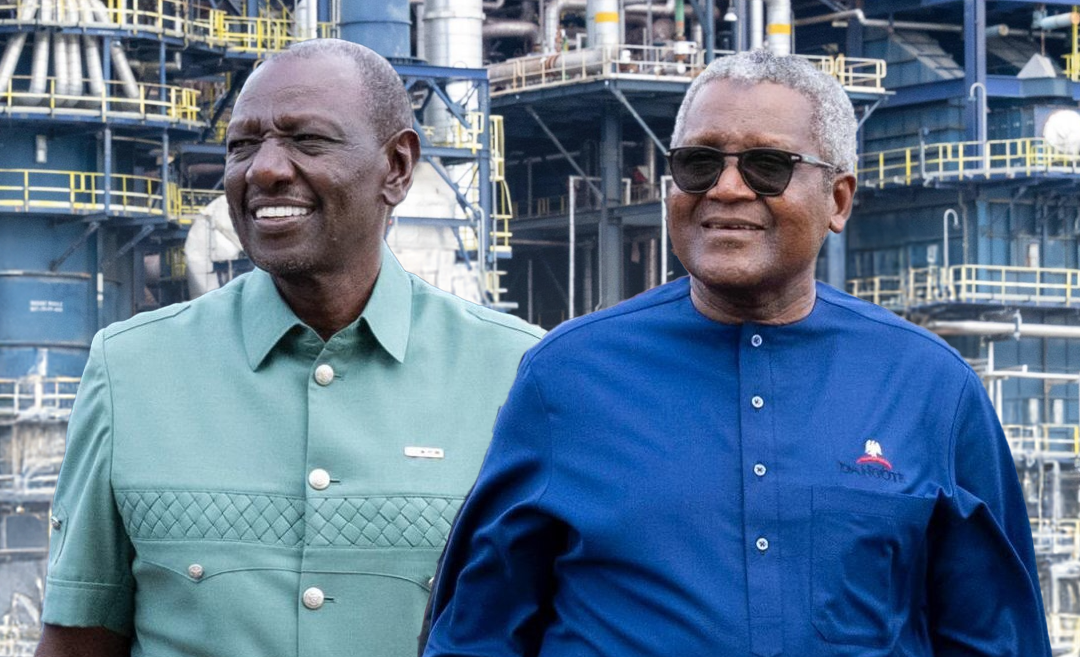
Dangote set for construction of $16 billion refinery in Kenya
The project, however, faces criticism from environmental campaigners who fear it could affect a World Heritage site that hosts fragile marine ecosystems.
Former Malaysian PM Mahathir hospitalised after wife's death
Mahathir Mohamad has been admitted to Malaysia’s National Heart Institute for observation a day after his wife, Siti Hasmah Mohd Ali, died aged 100.
Ukraine was first to request secrecy over North Korean POW transfer: South Korea
Transfer of captured soldiers to South Korea was disclosed by Ukrainian President Volodymyr Zelenskyy during his UN address last week.



All rights reserved. Newstimetr © 2026