What happens between elections matters most
Source:
TRT Afrika English
Elections are too often presented as the destination. They are not. They are milestones along a much longer journey, and the important question is never only who won. It is what kind of country the island nation wants to become over the next 20 years
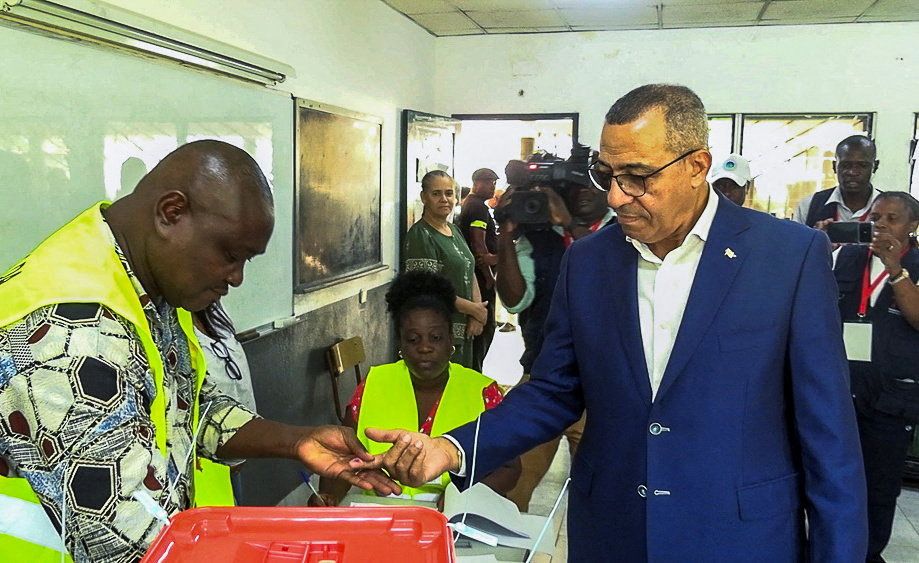
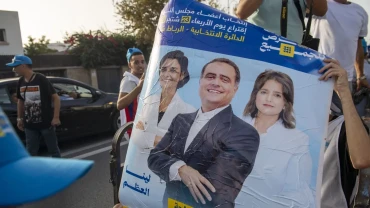
On 19 July, São Tomé and Príncipe elected its president. On 27 September, it votes again, for the National Assembly and for local and regional office. The weeks in between are usually treated as dead time, a pause between one campaign and the next.
They may be the most important weeks the country has.
Because elections are too often presented as the destination. They are not. They are milestones along a much longer journey, and the important question is never only who won. It is what kind of country this island nation wants to become over the next twenty years.
Of 142,191 registered voters, 83,427 did not cast a ballot, the lowest participation São Tomé and Príncipe has recorded. The National Election Commission delivered materials to polling stations on time and ran a calm and orderly vote, with international observers finding procedures respected throughout.
The machinery of the vote worked as designed, yet most citizens chose not to use it.
This election had its own particular circumstances, and observers have documented them carefully. But abstention on that scale is rarely explained by a single contest, and participation has been drifting downward across stable democracies for thirty years. What matters is that this is information, and it is the kind of information almost no government thinks to collect.
Timing
The timing matters, because the world is changing in ways that increasingly favour countries like this one. For decades, development advantage belonged to scale: bigger markets, bigger factories, bigger populations.
Today another map is emerging. Investors weigh stability before size. Travellers seek authenticity before luxury. Young entrepreneurs look for quality of life as much as opportunity. Climate finance rewards countries that protected nature instead of exhausting it.
Many of the characteristics that once made small island states appear vulnerable are becoming strategic advantages.
São Tomé and Príncipe did not invent these trends. It is unusually well positioned to benefit from them. An exclusive economic zone of roughly 160,000 square kilometres against a land area of about 1,000. Organic cocoa recognized around the world. Biodiversity and endemism in the Gulf of Guinea islands that few places on the continent can match.
A record of peaceful transfers of power. Social cohesion stronger than in many countries with far greater wealth. And a diaspora with skills, capital and enduring ties to home.
These are not simply attractive features. They are the building blocks of a development story.
Yet natural assets alone have never transformed a nation. Oil did not make Norway successful. Institutions did. The next chapter here will not be written by geography either. It will be written by imagination, and the country's most valuable investment over the coming years may not be financial at all. It may be intellectual.
Every government knows how many people live in its country. It knows its GDP, its inflation, its exports and its debt. Far fewer countries truly understand themselves.
Why do some young graduates return while others never come back? Why do certain communities organize themselves easily and others struggle? How is trust built? What makes people invest? Why do some reforms take root while others remain words on paper? And why, when the ballot is free and the process is sound, do most people conclude that the outcome will not reach their lives?
These are not academic questions. They are economic questions, political questions, development questions. And almost nobody has been asked them.
National listening exercise
This is why São Tomé and Príncipe should seriously consider something few countries have attempted: a structured national listening exercise, combining foresight methods with behavioural and social research, designed not for a university shelf but for the desk of whoever writes the next national development plan.
Imagine understanding, with the same precision now used to measure inflation, the aspirations of young people in each district, the strength of family networks, the role of women in local economies, the expectations of the diaspora, the informal systems of solidarity that already sustain thousands of households.
Imagine designing policy that begins not with imported models but with a deep understanding of the society it is meant to serve.
That would be innovation. Not technological innovation. Institutional innovation.
Countries compete through policies. They also distinguish themselves through imagination. People invest where they believe the future is being built. Young people return where they believe they can contribute. And citizens participate where they believe participation changes something.
UNDP is ready to put this to work rather than only recommend it. We have worked alongside Santomean institutions through successive electoral cycles, and we will continue to do so, strengthening the National Election Commission between elections and not only during them, and supporting civic education that reaches the citizens who stayed home this month.
The same principle governs the listening exercise. It should be commissioned by São Tomé and Príncipe, led by Santomean researchers and owned by the institutions that will use it.
Our role is to accompany, not to author. UNDP can bring foresight and behavioural insights capacity to the design, support the next National Human Development Report as the vehicle for what it finds, and carry the evidence into the preparation of the next Cooperation Framework, so that what the country learns about itself shapes what its partners fund.
Better version of itself
None of this is a proposal to become another country. São Tomé and Príncipe does not need to copy Dubai, Singapore or Mauritius. It needs to become a better version of itself, and to replace the language of limitation with the language of possibility.
For five and a half centuries, the story of these islands has been shaped largely by decisions taken elsewhere: by plantation economies, by distant capitals, by markets that valued the land more than the people on it. The next chapter is the first that can be written entirely from here.
A country that truly understands who it is will never have to imitate anyone else. In a century that rewards clarity of purpose over sheer size, that may prove to be its greatest competitive advantage of all.
The author, Luc Gnonlonfoun, is the UNDP, São Tomé and Príncipe, Resident Representative
Disclaimer: The views expressed by the author do not necessarily reflect the opinions, viewpoints and editorial policies of TRT Afrika.



TEKNOFEST announces final rankings for 2026 Industrial Robotic Applications Competition
TEKNOFEST has announced the final rankings for its 2026 Industrial Robotic Applications Competition. The official results are available through TEKNOFEST’s announcement page.
Indonesia arrests ferry captain after deadly Java Sea disaster
The captain is suspected of knowingly sailing an unsafe vessel, as divers continue searching for 57 people still missing.
New Zealand Parliament dissolved as November election approaches
The upcoming vote is seen as a tight contest between the ruling centre-right coalition and the left-leaning bloc.




All rights reserved. Newstimetr © 2026