
Uganda's President Yoweri Museveni and his Tanzanian counterpart, Samia Suluhu Hassan, have endorsed a proposal to build an oil refinery in Tanzania's port city of Tanga.
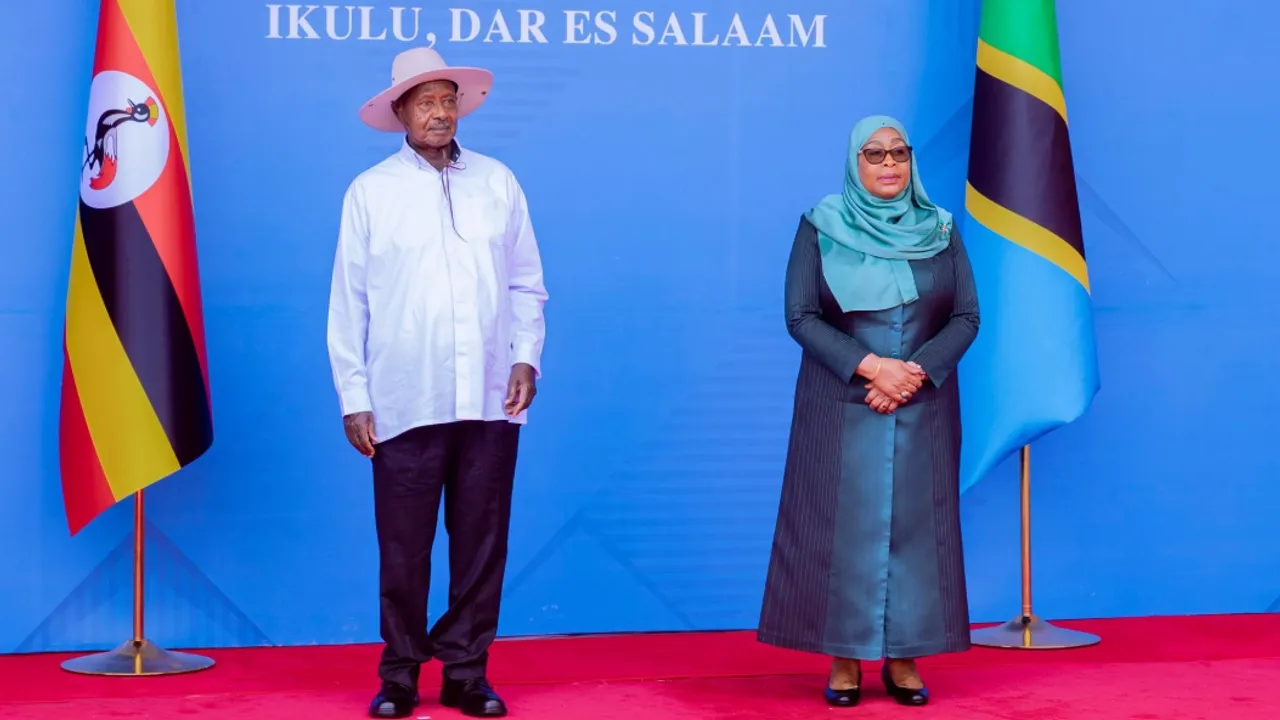
Uganda's President Yoweri Museveni and his Tanzanian counterpart, Samia Suluhu Hassan, have endorsed a proposal to build an oil refinery in Tanzania's port city of Tanga.
The presidents are confident that the move will turn East Africa into an integrated energy hub, as the proposed project aims to bring together oil refining, storage, and transportation services.
A Memorandum of Understanding was signed on Thursday, August 6, 2026 by the Uganda National Oil Company, the Tanzania Petroleum Development Corporation, and Vitol Bahrain Exempt Company to provide a framework for the proposed Tanga Regional Energy Hub on the Indian Ocean coast.
Presidents Suluhu Hassan and Museveni, who was on a two-day visit to Tanzania, witnessed the signing ceremony.
Potential $20-billion funding
Vitol's participation is expected to bring international financing, technical expertise, and access to global energy markets.
The Tanga project's proponents say that it builds on the East African Crude Oil Pipeline (EACOP), and could attract more than $20 billion in investment if fully implemented.
EACOP is a 1,443-kilometre underground crude export pipeline linking Uganda and Tanzania, and is currently in its final stages of construction.
The pipeline is designed to transport about 230,000 barrels of crude oil per day from Uganda's oilfields to Tanga.
Domestic processing of natural resources
According to Tanzania's Energy Minister Deogratius Ndejembi, EACOP will transport crude oil, while the Tanga hub will turn that oil into wider economic opportunities.
Uganda's Energy Minister Monica Musenero said the project would fulfill Africa's long-held goal of processing its natural resources locally and exporting finished products.
Officials say the hub would create jobs in engineering, operations, maintenance, and technical services, while improving energy security.
The project is expected to complement Uganda's planned Hoima Oil Refinery, whose final investment decision has been pushed to early 2027, with operations expected between 2029 and 2030.
Cross-border natural gas pipeline
While the proposed 60,000-barrel-per-day Hoima refinery will mainly serve Uganda's domestic market, Tanga is designed as a regional industrial and logistics centre serving East and Central Africa.
The two countries are also considering building a cross-border natural gas pipeline, with gas studies expected to be completed by October 2026.
Uganda has also secured $250 million in funding from the World Bank for its part of a planned 400-kilovolt electricity interconnector, which could strengthen regional power trading.
Uganda, which has an estimated 1.6 billion barrels of recoverable crude, is targeting commercial oil production between 2026 and 2027.
Competition from Dangote
The country currently spends an estimated $2 billion yearly on fuel imports.
If implemented, the Tanga project could mark a significant shift in East Africa's energy strategy, turning the region from an oil producer and exporter to a local refiner. This could build a wider regional industrial economy.
Although the proposed refining capacity of the Tanga hub has not been revealed, the project could potentially compete with businessman Aliko Dangote's proposed oil refinery in Lamu, on Kenya's coast.
The Nigerian billionaire is planning to build a 700,000-barrel-per-day oil refinery in Lamu at an estimated cost of $17 billion. Construction is projected to take 30 months.


Ethiopia's army says it has foiled attacks by Tigray rebels
The army said it inflicted heavy personnel and equipment losses on the TPLF rebels.
The cost of UNGA: Who pays and who profits?
Member states make mandatory annual contributions based on capacity to pay, factoring in gross national income, external debt burden and per-capita income.
Sudan rejects US remarks questioning government legitimacy amid Burhan visa dispute
Khartoum urges Washington to respect Sudan’s sovereignty as activists and journalists criticise the reported linking of Transitional Sovereignty Council Chairman Abdel Fattah al-Burhan’s UN visa to a proposed 90-day truce.