Ankara's annual trade with 57-member bloc hit $136.5B last year, with a target to raise OIC's share of total trade to 30 percent by 2028.
Türkiye's trade with the Organisation of Islamic Cooperation (OIC) nations rose 10 percent year-on-year in the first 10 months to $122.8 billion.
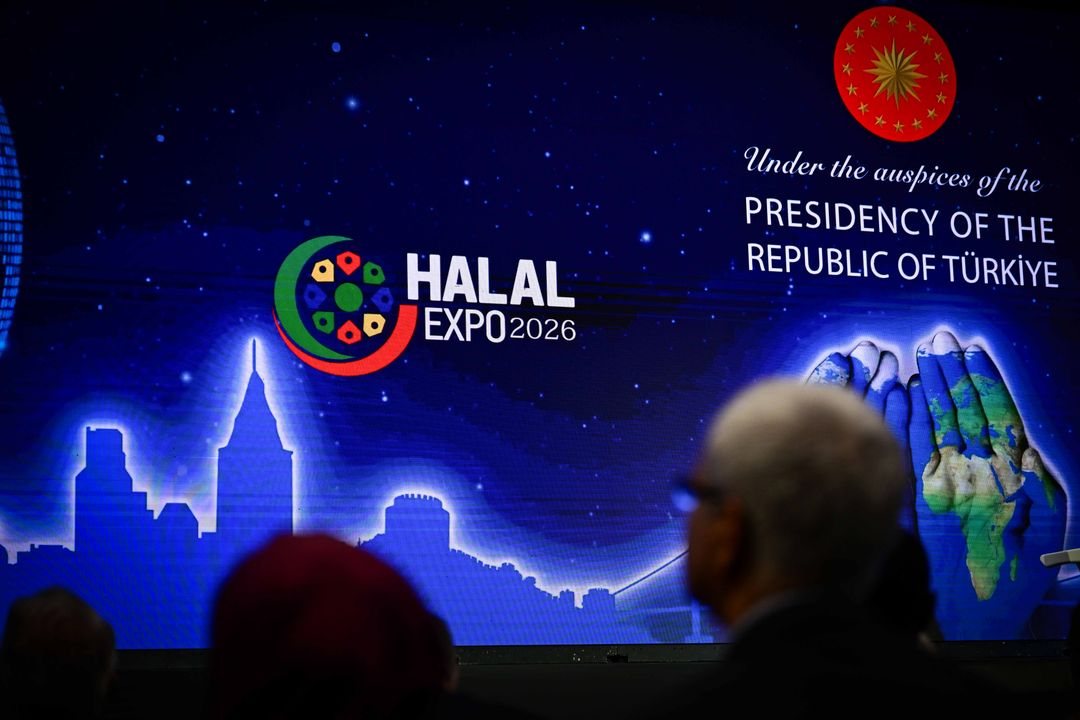
Speaking at the 12th World Halal Summit and OIC Halal Expo in Istanbul, the Turkish Trade Minister Omer Bolat said on Wednesday that annual trade with OIC member states reached $136.5 billion last year.
Held at the Istanbul Expo Centre under the auspices of President Recep Tayyip Erdogan and coordinated by Ankara’s trade ministry, the events bring together 225 companies from 25 countries.
He said the OIC's share in Türkiye's exports climbed from 11 percent in 2002 to 27 percent this year, targeting a 30 percent share in total trade by the end of 2028.
Bolat noted that Türkiye's economy has grown more than sevenfold in dollar terms since 2002 to $1.7 trillion, while merchandise exports rose from $36 billion to $285.5 billion.
He said the 57 OIC member states hold a combined national income of roughly $10 trillion and averaged 4.1 percent economic growth last year, outpacing the 3.4 percent global rate.
OIC trade
Intra-OIC trade totalled $979 billion, or 19.5 percent of member states' foreign trade, Bolat said, underscoring the Trade Preferential System (TPS-OIC) for reducing tariffs and non-tariff barriers.
He said global halal consumption across food, tourism, textiles, pharmaceuticals, cosmetics, and media reached $2.6 trillion in 2024, up 7 percent annually, and is projected to top $3.5 trillion by 2029.
Food accounts for $1.5 trillion of that halal consumption, Bolat noted, while global Islamic finance assets have separately reached $6 trillion.
Stressing common standards, he said the Standards and Metrology Institute for Islamic Countries (SMIIC) has published 81 standards, including 21 directly for the halal sector, across 49 member and observer nations.
Bolat added that Türkiye's Halal Accreditation Agency has authorised 147 bodies covering 3,000 halal certificates, while this year's expo expects at least 35,000 visitors, up from 31,800 last year.
Halal economy
Afghanistan's Deputy Minister of Industry and Commerce Mawlawi Shahabuddin Saqeb said the halal economy should be viewed beyond a commercial market as a driver of sustainable development, job creation, and investment.
He invited Turkish and Islamic-world investors to Afghanistan and urged OIC nations to align halal standards, build regional logistics networks, and turn conference talks into practical contracts and joint projects.
Vietnam's Deputy Foreign Minister Nguyen Minh Hang praised the summit's sustainability theme, saying the halal economy aligns closely with green values and sustainable development.
She noted that Vietnam recorded 9 percent GDP growth in the first nine months of 2026 and is leveraging its agriculture, fishery, food-processing sectors, and 17 free trade agreements to build a domestic halal ecosystem.
Hang said Vietnam has established a National Halal Certification Center and issued a government decree on halal quality management as it seeks deeper integration into global value chains.
Muslim-friendly tourism
She outlined three priorities for partnering with Türkiye and global stakeholders: boosting two-way trade and investment, strengthening mutual recognition in halal certification, and expanding Muslim-friendly tourism and human resource exchanges.
Safi Arpagus, head of Türkiye's Presidency of Religious Affairs, said halal compliance must be evaluated across the entire production chain rather than solely through final products.
He warned that reckless consumption, environmental destruction, and neglecting human health in production constitute a grave moral burden that harms future generations.
Arpagus stressed that building trust in the global halal food industry requires truthfulness, transparency, and accountability at every stage of production, backed by scientifically competent and independent certification mechanisms.
He cautioned that halal certification must not be left to unqualified or purely commercial actors and pledged continued work under the OIC to strengthen public awareness and scientific research.
TRT World / AA — TRT World / AA
Photo: AA