The new monthly minimum wage of $136 falls short of workers’ revised demand for $144, leaving uncertainty over whether the increase will end weeks of unrest that disrupted the country’s vital garment industry.
Bangladesh raised the minimum monthly wage for entry-level garment workers on Wednesday by 36 percent to 17,000 takas ($136) from 12,500 takas ($100) after weeks of violent protests that closed factories and disrupted production as workers demanded the minimum wage be doubled.
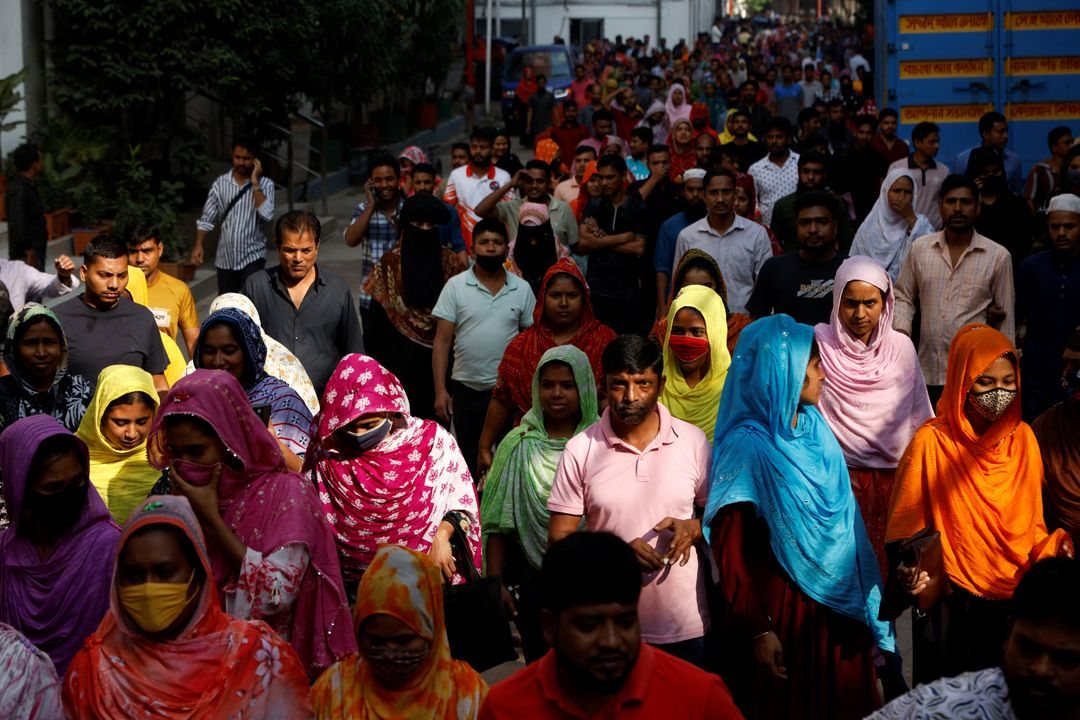
The workers took to the streets, fought with police and attacked factories for weeks as they demanded better wages and said higher inflation had made their lives difficult.
The hike was the smallest percentage increase since the sector's first minimum wage was set in 1986. Wages were raised by 56 percent in 2023, 51 percent in 2018 and 77 percent in 2013.
The garment industry is Bangladesh’s main sector to earn foreign currency through exports, mostly to the United States and Europe. It represents about 80 percent of the country’s total exports and directly employs about 4 million workers.
A government-appointed wage board approved the new wage structure early on Wednesday after nearly 12 hours of meetings between workers’ and employers’ representatives.
The six-member board, including two representatives each for workers and employers, approved the new wage structure in a 4-2 vote supporting 17,000 takas as the minimum wage. The other two board members sided with workers’ revised demand for 18,000 takas ($144) per month.
The wage board also revised monthly wages for other workers.
The government-appointed wage board's decision came on Wednesday around 2 am (2000 GMT) after nearly 12 hours of talks between workers' and employers' representatives.
Workers blocked a major highway in Gazipur, a garment manufacturing hub on the outskirts of Dhaka, on Wednesday, prompting police to fire tear gas and sound grenades to disperse them, police said.
The new monthly minimum wage of $136 falls short of workers’ revised demand for $144, leaving uncertainty over whether the increase will end weeks of unrest that disrupted the country’s vital garment industry.
North Korea orders Swiss diplomatic office chief Sylvain Astier to leave within 48 hours, accusing Bern of a hostile act over sanctions targeting the Songdowon International Children's Camp.