South Africa identifies hantavirus strain linked to cruise ship
Editor:
Halimatou HAMADOU DJIBO


The WHO says it is coordinating international efforts to manage the outbreak and prevent further spread.

South Africa has identified the Andes strain of hantavirus, which spreads human-to-human, in two people who came off a cruise ship hit by an outbreak of the disease, the health minister's presentation to parliament showed on Wednesday.
The outbreak occurred aboard the MV Hondius, a polar expedition vessel operated by Oceanwide Expeditions, which is currently stationed off Cabo Verde.
Other strains of hantavirus are more commonly transmitted to humans through contact with infected rodents or their urine, droppings or saliva.
The cruise departed from Argentina around three weeks ago with approximately 150 passengers, travelling through Antarctica and other remote regions before heading towards West Africa.
Contact tracing
The World Health Organization says it had begun tracing people on a flight between the island of Saint Helena and Johannesburg taken by a cruise ship passenger who died of hantavirus.
The Dutch woman, whose husband died of the virus on the ship now stuck off Cabo Verde, disembarked in Saint Helena with "gastrointestinal symptoms" on April 24. Her condition "deteriorated during a flight to Johannesburg," and she died on April 26, WHO said. "Contact tracing for passengers on the flight has been initiated," it said.
Around 150 people are still stuck on the Hondius that was carrying mostly British, American and Spanish passengers on a trip that set off from Argentina in March and is now off the coast of West Africa.
The seven cases linked to the virus included three people who had died, one who was critically ill, and three with mild symptoms, the WHO said in a statement late on Monday.
Respiratory infection
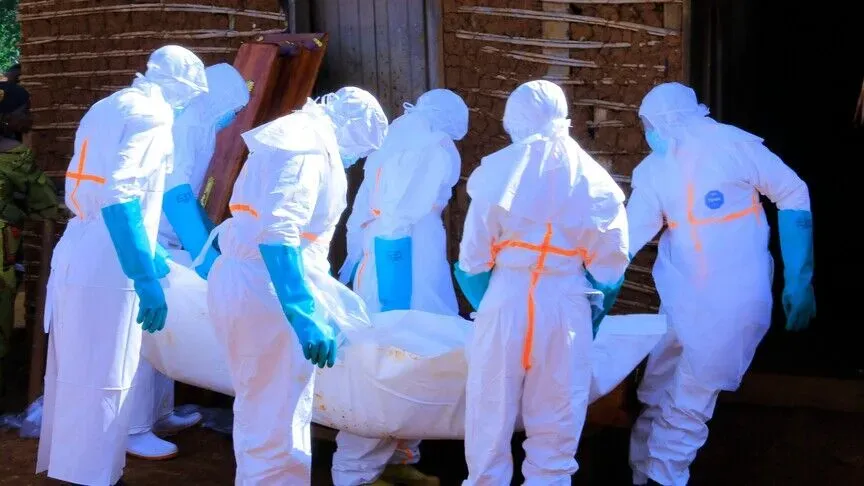
Health experts warn that hantavirus, a rodent-borne disease, can cause severe respiratory illness.
It is typically transmitted when particles from rodent urine or droppings become airborne. While human-to-human transmission is rare, it remains possible in certain cases.
The illness usually begins with flu-like symptoms but can rapidly escalate to heart and lung failure.
According to the Centers for Disease Control and Prevention, the virus has a fatality rate of around 40%.








CAS to hear Senegal's appeal on 2025 AFCON title awarded to Morocco
Senegal are contesting the Confederation of African Football's decision to declare Morocco champions, despite Senegal beating the hosts 1-0 after extra time.
Kosovo swears in Shiroka-Pula as president, averting snap elections
Prime Minister Albin Kurti welcomes Shiroka-Pula's election, describing it as a sign of institutional stability.
Merz warns extremism is entering German parliaments after AfD victory
The election of AfD lawmaker Tobias Rausch as Saxony-Anhalt’s state parliament president has intensified debate over Germany’s political firewall and put pressure on Chancellor Friedrich Merz.




All rights reserved. Newstimetr © 2026