Senegal's parliament rejects revised budget crucial to IMF bailout deal
Editor:
Tuğçe Nur Kaya


The National Assembly's rejection of the 2026 revised budget bill casts uncertainty over the IMF programme.
Senegal's National Assembly on Tuesday rejected a key budget bill that was seen as crucial to restoring public finances as the country finalises an IMF bailout.
Senegal in September announced it had struck a $2.2-billion International Monetary Fund deal aimed at stabilising its economic situation.
The National Assembly's rejection of the 2026 revised budget bill, however, casts uncertainty over the IMF programme, with the Fund's executive board yet to announce final approval which is subject to certain conditions.
Senegal's Pastef party, which holds an overwhelming majority in parliament, has long made clear its rejection of the revised budget.
Political feud
Following a morning debate, the session's presiding lawmaker, El Malick Ndiaye, announced that "we consider the bill rejected", after 126 lawmakers voted against it, 20 voted for it and three abstained.
Parliament had already sent the bill back to committee a week ago and the Pastef majority in the finance committee has rejected the bill twice.
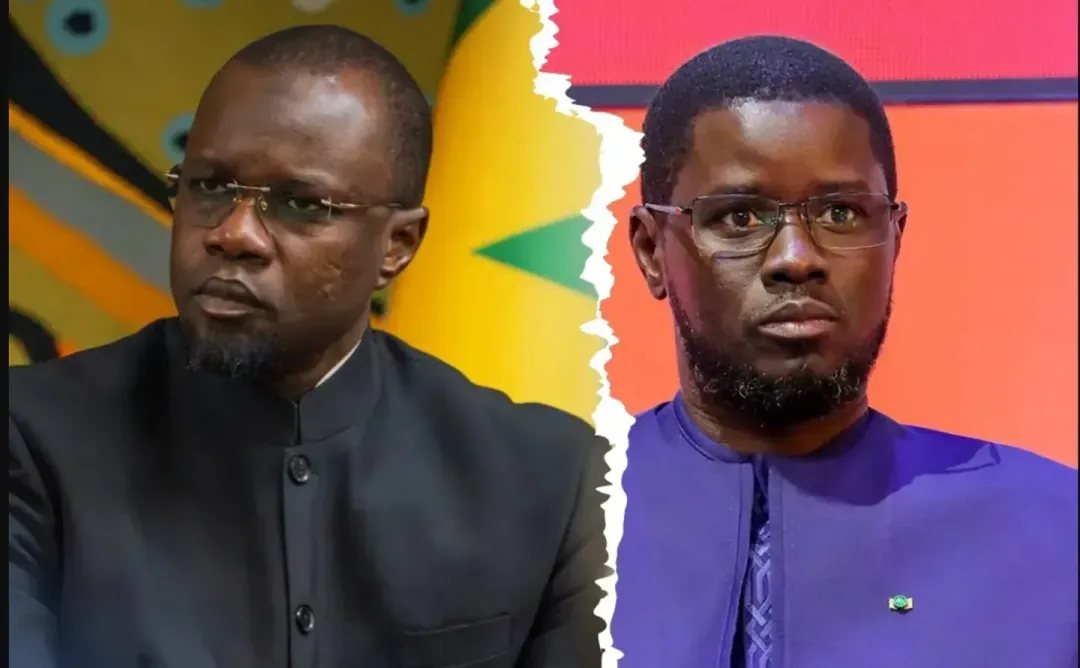
Pastef's leader Ousmane Sonko, who is engaged in a political feud with President Bassirou Diomaye Faye, is speaker of the National Assembly.
Tuesday's National Assembly debate was cut short upon request from a Pastef lawmaker Amadou Ba, who used parliamentary procedure to trigger a direct vote.
Lacked relevant data
He said lawmakers lacked relevant data and accused the government of having not provided necessary documents.
Another Pastef lawmaker, Ayib Daffe, said that measures in the bill that were aimed at combating the cost of living "do not suit us. (There are) no measures planned to stabilise fuel prices", he said.
The finance ministry said in a statement released Saturday that Pastef's rejection comes "in a context of severely limited room for manoeuvring, difficulties in accessing financial markets and ongoing negotiations" with the IMF.
Senegal faced public-sector debt estimated at 132 percent of GDP at the end of 2024.
The government indicated Friday that rejection of the budget would notably compromise the supply of electricity, payments owed to businesses and back pay for teachers.
TRT Afrika / AFP — TRT Afrika / AFP





Türkiye's intelligence chief holds talks in UAE on regional security
Ibrahim Kalin was received by UAE Vice President Mansour bin Zayed in Abu Dhabi alongside senior Emirati security officials.
Global internet users reach 6.3B this year: report
Internet access remains sharply divided, with 93 percent of people in high-income countries online compared with just 32 percent in low-income nations, according to a report.
US midterms kick off as voters weigh balance of power in Congress
Republicans currently control both chambers of Congress — House and Senate — while Democrats seek to gain control of at least one.




All rights reserved. Newstimetr © 2026