Palestinian official calls for easier access to international funds as Gaza faces widespread environmental destruction, with 97 percent of farmland contaminated or inaccessible.
The head of the Palestinian Environment Quality Authority has urged COP31 to recognise the heightened climate vulnerabilities of countries under occupation and make it easier for them to access international climate finance.
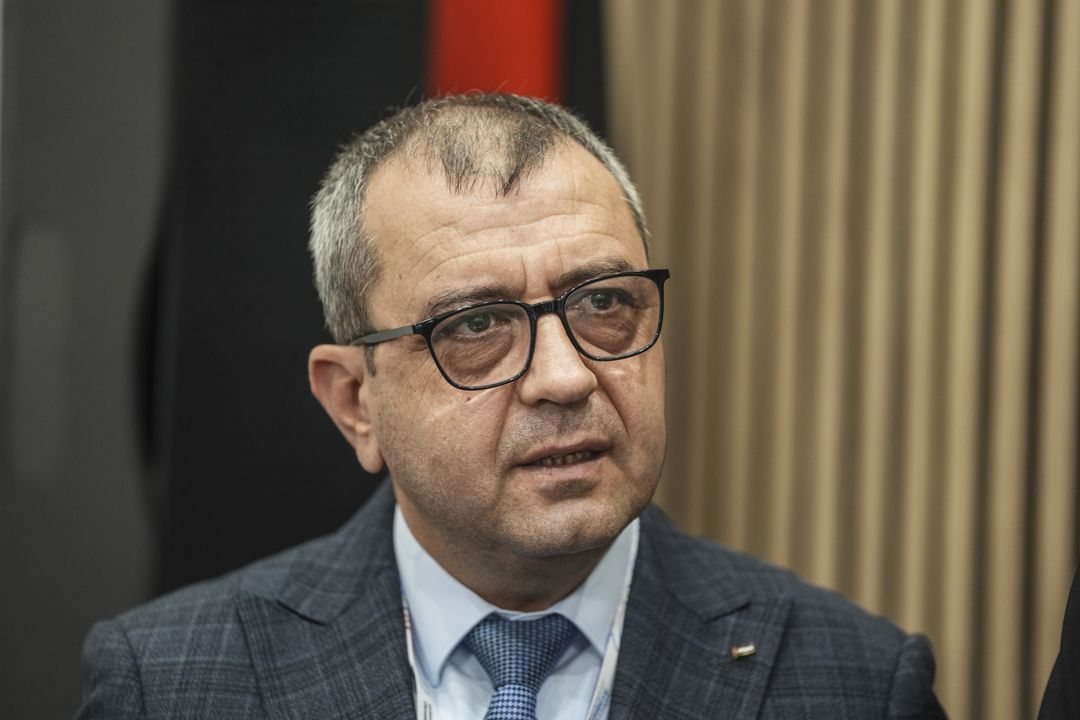
Speaking to Anadolu on the sidelines of the summit's second week in Türkiye’s Antalya, Zaghloul Samhan said Palestine wanted an outcome that secured international funding while protecting Palestinian control over land and natural resources.
He said countries facing occupation and crises should be prioritised according to the severity of their needs, calling for easier access to environmental and climate funding.
Samhan also argued that developing countries should prioritise climate adaptation over emissions cuts, given their limited contribution to global emissions and greater exposure to climate impacts.
“The developed countries should pay for their effects on the climate, and the developing countries should benefit from that finance,” he said.
Barriers to climate funding
Samhan called for removing institutional and procedural barriers that block Palestine from tapping international mechanisms — specifically pointing to the Global Environment Facility (GEF) and the Green Climate Fund (GCF).
"We would like to see Palestine one day have access to GEF funds," he said, adding that procedures for accessing the GCF and other environmental funds must be streamlined.
Both mechanisms serve as the main financial arms of the UN climate framework, yet political restrictions have barred Palestine from accessing major GEF project funds, while GCF financing has remained limited due to lengthy accreditation and project-approval hurdles.
Unlocking those funds, he said, would allow Palestine to carry out adaptation and mitigation projects outlined in its nationally determined contributions (NDCs).
Gaza's environmental infrastructure devastated
Israel’s genocidal war on Gaza has destroyed most of the enclave’s environmental infrastructure. Samhan said around 97 percent of Gaza's agricultural land has been contaminated or remains inaccessible, undermining a sector that had been a vital food source for the population.
A joint UN Food and Agriculture Organization and UNOSAT satellite assessment found that only 3 percent of Gaza's cropland remained accessible and undamaged as of August 2026. A World Bank-UN-EU report estimated that rebuilding agriculture and food systems would require nearly $10.5 billion.
He said reconstruction was needed across almost every environmental sector, including wastewater treatment, renewable energy, solid waste management and facilities handling medical and hazardous waste.
Water infrastructure, including groundwater wells, desalination plants, distribution networks and reservoirs, had also sustained extensive damage.
Samhan called for the rehabilitation of Wadi Gaza, the enclave's only nature reserve, describing it as one of its most polluted areas.
Damaged sewage and waste systems have also allowed wastewater and debris to flow into the Mediterranean, contaminating coastal and marine ecosystems.
Restoring Gaza's basic services, farmland and natural environment would require substantial financial support, he said.
Praise for Türkiye's COP31 presidency
Despite the challenges, Samhan said he remained hopeful that the summit could deliver progress, praising Türkiye's support and its presidency of COP31.
“Always there is hope. We are fighting all day in order to fix those issues,” he said.
He described Türkiye's hosting of the summit as “one of the best COPs that I ever attended”, adding that it would be difficult for other countries to match its efforts.
TRT World / Anadolu Agency — TRT World / Anadolu Agency
Photo: Anadolu Agency