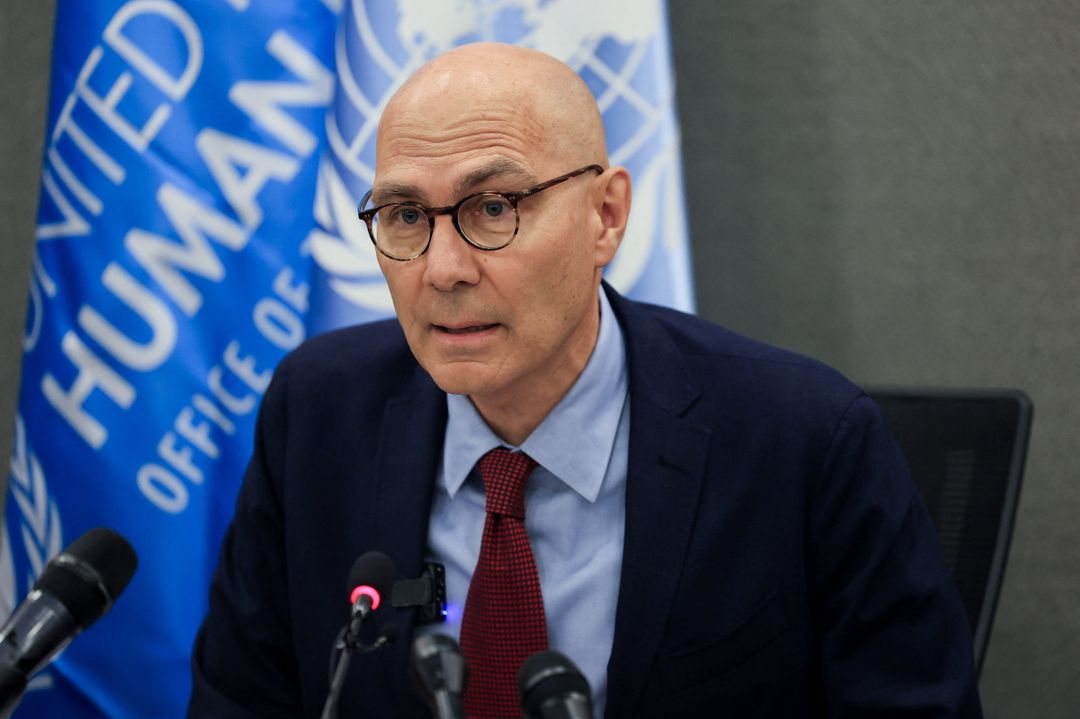
Pakistani envoy Syed Haider Shah tells the UN Security Council that decisions on using nuclear weapons must remain in human hands.
Pakistan told the UN Security Council on Tuesday that decisions on the use of nuclear weapons must remain under human control, warning that artificial intelligence could leave leaders less time to act and increase the risk of miscalculation.
Speaking at a council debate on “conflict resolution in an era of rapid technological change”, Pakistani Ambassador Syed Haider Shah said technology should “serve to address common challenges facing the entire humanity”, according to a statement from Pakistan’s UN mission.
Shah called for all UN member states, including developing countries, and all segments of society to take part in the “democratic, inclusive and equitable development of emerging technologies that are consequential for humanity at large”.
Warning over arms race
Shah warned that emerging technologies should not “supercharge the ongoing arms race impacting global peace and security”.
“In the military domain, we need measures of restraint and confidence-building to address the risks of miscalculation and compressed decision-making,” Shah said.
“This is most critical in the nuclear domain, where decisions on the use of nuclear weapons must remain under human control, and AI systems must never be used to target nuclear command, control and communications systems,” he added.
Global nuclear stockpiles
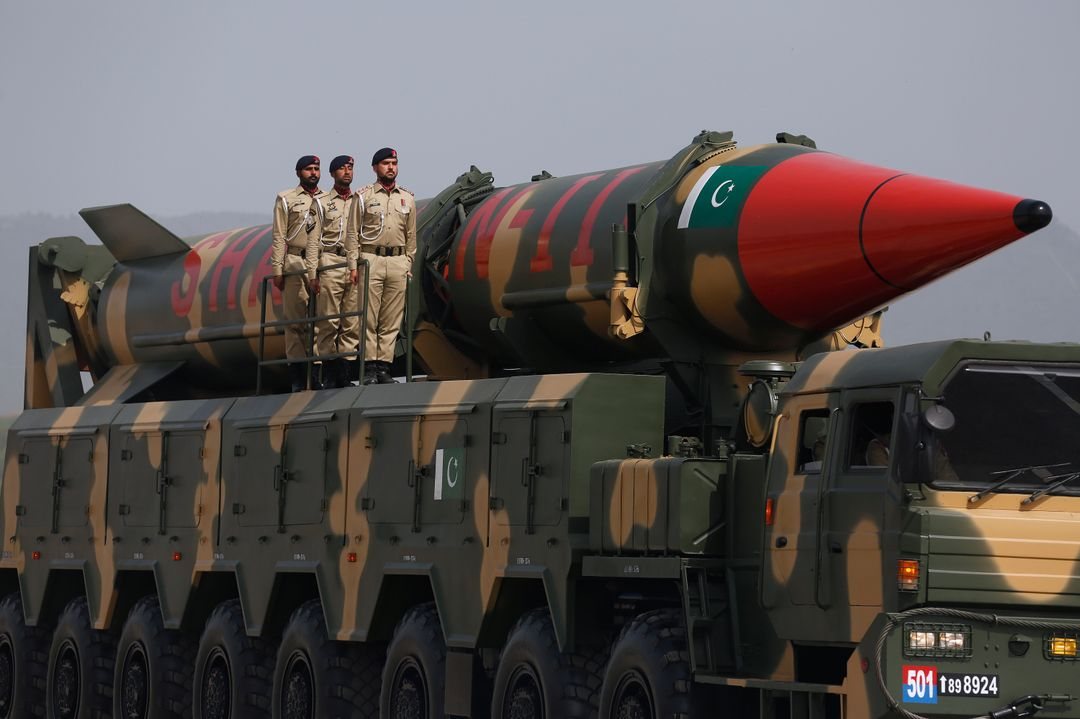
Pakistan is one of nine nuclear-armed countries, along with the US, Russia, China, France, the UK, India, North Korea and Israel. Israel maintains a policy of nuclear ambiguity and has neither officially confirmed nor denied possessing nuclear weapons.
The Stockholm International Peace Research Institute estimates that the nine countries hold a combined 9,745 nuclear warheads in their military stockpiles. Russia and the US have the largest stockpiles, with about 4,400 and 3,700 warheads respectively.
UN Secretary-General Antonio Guterres on Tuesday warned that artificial intelligence is transforming modern warfare, accelerating the spread of disinformation, and intensifying geopolitical competition.
He urged countries to establish stronger international safeguards to prevent emerging technologies from undermining global peace and security, including through autonomous weapons.
Drawing comparisons with aviation, medicine, and nuclear energy, Guterres said public confidence in powerful technologies has depended on systems of oversight and accountability.
“The same standard must apply to artificial intelligence,” he said.
The new monthly minimum wage of $136 falls short of workers’ revised demand for $144, leaving uncertainty over whether the increase will end weeks of unrest that disrupted the country’s vital garment industry.
North Korea orders Swiss diplomatic office chief Sylvain Astier to leave within 48 hours, accusing Bern of a hostile act over sanctions targeting the Songdowon International Children's Camp.