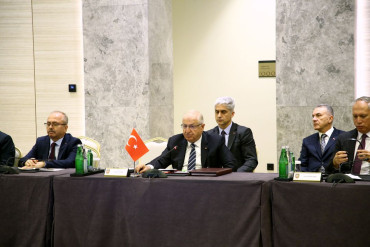
The South African jurist's career spans the struggle against apartheid, landmark genocide prosecutions and a UN investigation that concluded Israel had committed genocide in Gaza.
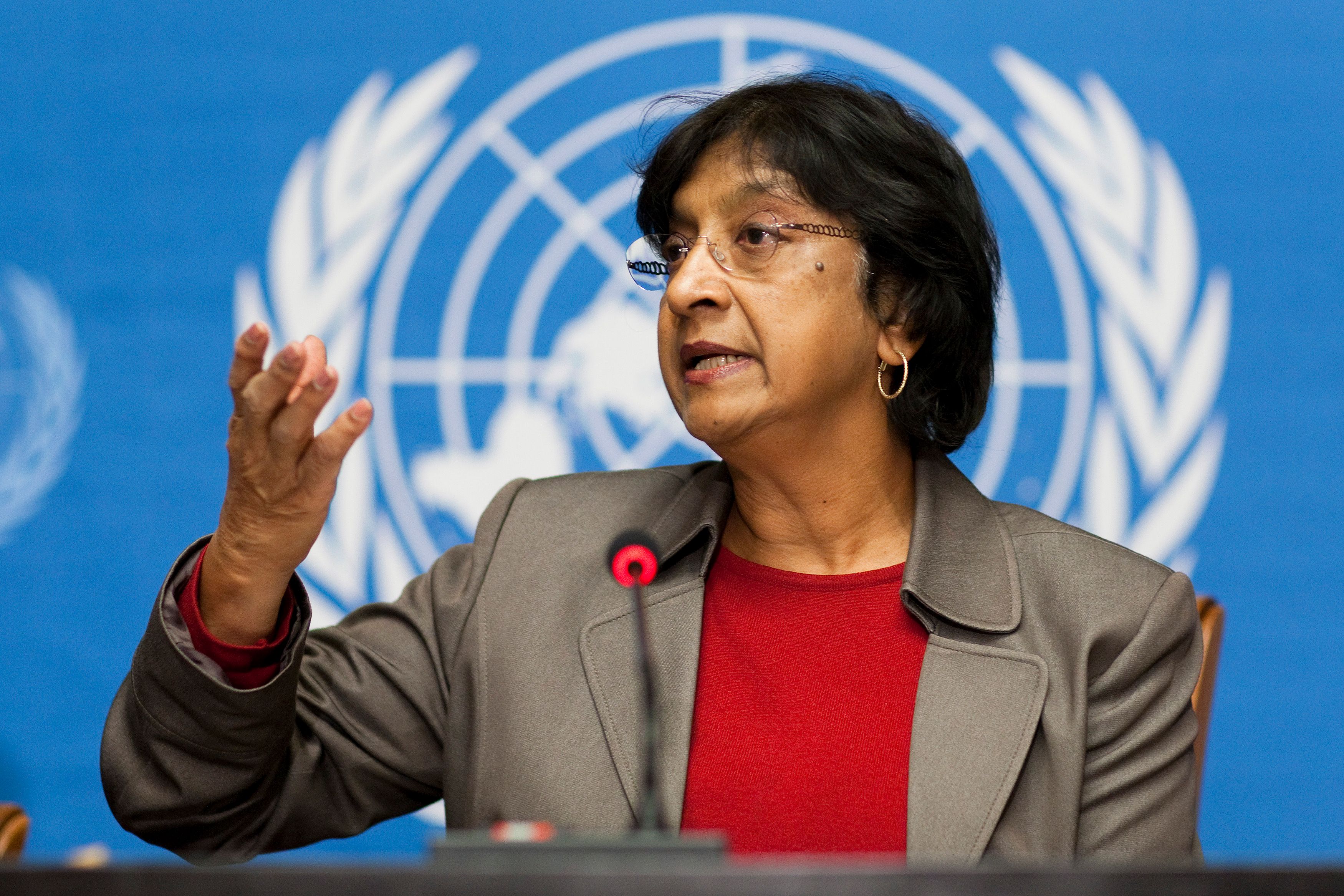
Navanethem ‘Navi’ Pillay, the South African jurist who led a United Nations commission that concluded Israel had committed genocide in Gaza, was awarded the 2026 Nobel Peace Prize on Friday for her efforts to promote peace and international law.
Announcing the award, Jorgen Watne Frydnes, chair of the Norwegian Nobel Committee, said Pillay had been instrumental in ensuring that war crimes, crimes against humanity and genocide are prosecuted.
The committee praised her decades of work holding states and national leaders accountable, highlighting a career spanning South Africa's struggle against apartheid, international criminal tribunals and the UN's human rights system.
The 85-year-old jurist's award comes as international legal institutions face growing political pressure over their efforts to hold powerful states and officials accountable for international crimes.
The significance of Pillay’s findings lies in the legal process and evidence underpinning them, according to Nasir Qadri, an international law practitioner and critical legal scholar at Koc University.
“The commission built its case on an evidentiary record and applied the Genocide Convention’s specific intent standard through the same legal framework Pillay helped develop at the International Criminal Tribunal for Rwanda (ICTR),” Qadri tells TRT World.
“There, her rulings established that rape and sexual violence could constitute acts of genocide.”
“A jurist who spent three decades developing international law’s capacity to address mass atrocities has now applied that framework to a conflict that the world’s most powerful states have placed beyond the reach of accountability,” he adds.
From apartheid South Africa to international courts
Born in Durban in 1941 to a family of Indian Tamil descent, Pillay grew up under South Africa's apartheid system, which enforced racial segregation and discrimination.
Her experiences in a society built around racial hierarchy helped shape a legal career dedicated to challenging injustice.
In 1967, she became the first woman to establish a law practice in Natal Province, now part of KwaZulu-Natal.
As a lawyer, she defended opponents of apartheid, including activists persecuted by the white minority government.
Her appointment to South Africa's High Court in 1995 marked another milestone: she became the first Black woman to serve as a judge on the country's highest provincial court.
Pillay subsequently moved onto the international stage, joining the International Criminal Tribunal for Rwanda in 1995.
She served for eight years, including four as its president, helping prosecute those responsible for the 1994 genocide, in which approximately 800,000 people were killed.
Her work at the tribunal helped bring sexual violence into sharper focus as a weapon of genocide and a crime under international law.
The tribunal's landmark 1998 judgment in the case of Jean Paul Akayesu established that rape and sexual violence could constitute acts of genocide when committed with the requisite intent.
Pillay later served as a judge at the International Criminal Court from 2003 to 2008 and became the UN High Commissioner for Human Rights in 2008, holding the position until 2014.
In that role, she advocated for accountability for human rights violations and pressed governments to meet their obligations under international law.
Gaza and the fight for accountability
Pillay's recent work has brought her to the forefront of international efforts to hold Israel accountable for its crimes in Gaza.
As chair of the UN Independent International Commission of Inquiry on the Occupied Palestinian Territory, including East Jerusalem, and Israel, she oversaw a report published in September 2025 that concluded Israel had committed genocide against Palestinians in Gaza.
After examining brutal Israeli military aggressions, the destruction of civilian infrastructure, restrictions on humanitarian assistance and statements by political and military officials, the commission found that Israel had committed four of the five acts defined as genocide under the 1948 Genocide Convention.
It concluded that these acts were carried out with the specific intent to destroy Palestinians in Gaza, in whole or in part.
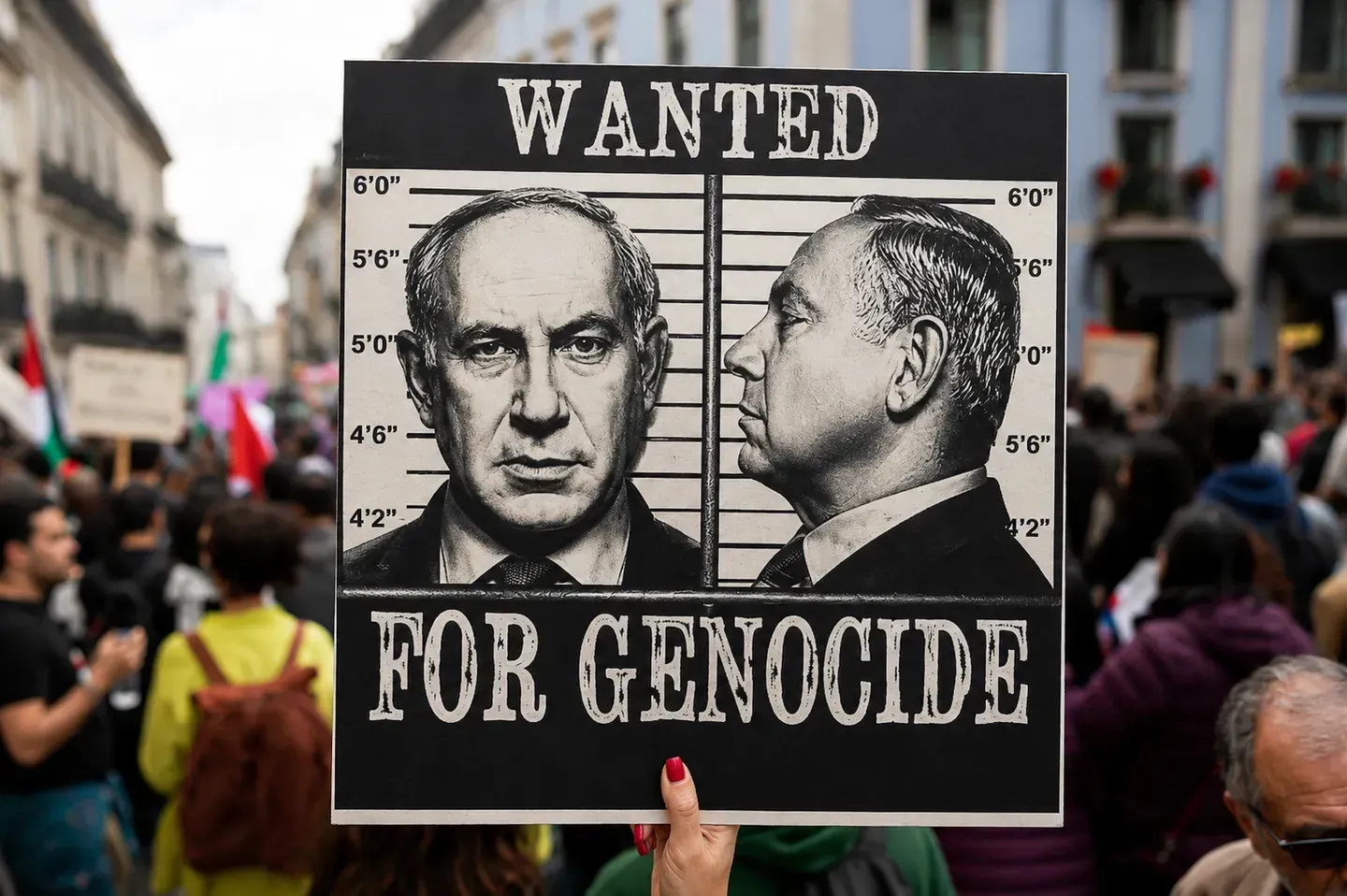
The commission also found that Israeli President Isaac Herzog, Prime Minister Benjamin Netanyahu and former Defence Minister Yoav Gallant had incited genocide.
Israel rejected the findings, with its Foreign Ministry dismissing the report as a “libellous rant” and Ambassador Daniel Meron calling it “scandalous” and “fake”.
The commission, meanwhile, grounded its conclusions in evidence, and its findings directly challenged Israel's efforts to reject its genocide and evade international accountability.
“What Israel and the US have done to the commission Pillay chaired, the International Criminal Court (ICC) and Palestinian human rights organisations, including Al Haq, follows a familiar pattern,” Qadri says.
“Since modern international accountability institutions were established, states have sought to constrain them when their work threatens powerful interests.”
“Those of us who have worked in this field across Kashmir and Palestine have never operated under the illusion that the law applies uniformly. What the past three years have done is strip away that pretence for everyone else,” he adds.
The Nobel Peace Prize awarded to former International Criminal Court judge Navi Pillay is especially important given current attacks on international law, the president of the ICC said.
"At a time of profound challenges to the international legal order and the rule of law, this recognition carries particular significance," said Tomoko Akane in a statement.
The cost of challenging Israel's impunity
The pressure on international accountability efforts extended beyond Pillay's commission.
In July 2025, the US administration imposed sanctions on Francesca Albanese, the UN special rapporteur on the occupied Palestinian territory, after she called for accountability over Israeli genocide in Gaza and urged international criminal proceedings involving Israeli and US nationals.
The measures restricted her access to the US financial system and barred her from entering the country.
In May 2026, a federal judge found that the measures likely violated Albanese's free speech rights. An appeals court subsequently allowed the sanctions to be reinstated while the legal challenge continued.
Pillay, Chris Sidoti and Miloon Kothari, the three members of the commission, resigned in July 2025, shortly before the publication of its genocide findings.
Their departure came amid intensifying pressure on UN accountability mechanisms, including Washington's campaign against Albanese.
Accountability mechanisms have never applied uniformly to states within the Western security architecture, according to Qadri.
“Sanctions against ICC judges and the designation of Palestinian human rights lawyers under counterterrorism instruments are measures deployed when findings become too legally rigorous to be contained through institutional pressure alone,” Qadri says.
“What has changed is that the evidentiary record produced by Pillay’s commission, the ICC prosecutor and the ICJ’s provisional measures has reached a level of legal authority that cannot be neutralised simply by attacking the institutions that produced it.”
“The states that have spent three years pursuing that strategy have, through their own conduct, helped create the most comprehensive public record of the architecture of impunity that international law has ever generated,” he adds.