Natural vs. artificial grass: Why Salah's exclusion from South Sudan match sparks wider conversation
Source:
TRT Afrika / TRT Afrika English


When Egypt's football star Mohamed Salah reportedly requested to be excluded from the squad facing South Sudan on September 29, 2026 over pitch-condition concerns, the world took note and reacted in a mixed fashion.
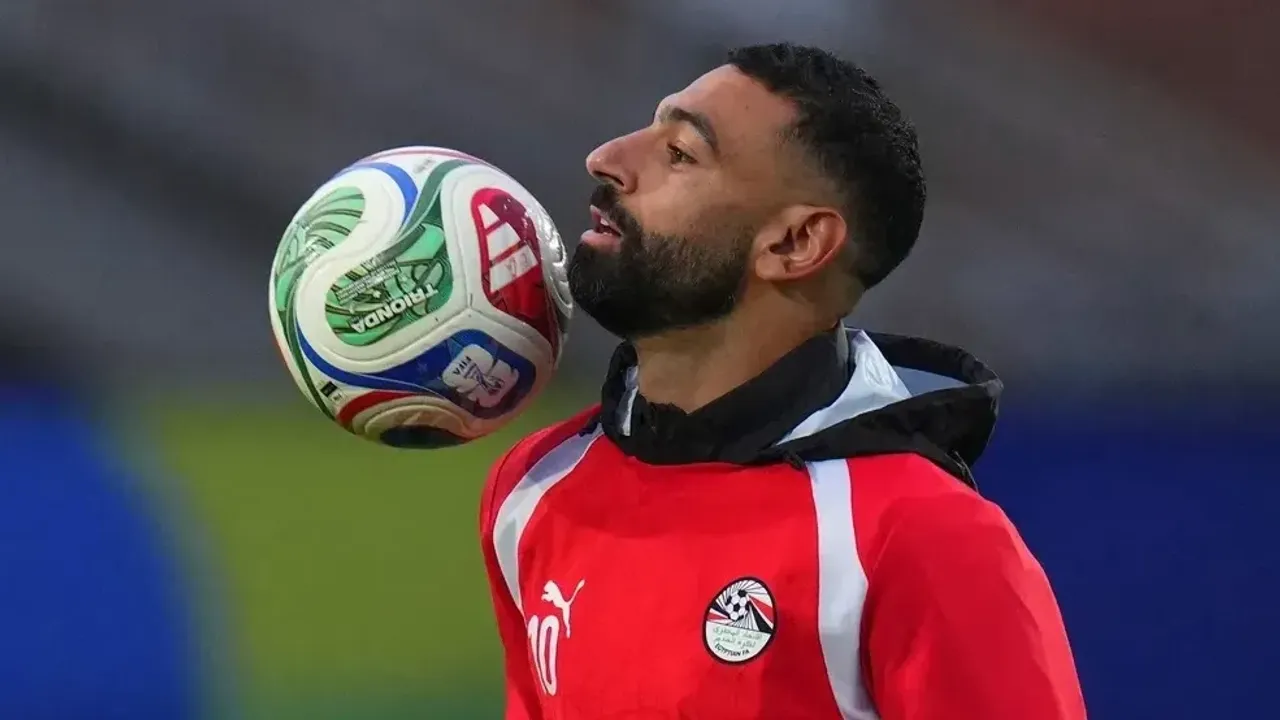
When Egypt's football star Mohamed Salah reportedly requested to be excluded from the squad facing South Sudan on September 29, 2026 over pitch-condition concerns, the world took note and reacted in a mixed fashion.
Some football fans and stakeholders supported Salah's decision, which was jointly taken with the Egyptian football team's technical staff, while others interpreted it as a slight against South Sudan's national infrastructure and, possibly, a lack of respect for the fixture. Egypt and South Sudan, alongside Malawi and Angola, are pooled in Group B of the 2027 Africa Cup of Nations (AFCON) qualifiers.
In a statement published a few days to the Egypt-South Sudan fixture, the Egyptian Football Association's (EFA) said Salah's omission was a cautionary strategy aimed at "protecting" the player against potential injury.
"The Egypt national team's technical staff has decided to rest Mohamed Salah for the match against South Sudan because of the playing surface," EFA said on September 26.
Backlash
The statement attracted widespread backlash, and social media was subsequently awash with memories of star footballers, such as Senegal's Sadio Mane, who previously played at the Juba National Stadium without raising concerns about its surface conditions.
Back at home, some fans and Egyptian media appeared to link Salah's absence to frustration after he was subbed off midway into the second half of an AFCON qualifier match against Angola on September 25.
Egypt's coach Hossam Hassan played down the speculations, saying his relationship with Salah, who he described as "one of the team's key pillars", was good.
"We need Salah in the upcoming matches. The well-being of every player is my top priority, and I have great confidence in all the players," Hossam said.
'Grass is better'
But beneath the controversy around Salah and a 5-0 scoreline favouring Egypt against South Sudan on September 29, the debate over natural-versus-artificial playing surfaces continues to simmer. Why does it matter whether a match is played on natural grass or artificial turf?
Robert Matano, the head coach of Kenya Premier League side the Kenya Commercial Bank (KCB), tells TRT Afrika that natural grass has "every advantage you can imagine of" over artificial turf.
"Grass is a better playing surface for footballers because it is softer than artificial turf, also known as artificial grass. It (natural grass), therefore, minimises the possibility of suffering severe injuries in case a player falls to the ground," Matano, who has won four Kenya Premier League titles while coaching two separate clubs (Sofapaka FC and Tusker FC) — and is Kenya's most successful club-level manager — said.
The coach recounted his players sustaining an "unusually high number of injuries" in September 2021 when his then-club, Tusker FC, played against Djiboutian side, AS Arta Solar 7, in the CAF Confederations Cup preliminary round. "In Djibouti, we played our match on artificial grass. I remember our players suffering an unusually high number of injuries compared to when they play on normal grass," Matano said.
'Grass is cooler'
Besides protecting players against potential injuries, natural grass allows the ball to move more easily, and also offers cooler playing conditions than artificial turf, Matano said.
"Because grass is watered often, it is naturally cooler than artificial grass, which does not require routine watering. Heat from the ground accounts for a significant proportion of a pitch's temperature. This, therefore, makes grass a more preferred surface when playing in hot conditions or environments like South Sudan or Djibouti."
Weighing in on Salah's decision to turn down the South Sudan match in Juba, Matano said: "I think he has his own reasons for declining the fixture in Juba. Maybe he previously played on artificial grass and suffered a serious injury as a result.
"Some football pitches are not well built or maintained, and this affects some players, both physically and psychologically. The heat in South Sudan, coupled with an artificial pitch, may discourage a player from honouring a fixture," Matano said, referring to the country's hot and tropical climate, which averages 28°C across the country annually.
'Safety comes first'
The KCB coach cautioned that in hot regions, "governments and sports stakeholders should try to minimise artificial-grass stadiums as much as possible" to protect footballers' health and overall well-being. He advises that if artificial pitches must be used, they should be a hybrid of natural and artificial materials, which he describes as semi-artificial turf.
Some observers say that many players, during the early stages of their careers, often play on rugged pitches and therefore should not be overly picky later in their careers.
Matano says that "while football can be played on any pitch, safety comes first" and that, during the early stages of a footballer's career, they have little choice over the grounds on which they play.
"However, once they have established themselves, they have greater latitude to choose the conditions in which they want to play, especially with the technical team's approval," Matano said.
Three advantages of artificial turf
After all is said and done, many football analysts and former players defended Salah's decision to decline the South Sudan match, noting that synthetic grass places severe stress on the joints of veteran players.
Additionally, Egypt's football association (EFA) announced that it had rested defender Mohamed Abdelmonem for the exact same reason, perhaps proving it was a broader squad safety policy rather than preferential treatment for Salah, 34.
While coach Robert Matano and many football stakeholders advocate for natural grass over artificial turf, studies and analysts say that synthetic surfaces offer three key logistical advantages: low maintenance costs, weather resilience, and water conservation.
According to stadium operators, eliminating the continuous cycle of mowing, weeding, and fertilising significantly reduces long-term labour and equipment costs. Analysts also point to artificial turf's durability, noting it can easily withstand heavy use and back-to-back matches. Additionally, synthetic pitches do not require routine watering, saving large amounts of water in dry climates.





Trump says co-pilot in flydubai incident may have been a 'terrorist' or 'whack-job'
US president, according to Netanyahu, a plumber with no flying experience, took control and levelled the aircraft, but acknowledged he could not independently confirm the account.
US House Democrats push sanctions over illegal Israeli settlements
"Stop the Settlements Act" targets individuals and entities involved in building or expanding Israeli settlements and outposts.
Seven killed, four wounded in gunfire attack on bus in Syria's Homs
Security forces secured and cordoned off the area as a separate gas pipeline explosion was reported near power station in Eastern Ghouta.



All rights reserved. Newstimetr © 2026