NATO Parliamentary Assembly President Calls for Greater Defence Investment Ahead of Ankara Summit
Editor:
Halimatou HAMADOU DJIBO


NATO Parliamentary Assembly President Marcos Perestrello and NATO Deputy Secretary General Radmila Shekerinska called on Allied nations to significantly increase defence investment and strengthen political unity during the NATO Parliamentary Summit h
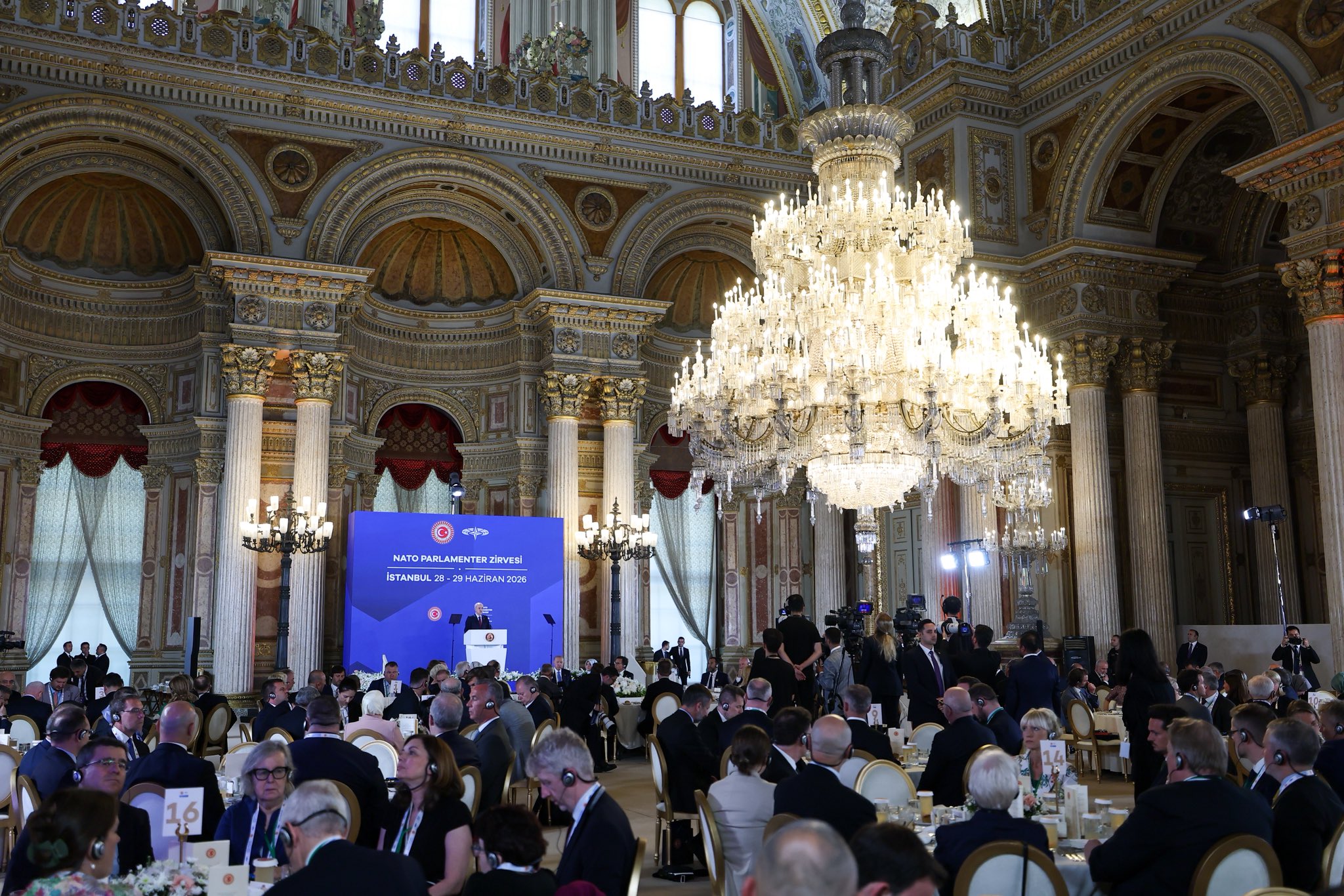
ISTANBUL — NATO Parliamentary Assembly President Marcos Perestrello has urged Allied nations to prepare for a new era of collective security by increasing defence investment, strengthening industrial production, and reinforcing political solidarity, warning that the Alliance faces increasingly complex security challenges requiring long-term commitment.
Speaking during the NATO Parliamentary Summit hosted by Türkiye in Istanbul, Perestrello thanked the Turkish authorities for organizing the gathering and welcomed delegates to one of the Alliance's most historically significant meeting points.
"It is a great pleasure to be together with all of you in this beautiful city that brings our Alliance together," he said at the opening of his address.
Perestrello noted that maintaining NATO's credibility requires more than simply improving military readiness. He argued that the Alliance must simultaneously expand its defence industrial capabilities while reinforcing the political cohesion that has remained the foundation of NATO since its establishment.
According to Perestrello, increasing military production capacity is becoming as essential as strengthening armed forces themselves, particularly at a time when security threats continue to evolve across multiple domains.
He stressed that Allies must continue working together to deepen mutual trust, preserve unity, and strengthen the political relationships that allow the Alliance to respond collectively to emerging challenges.
"Our work cannot be limited solely to defence," Perestrello said. "We must also expand the capacity of our defence industry. At the same time, we need to continue strengthening our unity and solidarity, increase mutual confidence, and reinforce the political and personal ties that bind us together."
The NATO Parliamentary Assembly President also reflected on the longstanding relationship between Portugal and Türkiye, noting that although the two countries are located at opposite ends of Europe, they have consistently worked toward shared strategic objectives within the Alliance.
He expressed hope that the parliamentary gathering in Istanbul would contribute to building what he described as a safer, stronger, and more modern NATO capable of responding effectively to future challenges.
Turning to the broader international security environment, Perestrello referred to Russia's policies toward NATO, saying Moscow continues to conduct cyberattacks and acts of sabotage targeting Allied interests.
He argued that such hybrid threats demonstrate why NATO must remain vigilant and continuously adapt its defence posture.
Looking ahead to next week's NATO Summit in Ankara, Perestrello said the success of decisions adopted by Allied leaders would ultimately depend on implementation by national governments and legislatures.
He emphasized that national parliaments play an indispensable role in approving defence budgets, supporting military modernization, and ensuring that long-term strategic commitments become operational realities.
According to Perestrello, parliamentary support will therefore be critical if NATO is to achieve its long-term capability objectives before 2035.
He stressed that reaching these goals will require determination from every Ally as well as sustained political consensus across member states.
Rather than relying solely on larger defence budgets, Perestrello argued that Europe must also invest more intelligently by improving coordination among Allies, accelerating procurement processes, and developing more efficient industrial cooperation.
"A stronger Europe will contribute to a stronger NATO," he suggested, emphasizing that defence investment must become both more ambitious and more strategically coordinated.
Perestrello also reiterated one of the central themes of his address by declaring that substantially greater investment in defence would be unavoidable.
"We will need much greater investment in defence," he said.
He added that continued support for Ukraine remains a responsibility for NATO and stressed that a strong, sovereign and independent Ukraine is of vital importance for European security.
Perestrello concluded by expressing hope that the upcoming summit in Ankara would send a clear message demonstrating that NATO remains united, capable of adapting to changing security challenges, and fully prepared to defend Allied territory whenever necessary.
NATO Deputy Secretary General Radmila Shekerinska told participants that next week's NATO Summit in Ankara would represent a defining moment for the Alliance, with the international community closely monitoring whether Allies fulfill the commitments they have collectively undertaken.
"Next week, the eyes of the world will be on Ankara and on all of us. The international community will closely observe whether we deliver on the commitments expected from us," Shekerinska said during her address.
She explained that Allied leaders would seek to demonstrate that NATO remains capable of honoring its defence commitments while maintaining a strong and credible deterrence posture across the Euro-Atlantic area.
According to Shekerinska, the summit is expected to reinforce confidence that NATO possesses both the capability and the political determination to defend Allied territory against emerging security challenges.
She pointed to several recent defence activities undertaken by NATO as practical examples illustrating how the Alliance's collective defence mechanisms continue to function effectively.
Those actions, she noted, serve not only as evidence of NATO's operational readiness but also as tangible demonstrations of solidarity among member states.
"The recent defence activities undertaken by NATO clearly show that the Alliance's defence mechanisms are functioning effectively. They also demonstrate how Allied solidarity is reflected through concrete actions on the ground," she stated.
Shekerinska stressed that preserving NATO's military strength cannot be achieved without sustained political commitment and increased financial support.
She argued that maintaining credible deterrence requires not only strategic planning but also long-term investment capable of responding to an increasingly unstable international environment.
According to the Deputy Secretary General, growing geopolitical tensions and multiple ongoing conflicts around the world have made it evident that current efforts alone will not be sufficient to meet future security requirements.
She therefore urged Allied governments to continue expanding defence expenditure while accelerating modernization efforts across the Alliance.
"The current international environment makes it abundantly clear that we need considerably more investment, stronger political determination and adequate financing to ensure NATO remains capable of defending its members," she said.
Shekerinska added that defence spending would become one of the principal agenda items at the NATO Summit in Ankara, reflecting the strategic importance attached to strengthening collective security.
A major focus of her remarks concerned the long-term defence spending objective agreed by NATO members.
Shekerinska said the Alliance expects every member nation to arrive in Ankara with practical national strategies outlining how they intend to achieve the agreed defence expenditure target by 2035.
"We expect all Allies to come to Ankara with concrete national plans demonstrating how they will reach the target of allocating five percent of GDP to defence spending by 2035," she said.
She emphasized that credible implementation plans would reinforce confidence among Allies and demonstrate NATO's collective determination to strengthen deterrence over the coming decade.
While discussing NATO's defence industrial capacity, Shekerinska noted that several highly successful defence companies operate across Allied nations.
She cited ASELSAN as one such example and recalled NATO Secretary General Mark Rutte's recent visit to the Turkish defence company.
The reference underscored the importance NATO places on strengthening industrial production capabilities alongside military preparedness.
According to Shekerinska, advanced defence industries throughout the Alliance will play a central role in ensuring NATO can respond rapidly to future operational requirements while maintaining technological superiority.
She also reiterated the importance of continuing support for Ukraine, stressing that Kyiv should receive the assistance it requires.
Without elaborating further on specific measures, she maintained that sustained support remains an important element of NATO's broader security agenda.
Concluding her remarks, Shekerinska said the Alliance's future credibility depends upon turning political commitments into measurable actions.
She argued that stronger financing, greater defence investment, industrial expansion and continued Allied solidarity together form the foundation of NATO's long-term security strategy.
"The decisions taken today will shape NATO's readiness for tomorrow," she indicated, emphasizing that implementation would ultimately determine the success of the Alliance's future objectives.
Bulgarian National Assembly Speaker Mihaela Dotsova described the upcoming NATO Summit in Ankara as an important opportunity for Allies to reaffirm their commitment to the Alliance's shared principles, collective security and stability across the Euro-Atlantic region.
Speaking during the parliamentary summit in Istanbul, Dotsova said Bulgaria considers NATO the fundamental pillar of its national security and regards the Alliance as indispensable in addressing the growing instability affecting the international environment.
"For Bulgaria, the NATO Summit to be held in Ankara represents an opportunity to reaffirm our unwavering commitment to the Alliance's values, our shared security, and strengthening stability throughout the Euro-Atlantic area," she said.
Drawing attention to the increasing number of conflicts and security challenges worldwide, Dotsova stressed that Allied nations must continue strengthening their defence capabilities in order to respond effectively to evolving threats.
She noted that Bulgaria remains committed to fulfilling its obligations toward collective defence while continuing the modernization of its armed forces.
According to Dotsova, investing in defence should not be viewed solely as military expenditure but rather as a broader investment in national resilience, public safety, sovereignty and the protection of citizens.
"Investing in defence means investing in security, resilience and the state's ability to protect its citizens and national sovereignty," she said.
Croatian Parliament Speaker Gordan Jandrokovic said Europe's security landscape has been fundamentally reshaped by Russia's war against Ukraine, hybrid threats, disruptive technologies and intensifying strategic competition.
He argued that military strength alone is no longer sufficient to safeguard national security.
According to Jandrokovic, protecting critical infrastructure, sustaining technological advancement, maintaining economic resilience and preserving political unity have become equally important components of modern defence.
"In this context, military power remains indispensable, but it is no longer sufficient by itself. Critical infrastructure, economic development, technological progress and political cohesion have become equally essential elements of the security equation," he stated.
He emphasized the importance of stronger European defence capabilities operating in close coordination with a reliable transatlantic partnership.
Jandrokovic also announced that Croatia is following a path that aims to allocate 3 percent of GDP to defence spending by 2030, while remaining committed to increasing that figure to 5 percent by 2035.
He stressed that NATO members share one common security space, meaning that any weakness affecting one Ally ultimately affects the security of the entire Alliance.
According to Jandrokovic, NATO must therefore remain fully prepared to confront future security challenges.
Latvian Parliament (Saeima) Speaker Daiga Mierina reaffirmed Latvia's continued support for Ukraine and argued that Russia will remain a long-term security threat to every NATO member state.
"Russia remains, and will continue to remain, a long-term threat to every member of the Alliance," Mierina said.
She called for maintaining international efforts aimed at supporting Ukraine while continuing policies intended to isolate Russia diplomatically.
According to Mierina, such measures would also contribute to deterring future provocations.
Referring to what she described as the principle of "peace through strength," she argued that maintaining unity among Allies remains essential for achieving a just and lasting peace.
"The ball is now in our court, and this is precisely why we must remain united and determined," she added.
Lithuanian Parliament Speaker Juozas Olekas said Lithuania has already approved a national budget allocating 5.38 percent of GDP to defence this year and intends to maintain defence spending at no less than five to six percent in the coming years.
He reiterated Lithuania's commitment to supporting Ukraine and argued that Europe's future security is currently being determined on Ukrainian territory.
"The future of Europe's security is being decided today in Ukraine. What we need most is strong political determination and fair burden-sharing," Olekas stated.
According to Olekas, NATO unity also requires Europe to assume greater responsibility for its own defence while preserving strong transatlantic cooperation.
He referred to Lithuania's efforts regarding the deployment of a German brigade and stressed that the United States' military presence in Europe remains particularly important for NATO's eastern flank.
Olekas also pointed to recent incidents affecting submarine infrastructure in the Baltic Sea as evidence that additional investment in integrated air and missile defence capabilities has become increasingly urgent.
Although progress has been made in strengthening NATO's defence industrial infrastructure, he said production capacity continues to expand too slowly.
To address this challenge, Olekas called for a highly qualified industrial ecosystem, an attractive investment climate, strong governmental support and increased investment in future-oriented military technologies that reflect operational realities on the battlefield.
He concluded by expressing hope that the Ankara Summit would deliver successful outcomes for the Alliance.
Luxembourg Chamber of Deputies Speaker Claude Wiseler said the growing number of crises across different regions of the world serves as a reminder that freedom must constantly be protected.
"Freedom is never simply given to us. It must be earned and defended," Wiseler said.
He stressed that Ukraine continues to resist with determination and argued that international support should therefore be strengthened.
According to Wiseler, every delay in providing assistance carries tangible human consequences reflected in destroyed infrastructure, damaged hospitals and lost lives.
He stated that Luxembourg considers NATO the strongest response to the security threats facing the country and described the Alliance as indispensable during a period in which peace continues to be tested.
Wiseler noted that Luxembourg has doubled its defence spending during the past two years and intends to increase its defence budget by five percent annually.
He explained that much of this investment is initially being directed toward air and missile defence systems, while Luxembourg also plans to continue investing in space capabilities and communications technologies.
Concluding his remarks, Wiseler emphasized that Luxembourg remains committed to the rule of law, credibility in honoring international commitments and collective action rather than unilateral approaches.
"Our priority within NATO is cooperation, trust and acting together rather than acting alone," he said.
Czech Senate President Milos Vystrcil stressed that every NATO member has a responsibility to dedicate at least two percent of its gross domestic product to defence, arguing that Europe must take on a greater share of responsibility for the Alliance's collective security.
"Europe must assume greater responsibility for NATO's defence because a stronger Europe means a stronger NATO," Vystrcil said during the parliamentary summit.
He noted that public support for NATO remains strong in the Czech Republic, stating that 82 percent of Czech citizens support the country's NATO membership while 62 percent favor maintaining defence spending at a minimum of two percent of GDP.
According to Vystrcil, NATO's future depends upon solidarity among Allies, fulfillment of commitments and Europe's willingness to contribute more actively to collective defence.
"If Istanbul is to send one message, it should be this: when it comes to defending our freedom and democracy, we all stand shoulder to shoulder," he said.
Czech Chamber of Deputies Speaker Tomio Okamura said today's international environment remains highly unstable and warned that countries should strengthen their defence capabilities before crises emerge rather than after conflicts begin.
"It is important to be prepared before a crisis occurs—not afterward," Okamura said.
He emphasized that every nation has both the right and the responsibility to defend its territory, citizens, borders and way of life.
Okamura also stressed that protecting sovereignty requires stronger defence investment and called for the war in Ukraine to end as soon as possible.
Danish Parliament Speaker Soren Gade described the Euro-Atlantic security environment as increasingly complex while emphasizing the continued importance of maintaining NATO's ability to respond rapidly to emerging threats.
A former Danish Defence Minister, Gade said he had personally witnessed the significant pressure facing the Alliance during recent years.
Despite these challenges, he argued that NATO continues to represent the strongest and most successful military alliance in history.
"NATO remains the strongest and most successful alliance in history because it is not only a military alliance but also a political alliance founded upon shared democratic values," Gade stated.
He added that preserving Allied unity has become even more important amid growing international pressure and expressed confidence that NATO possesses the necessary capabilities to confront future security challenges.
Polish Senate Speaker Kidawa-Blonska emphasized the importance of increasing resilience against Russia while reaffirming Poland's commitment to supporting Ukraine.
"We must support Ukraine with all the strength available to us," she said.
She stressed that NATO must further enhance its defence preparedness while exploring new formats for Allied cooperation.
Referring to the close relationship between Türkiye and Poland, Kidawa-Blonska described both countries as key Allies on NATO's eastern flank and expressed hope that bilateral and multilateral cooperation would continue strengthening the Alliance.
Portuguese Parliament Speaker Branco underlined the importance of preserving NATO's internal cohesion during a period of heightened international uncertainty.
He argued that deterrence and collective defence must remain among the Alliance's fundamental priorities, adding that achieving those objectives requires sustained investment in military capabilities.
Branco also stated that continued short- and medium-term support for Ukraine should remain a priority within the broader Euro-Atlantic security framework.
Slovak National Council Speaker Rasi reaffirmed that Slovakia's foreign and security policy remains firmly anchored in membership of both the European Union and NATO.
He described the Alliance as the country's principal security guarantee while emphasizing the need for what he called a stronger European pillar within NATO.
Rasi announced that Slovakia intends to gradually increase defence expenditure to five percent of GDP, noting that a significant share of future defence spending will support military modernization.
He also expressed hope for conditions that would enable a just and lasting peace regarding Ukraine.
Estonian Parliament (Riigikogu) Speaker Lauri Hussar described NATO's decision to work toward allocating five percent of GDP to defence spending by 2035 as a historic step for the Alliance.
He said Estonia is already deepening cooperation in regional defence planning and military capabilities, including air defence.
Referring to the well-known strategic principle that "If you want peace, prepare for war," Hussar argued that strong defence reduces rather than increases the likelihood of conflict.
"This is not about escalating tensions. It is about recognizing that strong defence decreases the probability of war," he said.
Hussar also referred to Russian violations of NATO airspace as reminders that strengthening Allied defence capabilities must remain a priority.
He called for increased pressure on Russia and continued support for Ukraine, arguing that Ukraine's integration into NATO would constitute a strategic investment in the Alliance's own security.
"We should never forget that peace is never free and weakness always carries a cost. Unity remains NATO's center of gravity," Hussar stated.
Finnish Parliament Speaker Jussi Halla-Aho said Finland intends to contribute actively to NATO's collective deterrence, emphasizing that the Alliance derives its strength from the capabilities of its individual members.
"We know that NATO's strength comes from the strength of its members. That is why we want to contribute actively to collective deterrence," Halla-Aho said.
He argued that Russia must face a unified Allied response and stressed that every member state should fulfill its responsibilities.
Halla-Aho also described Ukraine as an important component of Europe's security architecture, adding that increasing the economic and political costs of the war remains essential.
Italian Chamber of Deputies Speaker Lorenzo Fontana said security across the Euro-Atlantic region cannot be understood through a single geographical perspective.
He noted that the Mediterranean, the Middle East, the Red Sea and the Gulf should not be viewed as distant crises but rather as regions directly connected to security, trade routes, energy supplies and broader regional stability.
Fontana emphasized that the transatlantic dimension remains indispensable for NATO.
"NATO is strongest when it is united. It is credible not only when it reacts to crises but when it succeeds in preventing them," he concluded.
Speaker of the Dutch House of Representatives Thom van Campen began his remarks by thanking Turkish Parliament Speaker Numan Kurtulmuş in Turkish for hosting the parliamentary gathering.
Van Campen recalled that diplomatic relations between the Netherlands and Türkiye date back to 1612, describing them as one of Europe's oldest uninterrupted bilateral relationships.
He noted that the relationship extends beyond diplomacy and trade, pointing to the tulip—widely regarded as a Dutch national symbol—as a flower that originated in Anatolia, illustrating the deep historical ties between the two nations.
Van Campen emphasized that parliamentary diplomacy plays a crucial role in strengthening trust among nations, promoting mutual understanding and reinforcing transatlantic solidarity.
"We are meeting in Türkiye, a country that serves as a bridge between continents and cultures, and that is no coincidence," he said. "Although our histories differ, we are united by common objectives within the Alliance."
Referring to Russia's war against Ukraine, he argued that the conflict represents not only a threat to Ukraine's sovereignty but also a direct challenge to the rules-based international order.
According to Van Campen, parliamentary cooperation within NATO has therefore become more important than ever.
He concluded by urging Allies to continue supporting one another while demonstrating that NATO remains united, determined and prepared to act whenever necessary.
North Macedonian Parliament Speaker Afrim Gashi said the international security environment is evolving rapidly and argued that NATO must adapt with equal speed.
He suggested that the Alliance should be viewed from the perspective of a strategic renewal, referring to what he described as "NATO 3.0."
According to Gashi, European Allies should assume a larger share of the conventional defence burden while taking greater responsibility for defending the continent.
He also stated that future support for Ukraine should reflect balanced burden-sharing alongside national investments by Allied countries.
Addressing developments in the Middle East, Gashi warned that regional tensions carry significant implications for peace, global energy markets and humanitarian conditions, stressing the importance of continuing diplomatic efforts aimed at reducing tensions.
Norwegian Parliament President Masud Gharahkhani said Norway has increased defence production while investing in emerging capabilities, including unmanned aerial systems and digital technologies.
He argued that strengthening industrial production is no longer optional but has become essential for Allied security.
"This is not optional. We need greater coordination. We must accelerate our industrial capacity and defence production to strengthen our common security while supporting both national requirements and NATO's readiness," Gharahkhani said.
He added that Norway's long-term defence plan extending to 2036 enjoys broad political consensus, reflecting the country's assessment of the deteriorating international security environment and lessons drawn from the war in Ukraine.
House of Lords Speaker Michael Forsyth described Türkiye as a highly valued partner for the United Kingdom because of its strategic location connecting Europe, the Middle East, Africa and Asia.
"You play a vital diplomatic role in connecting regions and facilitating mediation in conflicts," Forsyth said.
He reaffirmed that NATO remains the cornerstone of British defence policy and stressed that Allies continue standing together in defence of freedom, democracy and the rule of law.
Forsyth also argued that deterrence is considerably less costly than conflict and emphasized the need for NATO to adapt to technological developments, including artificial intelligence and cyber capabilities.
Referring to Ukraine, he said the country has endured years of Russian attacks and stated that Ukrainians are defending not only their own nation but also the broader security of the Alliance.
"Their struggle is our struggle," he said.
Deputy Speaker of the House of Commons Judith Cummins said NATO has safeguarded peace and prosperity for 77 years through shared history and common democratic values.
She pointed to tensions in Ukraine and the Middle East while arguing that NATO members need one another more than ever.
"At this dangerous moment in history, NATO members need each other. We must cooperate more closely and reinforce the principle that an attack against one Ally is an attack against all," Cummins said.
She also highlighted the increasingly unpredictable nature of modern security threats, including growing geopolitical competition and emerging technologies.
Head of the French Delegation to the NATO Parliamentary Assembly Natalia Pouzyreff referred to discussions held during the G7 Leaders' Summit concerning developments in the Middle East and maritime navigation through the Strait of Hormuz.
She also noted that G7 leaders issued a joint declaration reaffirming Ukraine's territorial integrity while calling for strengthened military assistance.
Pouzyreff stated that Ukraine's future should be confirmed within NATO, arguing that the country's Euro-Atlantic integration would contribute directly to regional stability and security.
First Deputy Speaker of the Spanish Senate Javier Maroto stressed that NATO members should defend respect for international law in every conflict without exception.
"Whether in Ukraine or the Middle East, every NATO country should uphold respect for international law," Maroto said.
He argued that NATO reform should not mean less engagement from the United States but rather greater responsibility and leadership from European Allies.
According to Maroto, security remains the foundation upon which democratic institutions, education, healthcare and prosperity depend.
Swedish Parliament Deputy Speaker Kerstin Lundgren said the Ankara Summit would focus on Alliance capabilities, sustainable support for Ukraine and expanding defence industrial production while reaffirming Sweden's commitment to the 2035 defence spending objective.
Albanian parliamentary committee chair Igli Hasani emphasized that security depends on sustained solidarity and determination, adding that defence investment strengthens preparedness, resilience and deterrence while highlighting the strategic importance of the Western Balkans.
Chair of Iceland's NATO Parliamentary Assembly delegation Dagur Eggertsson described Istanbul as a city linking civilizations for centuries and argued that genuine security is built through dialogue, cooperation and shared responsibility rather than isolation. He stressed that military capability remains essential but that trust among Allies and democratic institutions ultimately forms NATO's foundation.
Montenegro's delegation head Dusko Stjepovic said continuing wars, cyberattacks, disinformation campaigns and attempts to undermine democratic institutions demonstrate NATO's growing importance. He reiterated support for strengthening defence capabilities and increasing defence investment while noting Montenegro's objective of joining the European Union in 2028.
Head of Ukraine's NATO Parliamentary Assembly delegation Yehor Cherniev thanked partner nations for their continued support and argued that Ukraine has begun regaining the strategic initiative during the war. He maintained that Russia should not be allowed to rebuild its military capabilities and expressed gratitude to Türkiye for hosting negotiations in Istanbul in 2022, while noting that the proposed peace conditions at that time were not acceptable for Ukraine. Cherniev concluded that Ukraine's future NATO membership would contribute significantly to Europe's long-term security architecture.
Throughout the NATO Parliamentary Summit in Istanbul, parliamentary leaders from across the Alliance repeatedly emphasized the need for stronger defence investment, expanded industrial capacity, greater political unity and continued cooperation among Allied nations.
Across the various national statements, participants consistently highlighted the importance of strengthening NATO's collective deterrence, supporting the implementation of long-term defence commitments, reinforcing Allied solidarity and ensuring that future strategic decisions are matched by concrete national action.
The discussions also underscored expectations surrounding next week's NATO Summit in Ankara, where Allied leaders are expected to focus on defence investment, capability development and the Alliance's long-term security priorities.




Rubio heads to Iceland to boost US Arctic presence after Greenland pact
The US Secretary of State is also scheduled to visit Greece and Portugal as Washington seeks to strengthen Arctic security ties and deepen cooperation with European countries on energy and regional security.
Jailed Cilia Flores has ‘very delicate’ heart condition, son says
The wife of abducted Venezuelan leader Nicolas Maduro needs heart surgery and should be released to house arrest to recover, her son says.
Türkiye begins construction of spaceport in Somalia, Erdogan says
President Recep Tayyip Erdogan said Türkiye’s geographical circumstances had led it to pursue cooperation with Somalia on the project.




All rights reserved. Newstimetr © 2026