
The boycott follows growing tensions between lawyers and the judiciary over reforms, transparency and the performance of courts.
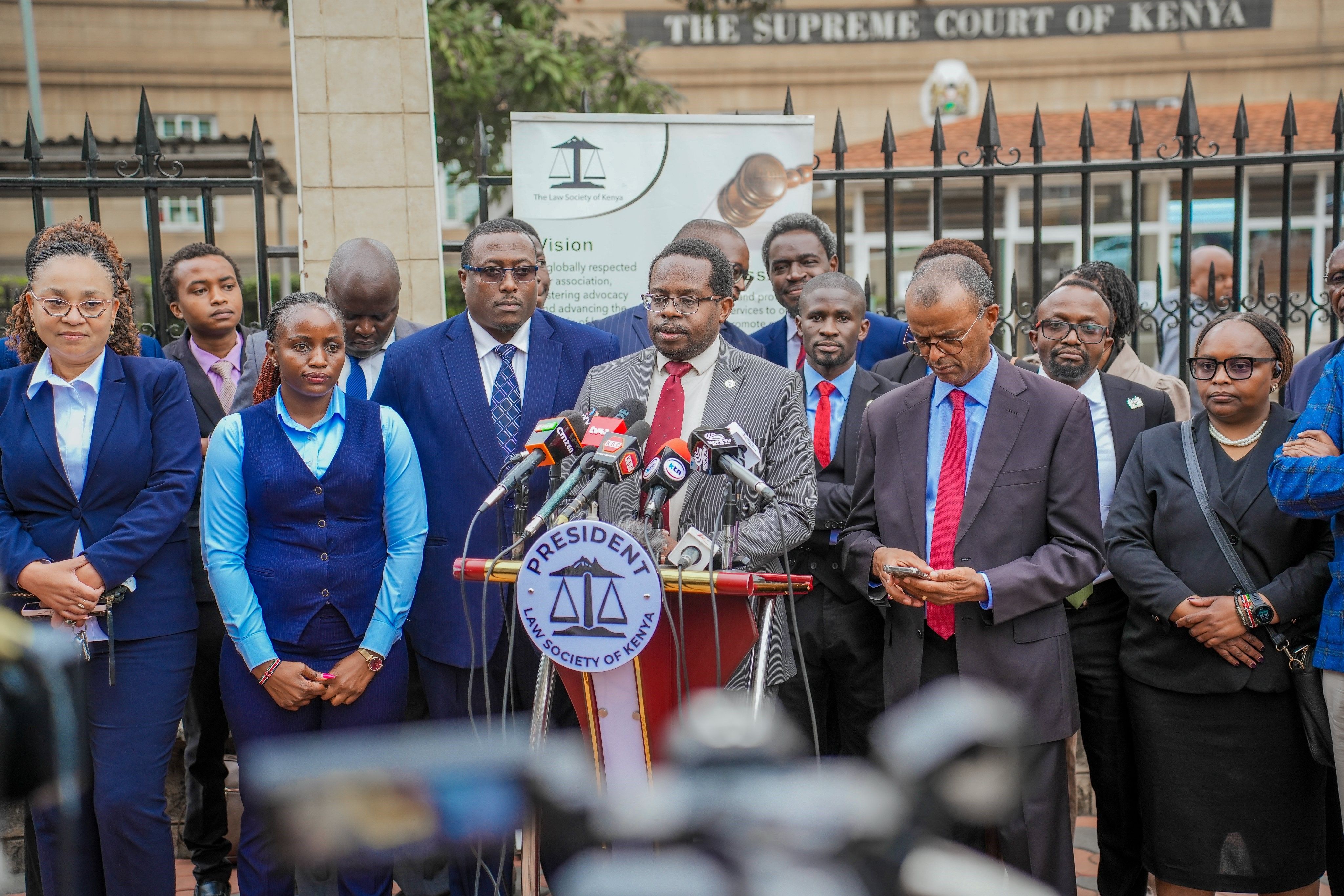
Kenyan lawyers staged a nationwide boycott of court proceedings on Wednesday to protest alleged judicial corruption and chronic delays.
Cases in the East African nation take an average of two years to conclude, according to official records, with lawyers blaming graft and systemic inefficiencies.
"The court boycott is going on in courts across the country, with many lawyers heeding the call," Charles Kanjama, the president of the Law Society of Kenya (LSK), told reporters.
However, the judiciary said that accountability mechanisms already exist through the Judicial Service Commission and the Office of the Judiciary Ombudsman, where complaints against judges and judicial officers can be lodged and investigated, according to a statement released prior to the boycott.
It also defended its recent performance, saying it achieved a case clearance rate of 104 per cent for the first time in several years.
Blocked investigations
After the nationwide boycott on Wednesday, LSK is pushing for an ongoing boycott of specific judges and magistrates who they say have blocked anti-corruption investigations and disciplinary proceedings, including Chief Justice Martha Koome, starting from Thursday.
"As lawyers we are tired of a corrupt judiciary that refuses to reform itself," said lawyer Ahmednasir Abdullahi.
Others warned judicial corruption could be an issue for next year's election if political disputes arise.
"The judiciary is irredeemably compromised and is unable to act as an arbiter," said former LSK presidents Eric Theuri.
On Wednesday, the country's anti-corruption body said it had arrested a magistrate for allegedly soliciting 170,000 Kenyan shillings (around $1,300) to influence a criminal case.
Data from the State of the Judiciary Report 2023-2024 said there were 1,115 complaints against it, including 141 petitions against judges, over allegations ranging from ethical violations to judicial misconduct and abuse of court processes.


Ethiopia's army says it has foiled attacks by Tigray rebels
The army said it inflicted heavy personnel and equipment losses on the TPLF rebels.
The cost of UNGA: Who pays and who profits?
Member states make mandatory annual contributions based on capacity to pay, factoring in gross national income, external debt burden and per-capita income.
Sudan rejects US remarks questioning government legitimacy amid Burhan visa dispute
Khartoum urges Washington to respect Sudan’s sovereignty as activists and journalists criticise the reported linking of Transitional Sovereignty Council Chairman Abdel Fattah al-Burhan’s UN visa to a proposed 90-day truce.