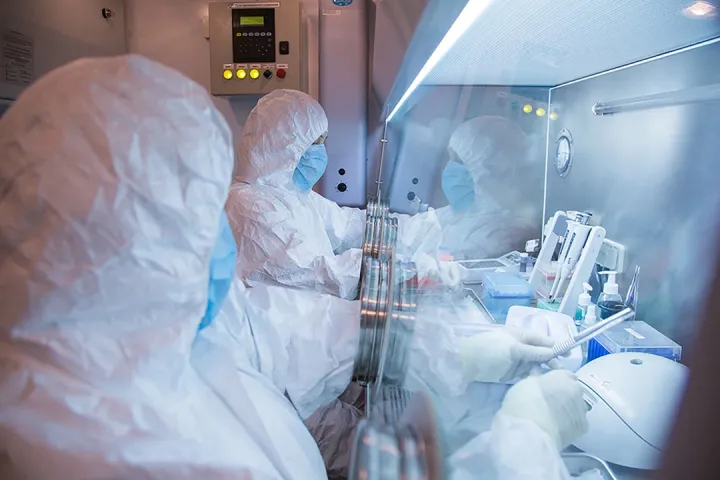
From meningitis to brucellosis, five incidents show how biosafety failures can kill workers and, at times, endanger whole communities.
Laboratories exist to study the world's most dangerous microbes, and strict biosafety rules exist to keep those microbes contained.
The record shows the rules do not always hold.A review of reports from 2000 to 2024 identified 712 laboratory-acquired human infections and 17 deaths.Here are five incidents that show how containment can fail.California microbiologist dies after meningococcal infectionA 25-year-old microbiologist working with meningococcal bacteria in California became infected and died in 2012.The US Centers for Disease Control and Prevention (CDC)saidinvestigators identified several biosafety breaches.The case showed that even trained scientists handling Neisseria meningitidis in routine conditions can pay with their lives when safety procedures fail.
It remains a stark reminder that laboratory-acquired infections are not only a risk of exotic, headline-grabbing pathogens.Everyday bacteria can be just as dangerous when protocols slip.Dozens exposed in CDC anthrax and H5N1 lapsesDozens of workers at the CDC in Atlanta were potentially exposed in 2014 after anthrax was inadequately inactivated.Separately, material contaminated with H5N1 avian influenza was mistakenly shipped to another laboratory.
The CDCsaidno illnesses or deaths resulted.The episodes are notable because the agency helps set biosafety standards for laboratories across the United States.They show that near misses, not only fatalities, can reveal weaknesses in even the best-resourced institutions and raise questions about oversight.French technician dies of prion disease after needlestickA research technician in France died in 2019 from variant Creutzfeldt-Jakob disease (vCJD), a fatal brain disorder caused by prions.French authorities said theinfectioncould have resulted from a laboratory needlestick accident in 2010.The Ministry of Agriculture made the assessment.
Almost a decade passed between exposure and death.Prions are neither bacteria nor viruses, and standard sterilisation methods struggle to destroy them, which makes accidental exposure particularly hard to guard against.Lanzhou factory leak infects more than 10,000 peopleImproperly disinfected waste gas from a vaccine factory in Lanzhou, China, released aerosolised Brucella bacteria in 2019 and 2020.More than 10,000 infections were eventuallyreported, according to published research.That makes it one of the largest documented accidental pathogen releases.
Brucella causes brucellosis, a disease that normally passes from animals to humans and can bring prolonged fever and joint pain.Unlike the other cases here, this one reached the wider community, not only staff.Russian lab worker dies as plague link remains unprovenA 28-year-old employee of an anti-plague institute in Irkutsk, Russia,diedin 2026 from severe pneumonia.According toReuters, reports alleged a laboratory accident involving plague.Authorities said testing has not established a laboratory link or plague infection.
The cause remains undetermined, so this is an open investigation, not a confirmed escape.It shows how quickly speculation can fill the gaps when information about laboratory incidents is limited.Laboratory accidents remain rare, but the cases above show the consequences can be severe when they happen.
The CDC, French authorities and published research all point to the same lesson: biosafety depends on strict procedures and transparent investigation.As the Irkutsk case shows, unanswered questions can fuel speculation, so clear and prompt reporting matters as much as containment.
The dinar's official exchange rate has been lowered from 1,300 to 1,500 per US dollar as the widening gap between official and market rates add pressure on the economy.
Russian missile and drone attacks hit several Ukrainian cities, including Kiev, as officials warn of further strikes on energy infrastructure ahead of winter.
The African Union will launch the continent's first credit rating agency on Wednesday, seeking to provide an alternative to the "big three" global ratings agencies.