With Ebola cases topping 1,000, a youth group in eastern DR Congo has decided to join the fight against the deadly virus with altruism as their main weapon.
Since May 15, people in eastern DR Congo have been on high alert following the outbreak of the Bundibugyo strain of the Ebola virus. The scale of the outbreak has seen the World Health Organization (WHO) declare it as a public health emergency of international concern.
Since then, despite the highly publicized mobilization of the WHO and its partners, the number of cases from the Bundibugyo strain of the disease continues to be a cause for concern.
More than 1,100 confirmed cases and at least 200 deaths have been reported in Congo so far, with 19 confirmed cases in neighbouring Uganda.
Raising awareness about best practices for managing the disease, as well dietary habits and hygiene guidelines, has always been one of the keys to breaking the deadly chain of the virus.
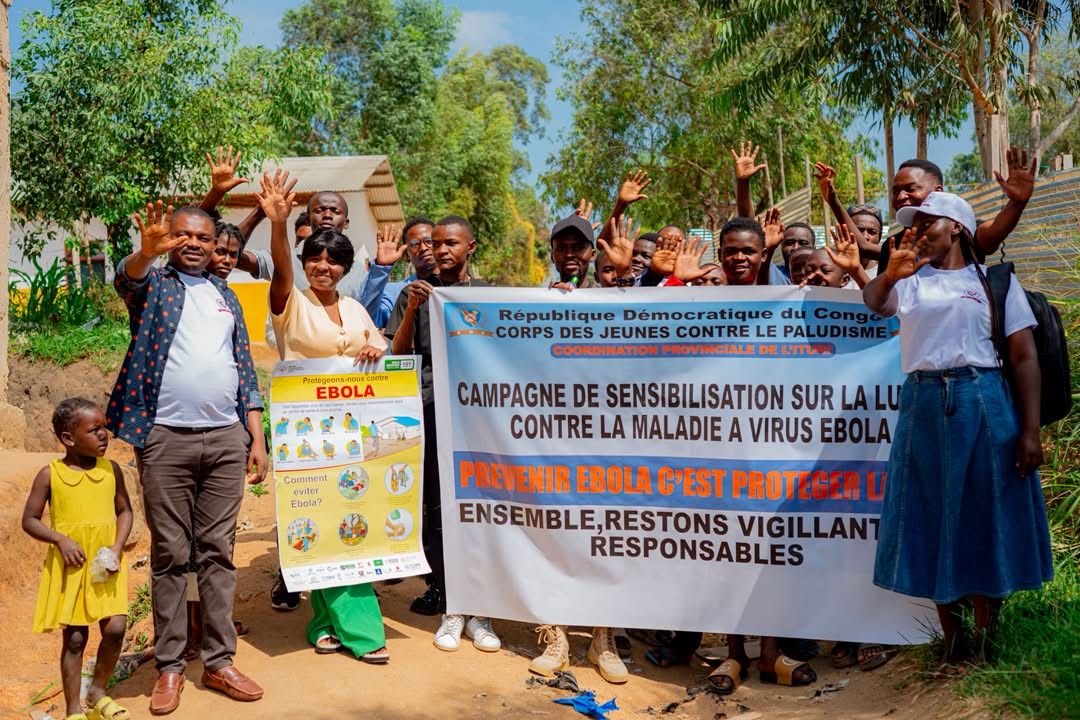
Congolese youth—who have decided to join the fight against the spread of the virus—intend to make full use of this key.
Alexis Alyson KABAMBI is the country coordinator for the Youth Corps Against Malaria (CJP-RDC/Asbl), a civil society organization founded in 2021 with support from the African Leaders Malaria Alliance (ALMA).
Just a few days ago, members of this youth network were deployed across the towns of Bulape in Kasai, Goma, and Bunia.
Outreach campaigns
For these volunteers, these kinds of field missions are not just a mere formality or a matter of statistical data. For them, every encounter with local communities is a human experience that may just as easily bring death as it may bring hope.
“We have mobilized our volunteer members to support community activities, strengthen community surveillance of suspected cases, and refer people to healthcare facilities.”
“In the future, we plan to step up community outreach campaigns, support awareness efforts in high-risk areas, and collaborate more closely with health authorities and humanitarian partners. For now, we are working with the team from the international NGO ALIMA,” Alexis Alyson KABAMBI told TRT Afrika.
According to Doctors Without Borders, the estimated case fatality rate for the Bundibugyo virus ranges from 25 to 40 percent.
The virus is transmitted through human-to-human contact (blood, organs, bodily fluids) and contact with infected animals.
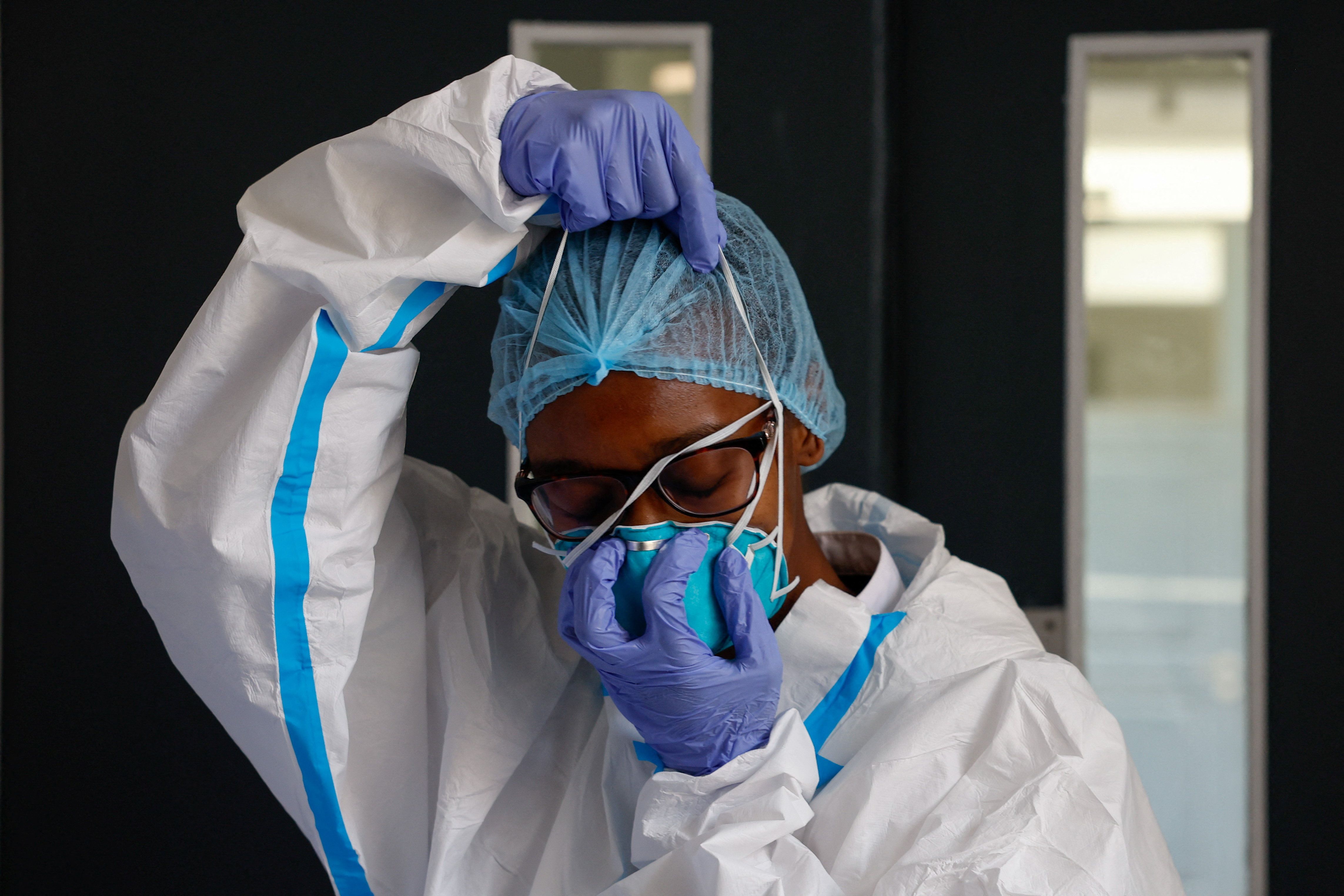
When it comes to conducting these field visits, Alexis and his colleagues must follow specific protocols to the letter, both before and after.
A technical briefing is held, followed by the donning of certain protective equipment. The young male and female volunteers then take with them awareness-raising materials that they design using the limited resources at their disposal.
Health protocols
“We follow the recommended health protocols to protect both our teams and the beneficiary communities (handwashing, social distancing, and wearing face masks…),” explains the country coordinator of the Youth Corps Against Malaria (CJP-RDC/Asbl).
Several members of the network received training in community health, risk communication, and community engagement.
Their message to the communities, most of whom welcome them warmly,focuses primarily on adhering to preventive measures, the need to promptly report suspected cases, the importance of avoiding self-medication, and the trust that community members should place in teams of healthcare professionals.
And thanks to this peer-to-peer outreach, communities are more receptive and less suspicious.
This approach has the merit of fostering a genuine dialogue that sheds light on and exposes prejudices, false rumors, and fake news.
"This health crisis often creates mistrust within the community, and people are no longer willing to visit health centers for fear of being labeled as infected with the virus. Reactions vary from community to community.”
“Some groups welcome the messages and actively cooperate. Others sometimes express fears or mistrust, often stemming from a lack of information. In these cases, we organize community dialogues and listen to people to build trust. The community trusts us and is happy to share their experiences and needs without hesitation or shame,” Alexis emphasizes.
Spirit of solidarity
To ensure that their mission of raising awareness and providing technical and moral support proceeds smoothly, CJP-RDC members rely on the leaders of the communities they visit.
Neither the challenges of accessing these communities, nor security issues, nor even the sometimes unpredictable weather conditions have so far managed to slow down these young people’s spirit of solidarity.
“Among the most memorable moments are situations where children (students or schoolchildren) spontaneously become our best advocates for raising awareness after understanding the prevention messages. Because a child who has learned a lesson shares that information with their parents and the whole family when they return home.”
“Several parents learned about our organization through information shared by their school-age children.”
Conversely, some moments are more difficult, particularly when these young Congolese volunteers meet families affected by the disease or coping with the loss of a loved one.
“These situations remind us of the importance and urgency of our commitment. We’ve had cases of bereaved families in the Bulape health zone, where the 16th epidemic was declared earlier this year,” adds Alexis.
Since May 15, the efforts of international organizations specializing in health issues, along with those of the Congolese authorities, have been intensifying.
And calls for larger-scale mobilization are rightly multiplying, given the vast needs for healthcare personnel and medical equipment.
However, the efforts of groups such as the CJP-RDC, whose members risk their health and lives and whose impact are crucial to changing behavior and definitively eradicating the disease, equally require support of all kinds.