
Frontline health workers said cases were continuing to emerge in new areas that were not adequately prepared to respond.
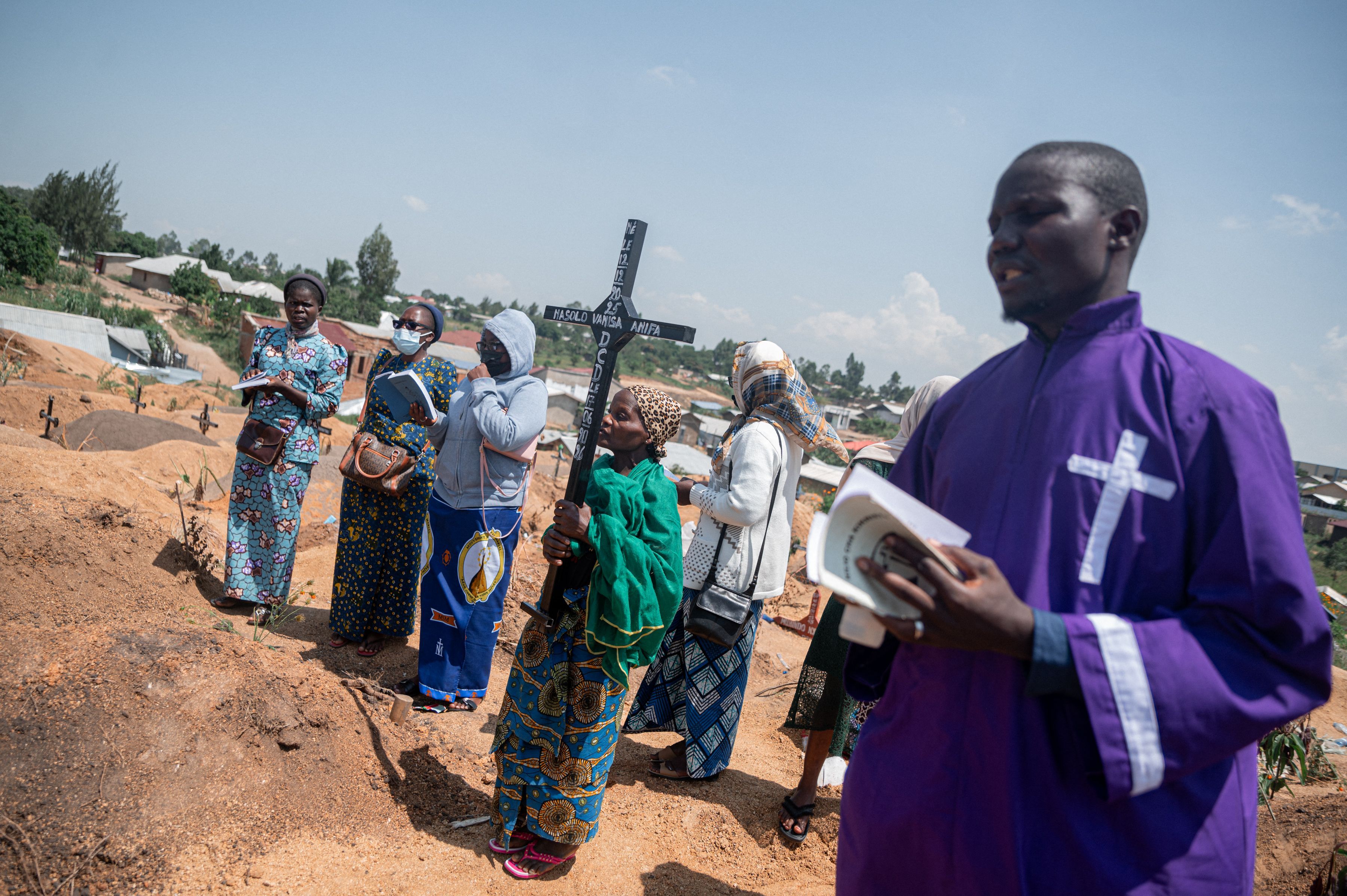
Democratic Republic of Congo's North Kivu province is emerging as a new Ebola hotspot, accounting for around a third of newly confirmed cases and deaths as the virus spreads into areas with limited preparedness, the World Health Organization (WHO) said.
Congo had recorded 7,820 confirmed cases and 3,779 deaths as of Tuesday, according to government data.
While neighbouring Ituri province remains the worst affected, North Kivu's share of new infections has risen sharply this month, with the province now accounting for around a third of newly confirmed cases and deaths.
All 29 beds at the Kitatumba Ebola treatment centre in North Kivu were occupied this week as a surge in cases put pressure on health facilities, even as transmission showed signs of slowing in some parts of the country, international medical charity Medecins Sans Frontieres (MSF) said.
Unexpected increase
"Over the past two weeks, we've seen a very sharp increase," said Stephanie Hoffmann, MSF's project coordinator in the city.
Frontline health workers said cases were continuing to emerge in new areas that were not adequately prepared to respond.
Last week, South Ubangi became the seventh province affected by the outbreak, which WHO described as showing a "pronounced geographic redistribution of transmission."
Congolese government and United Nations officials said last week that transmission appeared to be slowing in some of the worst-affected parts of Ituri, where health workers have been racing to establish treatment centres, identify cases, trace contacts and educate communities about how to prevent infection.
But it remains a "massive" outbreak, UN Special Ebola Coordinator Julien Harneis told reporters in Geneva.
"Assuming the outbreak is under control because some Ebola treatment centres are admitting fewer patients would be a mistake," Anthony Kergosien, MSF's emergency coordinator in Congo, said in a September 18 statement. "The outbreak is not shrinking; it is moving."
Funding shortages
Interviews with residents, health workers and local leaders suggest that funding and staffing shortages, combined with deep mistrust of Ebola responders, are making the outbreak difficult to contain in North Kivu.
Congolese authorities and WHO said they were working to build trust through awareness campaigns, household visits and engagement with religious and community leaders.
Researchers believe the rare Bundibugyo species of Ebola had been spreading for months before the first cases were confirmed in Ituri in May. Aid cuts, gaps in disease surveillance and the lack of approved vaccines and treatments have complicated the response, alongside armed conflict in the region.
North Kivu was the epicentre of three previous Ebola outbreaks, including the 2018-2020 epidemic, which until this year was Congo's largest and deadliest.



Morocco's PAM Party wins most parliamentary seats after low voter turnout
The election drew a turnout of 38 percent, marking the lowest level in almost two decades.
Western support for slavery reparations growing: Ghana foreign minister
The UN passed a resolution in March recognising trans-Atlantic slavery as "the gravest crime against humanity"
Uganda's debt rises to $37.1 billion on higher domestic borrowing
The central bank has previously expressed concern over the rising debt.