Democrats win US Senate, then turn on their own leader as Schumer faces revolt
Editor:
Halimatou HAMADOU DJIBO


Challenge to Chuck Schumer's leadership by Chris Van Hollen has exposed a struggle over leadership, party identity, and the direction of American politics.
A stunning election victory. A new majority in the US Senate. And now, a fight over who gets to lead it.
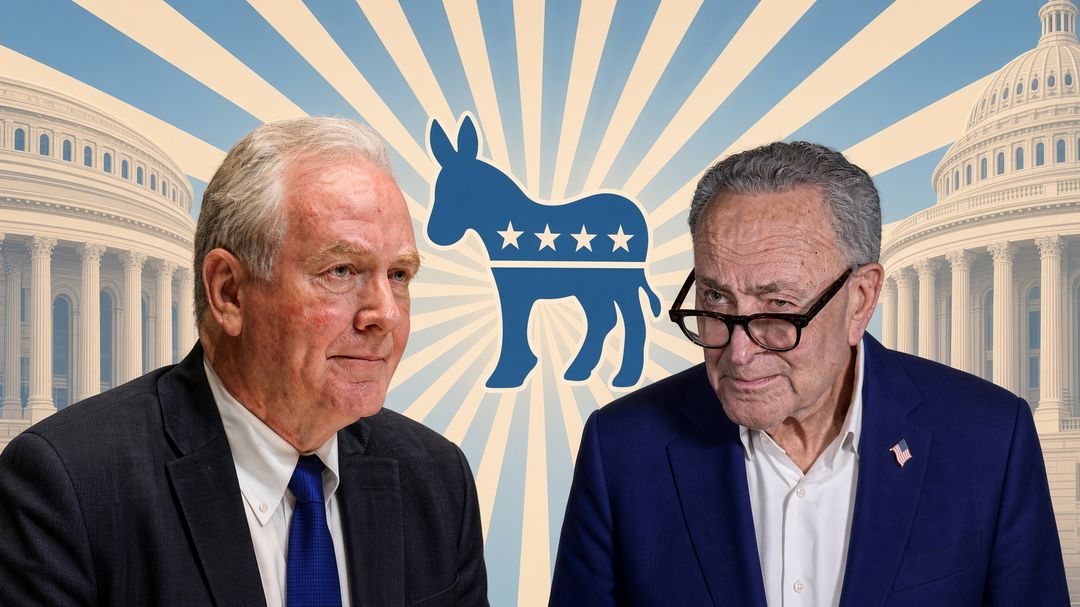
Just days after Democrats celebrated their sweeping midterm triumph, Maryland Senator Chris Van Hollen has launched a challenge against Chuck Schumer, the veteran New York lawmaker who has led Senate Democrats since 2017.
It is an extraordinary turn for a party that has just regained control of both chambers of Congress.
Schumer, 75, helped deliver the victory. Van Hollen, 67, believes the result offers Democrats an opportunity to change direction, starting with their leadership.
The contest has divided party figures and drawn sharply different assessments from political scientists, strategists and commentators.
Some believe Schumer's experience and relationships make him difficult to dislodge. Others see a party increasingly impatient with its established leadership.
At stake is more than a Senate title.
The winner will help determine how Democrats confront President Donald Trump, pursue their legislative agenda and approach contentious issues ranging from healthcare to the Middle East.
Schumer's strong defence
Despite growing calls for change, Schumer enters the contest with considerable advantages.
The Senate's longest-serving Democratic leader has spent years building relationships across the party. He also has a fresh electoral victory to his credit.
Maarten Pereboom, dean of Salisbury University's Fulton School of Liberal Arts, believes the incumbent remains well placed.
"Sounds like Schumer is likely to stay," Pereboom told CBS News Baltimore.
But Pereboom also suggested the debate itself could be useful, giving Democrats an opportunity to examine what voters expect from their new majority.
David Karol, an associate professor of government and politics at the University of Maryland, sees another dimension to Van Hollen's challenge.
"It's not going to hurt him if he runs against Schumer and loses, unless he is totally humiliated," Karol told CBS.
Both academics spoke before Van Hollen formally entered the contest on Thursday.
The numbers help explain their caution.
Democrats are expected to have at least 55 to 56 senators in the incoming Congress. A candidate would need 28 votes to win a leadership election if all 56 participate.
Van Hollen says he has secured more than 10 commitments, while Schumer insists he already has enough support to retain the position.
The vote will be by secret ballot, making it difficult to determine exactly how much support either candidate commands.
Schumer's allies argue that replacing him immediately after an election victory would make little sense.
Maine Senator Angus King, an independent who caucuses with Democrats, offered a sporting analogy.
"Why would you fire the manager when you just won the World Series?" King asked, according to Roll Call.
King also praised Schumer's understanding of Senate procedures and his plans for the incoming majority.
Yet the challenge has exposed an uncomfortable question for Democrats: does winning an election necessarily mean the party should retain the same leadership?
Growing calls change
For many in the Democratic Party and its network, the answer is no.
Leah Greenberg, co-founder of the grassroots organisation Indivisible, believes Democrats must respond to voters' demands for a different approach to politics.
"Americans want to see leadership. They want to see a willingness to take on concentrated power and corruption," Greenberg told The Washington Post.
Indivisible has encouraged supporters to contact Democratic senators and demand an open leadership contest rather than automatically retaining Schumer.
The organisation wants the incoming majority to take a firmer position on the Iran war, reconsider Senate filibuster rules and redirect funding from immigration enforcement towards healthcare.
The dissatisfaction is not confined to activist organisations.
Michigan Senator Elissa Slotkin has publicly called for new leadership, arguing that Democrats need to demonstrate a willingness to fight for their priorities.
Senator Bernie Sanders, a leading progressive figure, has backed Van Hollen, while Michigan Senator-elect Abdul El-Sayed has also endorsed the Maryland lawmaker.
El-Sayed's support is particularly notable because Schumer's political operation backed his opponent during Michigan's Democratic Senate primary.
In recent days, El-Sayed praised Van Hollen's experience and willingness to challenge the Trump administration.
The dispute has also brought foreign policy into the leadership debate.
Van Hollen has been a vocal critic of Israel's genocide in Gaza and its occupation of Palestinian territories. He has also opposed the US-Israeli war against Iran.
Schumer, by contrast, has maintained longstanding ties with pro-Israel groups, although he has criticised some Israeli government policies.
According to Reuters, Van Hollen wants Democrats to pursue an agenda centred on working-class economic concerns, holding the Trump administration accountable and ending the war on Iran.
He has publicly pledged to change how Democratic Senate campaigns handle donations from the American Israel Public Affairs Committee, or AIPAC.
These differences have given the leadership contest a wider significance, particularly as Democrats are all set to exercise greater influence over Washington's foreign policy.
But opposition to Schumer does not automatically mean support for Van Hollen. Some senators demanding change have yet to publicly commit to his candidacy.
Victory's political price
The timing could hardly be more awkward for Democrats.
The party has just won a substantial Senate majority and is preparing to take control of Congress in January 2027. Its lawmakers are already discussing an ambitious agenda involving healthcare, economic policy and oversight of the Trump administration.
Instead, the leadership contest threatens to consume political attention.
Van Hollen argues that the election results should be understood as a demand for change, not merely a rejection of Republican policies.
In announcing his candidacy, he said Democrats needed new leadership capable of responding to the concerns of working Americans.
Schumer has rejected suggestions that his position is vulnerable.
As Roll Call reported, the New York senator welcomed discussion about the party's future while declaring that he had secured enough votes to remain leader.
The political consequences could extend beyond the leadership election.
Van Hollen has previously acknowledged considering a presidential bid in 2028. A strong showing against Schumer could increase his national prominence, even if he fails to secure the leadership.
For Schumer, retaining the position would settle the immediate question of who leads Senate Democrats, but it might not resolve the divisions that produced the challenge.
The contest is scheduled to be decided on December 1, although Democrats have discussed bringing the vote forward.
Van Hollen himself acknowledges the difficulty of defeating an incumbent with Schumer's influence and relationships.
"Am I the underdog? Yes," he told MS NOW.
That admission captures the central uncertainty surrounding the race.
Schumer has establishment backing. Van Hollen has growing support from those who believe Democrats need a different approach.
For a party celebrating one of its biggest electoral successes in decades, the question is difficult.
Having won the power to change Washington, Democrats must first decide whether they want to change themselves.
TRT World / TRT World, TRT World and Agencies — TRT World / TRT World, TRT World and Agencies







Saudi Arabia hails Türkiye's 'pioneering' defence industry
Riyadh welcomes the convergence of Saudi Arabia's and Türkiye's interests in the defence industry.
Erdogan hails leaders' commitment at COP31 in Türkiye as boost for Paris climate deal
Turkish President Erdogan says global leaders' participation in Antalya summit is proof of political will on climate action and confidence that cooperation can solve world’s biggest challenges.
COP31 wish list puts fossil fuel phaseout back at centre of climate talks
Countries are weighing proposals on climate finance, global warming limits and scientific cooperation as negotiators work towards a possible political agreement in Antalya.




All rights reserved. Newstimetr © 2026