This is the first recorded death in the current winter season, as the WHO says poor living conditions and severe overcrowding are driving up infections in Gaza's population.
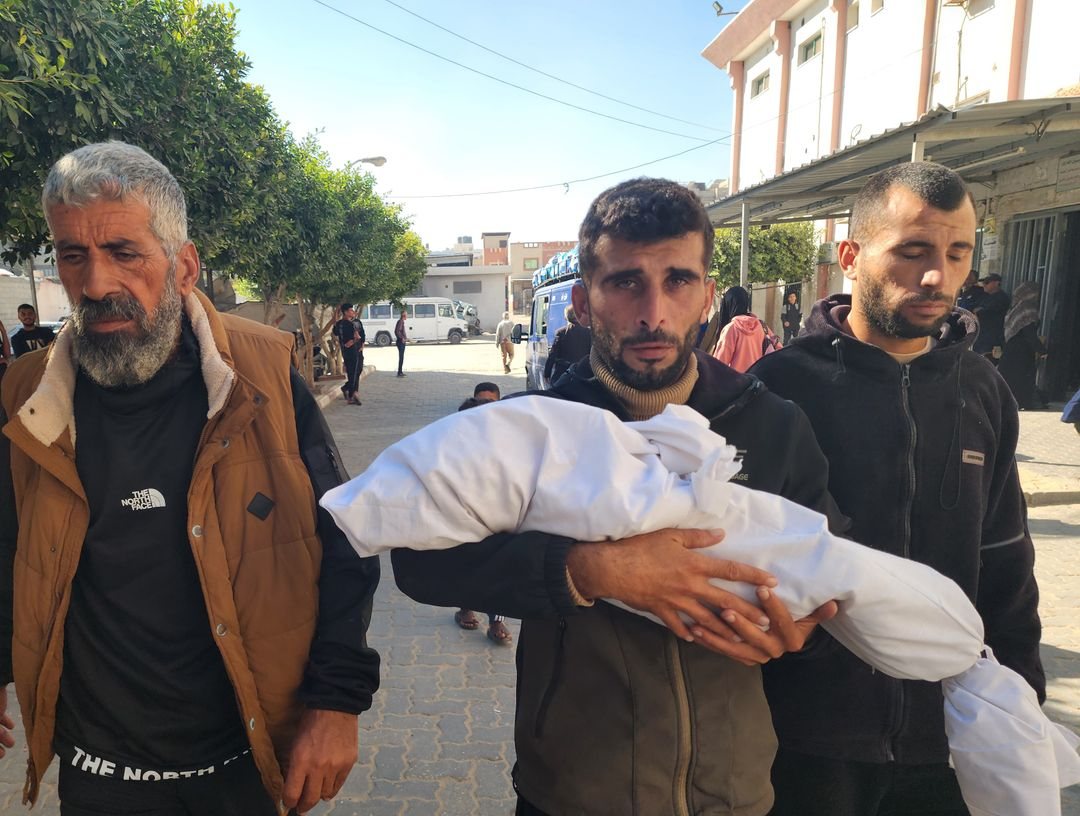
A nine-month-old Palestinian baby has died from a severe cold in Gaza, marking the first recorded cold-related death in the enclave during the current winter season, as the World Health Organization (WHO) warns of surging respiratory illnesses.
In a statement carried by the Gaza media office on Friday, the health ministry identified the infant as Kinan Ahmed Arqiq, saying he died after suffering a sharp drop in body temperature.
The baby was transferred from the Kuwaiti Hospital to Nasser Medical Complex on Thursday, where he arrived dead, the ministry said.
A forensic examination confirmed that severe hypothermia was the cause of death, it added.
The ministry said 10 people died from cold exposure in Gaza during the 2025 winter season.
The latest death comes as hundreds of thousands of displaced Palestinians face deteriorating living conditions amid heavy rainfall, flooding and shortages of adequate shelter.
Worse expected
The World Health Organization warned of surging respiratory illnesses in Gaza, with worse expected.
“The numbers already show the pressure. Acute respiratory infections are 33,000 cases higher than at the same time last year,” Dr Reinhilde Van De Weerdt, WHO Representative in the Occupied Palestinian Territory, told reporters in Geneva from Jerusalem.
Poor living conditions and severe overcrowding are driving up infections as Gaza's population is squeezed into an ever-smaller area, WHO said.
The crunch has worsened as Israel expands its occupation by advancing the so-called "yellow line."
“That means people are living in more crowded conditions, where, of course, the spread between humans of a virus is much more prone to spread,” Van De Weerdt explained.
Respiratory infections
Respiratory infections currently make up 11 percent of all consultations, with the WHO expecting cold weather, flooding, overcrowded shelters and poor ventilation to push these numbers higher.
“It is shocking that just a few days of rain really showed us what the coming months will bring. And winter has not even fully set in. The worst really is yet to come," Van De Weerdt said.
Nearly a million displaced people in Gaza live in flood-exposed areas, and 400,000 of them are in locations that are considered at extremely high risk, according to the WHO.
The agency said flooding heightened the risk of contaminated water, while standing water gave mosquitoes and pests more places to breed. Dampness encouraged mould and bacteria that are major drivers of respiratory infections, especially in young children, it said.
The WHO faces difficulty getting laboratory supplies, which it says are vital for diagnosing patients before they can be treated.
“To prevent outbreaks, we really call for laboratory equipment to enter Gaza today so that we can avoid a public health disaster on top of a disaster.”
Gaza in ruins
According to the UN Office for the Coordination of Humanitarian Affairs (OCHA), heavy rainfall between November 6 and 8 caused widespread flooding across Gaza, damaging thousands of tents and makeshift shelters.
The agency said about 1.4 million people, or 65 percent of Gaza's population, are living in tents or temporary shelters.
Israel’s genocide has left much of Gaza in ruins, forcing displaced families into tents and damaged buildings.
Israeli restrictions on shelter and repair supplies continue to hamper recovery despite a ceasefire in effect since October 2025.
TRT World / AA, Reuters — TRT World / AA, Reuters
Photo: AA