COP31 must make climate implementation work for Africa
Editor:
Tuğçe Nur Kaya
After three decades of climate diplomacy, Türkiye has put implementation at the centre of COP31. Africa will test whether the global climate architecture can finally turn commitments, finance and plans into resilience on the ground.

For three decades, COP summits have built the architecture of global climate cooperation, from the Paris Agreement and national climate plans to adaptation mechanisms, climate funds and loss-and-damage arrangements.
As nearly 200 countries gather in Antalya for COP31, the challenge is no longer only to negotiate greater ambition. It is to prove that this architecture can be implemented.
Africa sits at the centre of a striking climate paradox. The continent has contributed relatively little to historical greenhouse-gas emissions, yet it is already experiencing widespread climate impacts.
At the same time, African countries are struggling strengthen adaptation, accelerate low-carbon development and implement increasingly ambitious climate plans while many contend with constrained fiscal space, debt stress, high financing costs and pressing development needs.
This makes Africa more than a region seeking a greater share of climate finance. It is a test of whether the global climate system can reconcile climate ambition with development, adaptation with investment, and common global goals with profoundly unequal capacities to implement them.
Türkiye has made implementation central to its presidency. Its COP31 Action Agenda is explicitly framed around moving from dialogue and consensus to action, covering clean energy, resilient cities, food security, green industrialisation and other areas.
At the June climate meetings in Bonn, the incoming presidency was even more explicit: the task now is to accelerate implementation.
Türkiye's proposed Climate Implementation Bridge (CIB) offers a serious starting point.
Rather than establishing another fund, it is intended to close the space between national climate priorities and delivery, strengthening implementation architecture, connecting NDCs with economic policy, developing investable project portfolios and matching them with appropriate financing.
Türkiye says the initiative will pay particular attention to developing and least-developed countries.
The harder equation for Antalya is whether that bridge can work where climate vulnerability is greatest, capital is most expensive, fiscal space is limited, institutional capabilities are uneven, and where some of the most valuable resilience investments do not produce commercial returns.
The Implementation gap
UNEP's 2025 Adaptation Gap Report estimates that developing countries will require $310–365 billion annually for adaptation by 2035. Yet international public adaptation finance flows to developing countries were just $26 billion in 2023, leaving adaptation needs roughly 12 to 14 times current flows.
(UNEP ) COP29 established a new climate-finance goal under which developed countries are to take the lead in mobilising at least $300 billion annually by 2035, alongside a broader call for all actors to scale public and private climate finance to at least $1.3 trillion annually by 2035.
The continent accounts for around one-fifth of the world's population but attracts less than 3 percent of global energy spending. Around 600 million Africans remain without electricity, while more than one billion lack clean cooking.
And when investment is available, it can be much more expensive. The International Energy Agency estimates that the cost of capital for utility-scale clean-energy projects in Africa is at least two to three times higher than in advanced economies and China.
Türkiye's COP31 presidency has proposed raising electricity's share of global final energy demand from just over 20 percent today to 35 percent by 2035. It is a welcome ambition.
But electrification means fundamentally different things from different starting points. In an advanced economy, electrification may mean replacing an internal-combustion vehicle or gas heating with an electric alternative.
Much of Africa must simultaneously build electricity systems, expand access, industrialise, create jobs and make new infrastructure resilient to intensifying climate shocks. That is not an argument for lower climate ambition. It is an argument for an implementation architecture capable of delivering ambition under profoundly different conditions.
Somalia shows what the implementation gap looks like
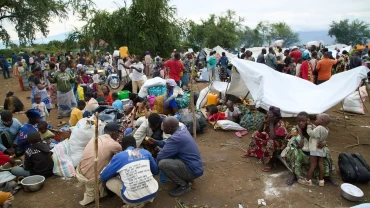
For a country repeatedly exposed to droughts, floods and increasingly unpredictable rainfall, the case for adaptation is hardly theoretical.
The question is how identified priorities, water security, climate-smart agriculture, resilient cities, early-warning systems, ecosystem restoration and renewable energy, move from national plans into financed and implemented programmes.
The economic stakes are substantial. A 2026 World Bank Country Climate and Development Report for Somalia found that cost-effective investments in climate-smart agriculture, resilient cities, disaster-risk management and stronger institutions could cut projected economic losses from climate change by half, while supporting more stable and productive employment.
Between a national climate priority and a resilient community lies an entire implementation chain: institutions capable of coordinating policy, reliable data, technical expertise, project preparation, financing, procurement, technology, implementation capacity, monitoring and institutions capable of maintaining what has been built.
For countries such as Somalia, breaking any link in that chain can prevent a climate priority from becoming reality.
Bankability matters
A drought early-warning system can prevent enormous livestock and livelihood losses. Flood protection can save infrastructure and economic activity. Climate information can improve agricultural decisions.
Watershed restoration can protect communities and productive ecosystems. These interventions can generate substantial economic and social returns without producing the financial cash flows required by private investors.
That distinction should shape COP31's implementation agenda. Commercial capital should flow where viable returns exist. Blended finance, guarantees and concessional resources can help viable but difficult projects overcome risk.
Grants and public finance will remain indispensable where climate interventions generate public goods rather than commercial revenues. The objective should therefore not be to make every climate priority fit the same financing model, but to match the financing instrument to the economics and public value of the intervention.
This is also why the priorities emerging from Africa and the least-developed countries extend beyond simply demanding more money.
Following the June 2026 Bonn negotiations, the LDC Group warned that “trust depends on delivery”, while calling for simplified access to climate finance, progress on adaptation finance and stronger implementation ahead of COP31.
At the same time, African countries need to strengthen their own implementation readiness through better institutional coordination, stronger project-preparation capacity, more effective public institutions and clearer national implementation frameworks.
African policy discussions ahead of COP31 and COP32 increasingly stress that climate leadership is not only about securing more international support, but also about building the domestic capability to translate commitments into investable programmes and measurable outcomes.
Delivery is a test of multilateralism itself
African countries should not merely be a beneficiary of COP31's implementation agenda. It should be one of its defining tests.
If the Climate Implementation Bridge can help move countries from priorities to projects, projects to appropriate finance, and finance to stronger institutions and measurable resilience, including in countries such as Somalia, Türkiye will have delivered something more consequential than another successful climate summit.
At a moment when confidence in multilateralism is under strain, it will have demonstrated that international cooperation can still deliver where the need is greatest.
The author, Mohamed Okash is the Founding Director of the Institute of Climate and Environment at SIMAD University and a Public Voices Fellow Tackling Poverty, a partnership of Acumen and The OpEd Project. He is also a member of the World Economic Forum’s Global Future Council on Climate and Nature Governance.
Disclaimer: The views expressed by the author do not necessarily reflect the opinions, viewpoints and editorial policy of TRT Afrika.
TRT Afrika / Mohamed Okash — TRT Afrika
Life & Development






South African telco MTN's service revenue rises over 17%
South Africa's MTN Group said on Monday its service revenue rose more than 17% in constant-currency terms in the nine months ended September 30.
South African voters rebuff ANC, accelerating shift to coalition politics
South Africans' disapproval of the African National Congress in local elections was a vote for performance over loyalty.
COP31 President Kurum urges action to turn climate pledges into results
Türkiye's Murat Kurum has called for COP31 to become an 'Implementation COP', turning pledges into tangible action through dialogue and stronger support for vulnerable countries.



All rights reserved. Newstimetr © 2026