
The opposition has called for an official clarification on the whereabouts of President Paul Biya even after the ruling party said he was running the government while abroad.
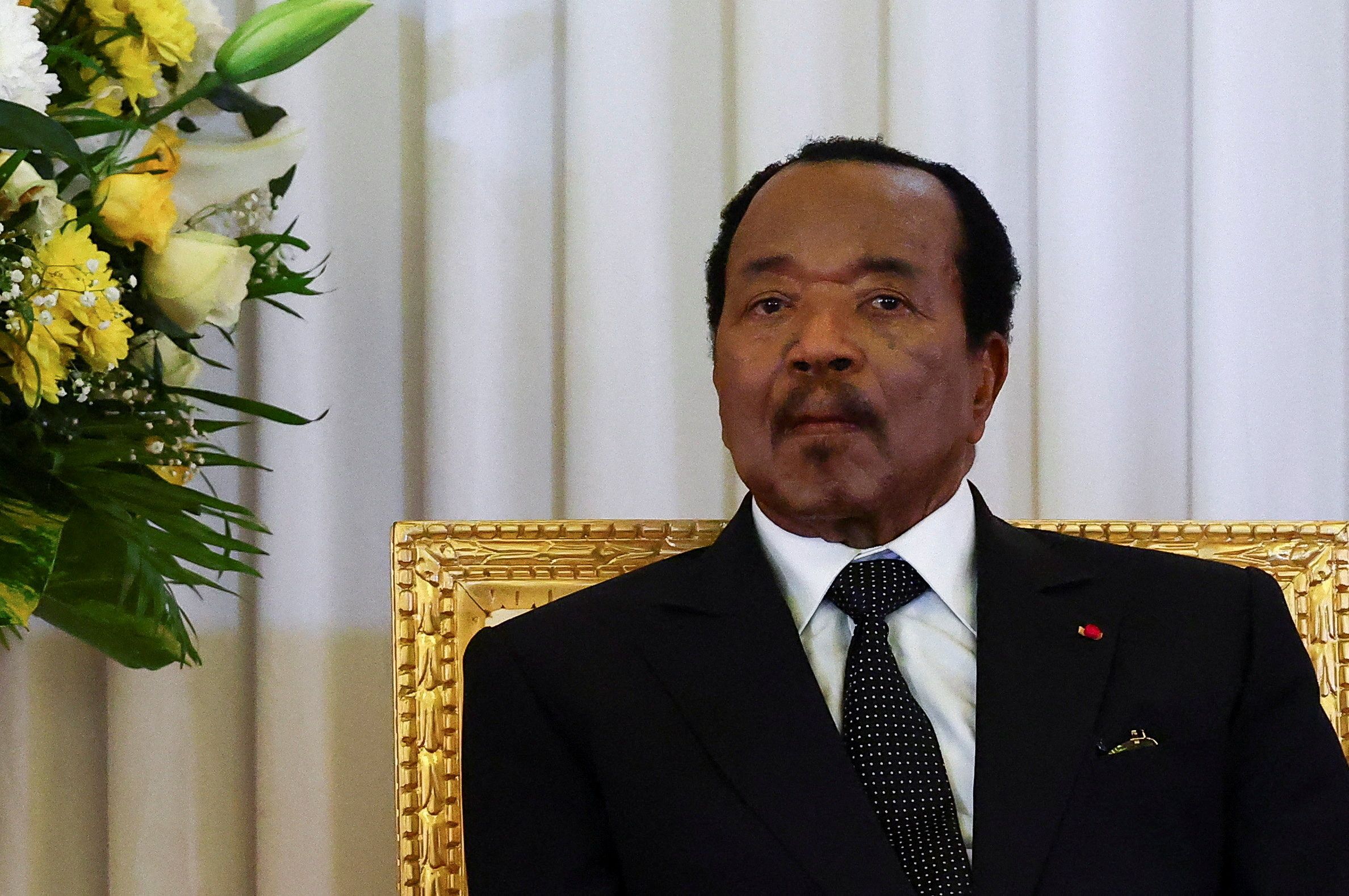
A question is begging for an answer in Cameroon: where is President Paul Biya?
For more than four decades, the 93-year-old leader has been at the helm of the oil-rich nation.
However, concern has been growing among Cameroonians and observers alike in recent weeks due to his absence.
President Biya, the world’s oldest head of state, left the country on 7 June for what officials called a "short, private stay in Europe" with his wife, Chantal Biya.
The government did not disclose the exact country in Europe.
But the Cameroonian leader has made frequent trips to Switzerland over the years, sometimes for medical reasons.
Communication Minister René Emmanuel Sadi on 18 June denied that Biya had been hospitalised in Geneva.
President Biya’s last widely reported public appearance was on 20 May 2026, during Cameroon’s National Day celebrations in Yaoundé.
So, who is in charge?
The Cameroon government had banned public discussion about Paul Biya's health after he took a similarly long period out of the country in 2024.
However, that has done little to silence comments, particularly by the opposition.
The Cameroon Democratic Union has urged officials to provide "necessary clarifications regarding the effective continuity of the state," while the Vice President of the Cameroon Renaissance Movement (MRC), Mamadou Mota, said there is a "glaring institutional vacuum."
However, after a rare meeting of the ruling party, the Cameroon People’s Democratic Movement, on 22 July, its Communication Secretary, Jacques Fame Ndongo, was quoted as saying President Biya "is meticulously following files" from abroad.
In Cameroon, there is no automatic "acting president" when the president travels or is temporarily absent.
When the president is out of the country but still able to govern, he retains power.
Ministers run the day-to-day affairs of their ministries, and the Secretary-General of the Presidency handles files. This appears to be the case currently.
Earlier this year, Cameroon reintroduced the role of vice-president, who is widely believed to assume power in the event of the president’s death or permanent incapacity. However, no VP has been appointed yet.
Prior to the creation of the VP role, the Constitution stipulates that the President of the Senate becomes interim president in the event of the president’s death or permanent incapacity, and new presidential elections must be held within 20 to 120 days.
The current Senate President is 65-year-old Aboubakary Abdoulaye, who was elected in March, succeeding 91-year-old Marcel Niat Njifenji.
Paul Biya came to power in 1982 following the resignation of Cameroon’s first leader, Ahmadou Ahidjo.
In October 2025, Biya secured an eighth term in office following an election disputed by his main challenger and former ally, Issa Tchiroma Bakary.


Ethiopia's army says it has foiled attacks by Tigray rebels
The army said it inflicted heavy personnel and equipment losses on the TPLF rebels.
The cost of UNGA: Who pays and who profits?
Member states make mandatory annual contributions based on capacity to pay, factoring in gross national income, external debt burden and per-capita income.
Sudan rejects US remarks questioning government legitimacy amid Burhan visa dispute
Khartoum urges Washington to respect Sudan’s sovereignty as activists and journalists criticise the reported linking of Transitional Sovereignty Council Chairman Abdel Fattah al-Burhan’s UN visa to a proposed 90-day truce.