

Lenacapavir, taken twice a year, has been shown to reduce the risk of HIV transmission by more than 99.9 percent, making it functionally akin to a powerful vaccine.
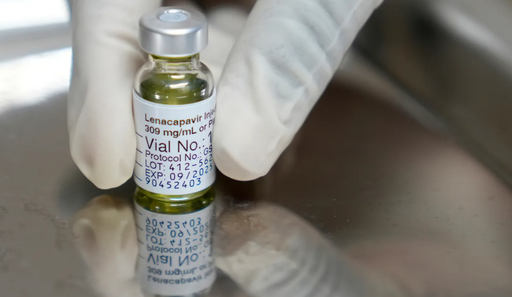
South Africa, eSwatini and Zambia are set to begin administering a groundbreaking new HIV-prevention injection in the drug's first public rollouts in Africa on Monday.
Lenacapavir, taken twice a year, has been shown to reduce the risk of HIV transmission by more than 99.9 percent, making it functionally akin to a powerful vaccine.
In South Africa, where one in five adults lives with HIV, a Wits University research unit oversaw the rollout as part of an initiative funded by Unitaid, the United Nations health agency.
"The first individuals have begun using lenacapavir for HIV prevention in South Africa ... making it among the first real-world use of the 6-monthly injectable in low-and middle-income countries," Unitaid said in a statement.
It did not specify how many people received the first doses of the drug, which cost $28,000 per person a year in the United States. A broader national rollout is expected next year.
Cost is high, people can’t afford it
Neighbouring Zambia and eSwatini received 1,000 doses last month as part of a US programme and were expected to launch the drug at World AIDS Day ceremonies on Monday.
Under the programme, manufacturer Gilead Sciences has agreed to provide lenacapavir at no profit to two million people in countries with a high HIV burden over three years.
Critics say this is far below the actual requirement and that the market price is out of reach for most people.
Eastern and southern Africa account for about 52 percent of the 40.8 million people living with HIV worldwide, according to 2024 UNAIDS data.
Generic versions of lenacapavir are expected to be available from 2027 at around $40 per year in more than 100 countries, through agreements by Unitaid and the Gates Foundation with Indian pharmaceutical companies.
Pre-exposure prophylaxis, or PrEP, has been used for over a decade to prevent HIV, but its reliance on a daily pill has limited its impact on global infections.



Sudanese army downs unidentified 'enemy drones' in eastern states
The Sudanese army air defences have repeatedly engaged and shot down militia drones that attempted to target areas in northern Omdurman.
Anthropic chief unveils three-step plan to slow AI race
After days of warnings from AI leaders, Anthropic CEO Dario Amodei unveils a plan to slow frontier AI and embed independent watchdogs inside leading developers.
Libya parliament unanimously approves general election plans
Libyans hope that the long-awaited elections will end political and armed conflicts and bring to a close the successive transitional periods.