The 2026 FIFA World Cup is no longer just the world's biggest football tournament. As political controversy, diplomatic tensions and unprecedented public attention converge on stadiums across North America, the competition has become a reflection of
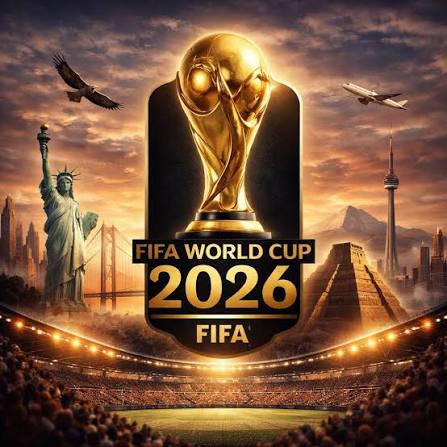
The FIFA World Cup has always been more than a sporting event. From the political symbolism of Argentina 1978 to South Africa's historic 2010 tournament and Qatar's human rights debates in 2022, football's biggest stage has repeatedly mirrored the world's most pressing issues. Yet the 2026 edition, jointly hosted by the United States, Canada and Mexico, is unfolding in a way few anticipated.
While millions of fans continue filling stadiums from Seattle to Mexico City, conversations surrounding the tournament have shifted well beyond tactics, goals and title favourites. Instead, political intervention, questions about FIFA's independence, immigration policies, security concerns and cultural identity have become defining themes of the competition.
Football's biggest celebration meets political reality
The latest controversy erupted following FIFA's decision to overturn the suspension of United States striker Folarin Balogun shortly before the Round of 16 clash against Belgium. The decision, made after public intervention from U.S. President Donald Trump, triggered criticism from European football officials, former players and governance experts, who argued that sporting institutions must remain insulated from political influence.
Although FIFA insisted that its disciplinary bodies acted independently, the incident sparked renewed debate over whether the world's governing football body can truly remain neutral while operating within increasingly polarized political environments.
Belgium ultimately defeated the United States 4-1, eliminating one of the tournament's hosts. Yet the result itself quickly became secondary to broader discussions surrounding governance, transparency and the integrity of international sport.
A tournament shaped by geopolitics
Unlike previous World Cups hosted by a single nation, the 2026 tournament spans three countries and dozens of cities, creating unprecedented logistical and diplomatic complexity.
Border management, visa processing, transportation networks and security coordination have required close cooperation between governments that often maintain differing political priorities. These operational challenges have coincided with global debates over migration, border security and international mobility.
For thousands of supporters from Africa, Asia and the Middle East, obtaining travel documentation proved almost as difficult as securing match tickets. Fans from several countries encountered visa delays or restrictions, prompting criticism that the tournament's promise of global inclusivity had not been fully realized.
Identity takes center stage
Perhaps no player better represents modern football's evolving identity than Balogun himself.
Born in New York to Nigerian parents and raised in England before choosing to represent the United States internationally, his personal story reflects the increasingly multicultural nature of international football.
His emergence has reignited discussions over nationality, dual citizenship and the role migration plays in shaping national teams.
Experts argue these conversations extend far beyond football, touching broader debates over globalization, demographic change and national belonging in many Western societies.
FIFA faces renewed governance questions
The Balogun controversy has also intensified scrutiny of FIFA President Gianni Infantino and the organization's decision-making processes.
European football associations questioned whether political pressure had influenced disciplinary procedures, while legal experts suggested the incident could encourage future appeals from federations seeking similar treatment.
Governance specialists warn that perceptions of unequal treatment can be nearly as damaging as actual institutional bias.
Maintaining confidence among players, supporters and member associations remains one of FIFA's greatest challenges as football continues expanding into a global entertainment industry worth tens of billions of dollars annually.
Football's economic influence keeps growing
Off the pitch, the World Cup has become one of the world's largest economic events.
Host cities have welcomed millions of visitors, generating billions in tourism revenue for hotels, airlines, restaurants and retail businesses.
Major sponsors including sportswear manufacturers, technology firms and financial institutions have invested heavily in advertising campaigns linked to the tournament, viewing the World Cup as one of the few events capable of reaching audiences across every continent simultaneously.
Meanwhile, broadcasters continue competing aggressively for television and streaming rights as viewing habits increasingly shift toward digital platforms.
Climate and infrastructure under the spotlight
The expanded 48-team tournament has also highlighted environmental questions.
Several matches have been played under unusually high temperatures, forcing FIFA to adjust hydration protocols and scheduling considerations.
Climate researchers note that extreme summer weather may become a recurring challenge for future global sporting events, prompting organizers to reconsider tournament calendars, stadium design and player welfare measures.
Infrastructure investments—including transportation upgrades, stadium modernization and urban redevelopment—are expected to leave long-term economic benefits for many host cities, though analysts caution that maintaining these facilities after the tournament will determine whether the investments prove sustainable.
Fans remain the heart of the tournament
Despite political controversy, supporters continue providing the tournament's defining moments.
Seattle, Mexico City, Toronto and other host cities have witnessed remarkable scenes of multicultural celebration as fans from dozens of nations gather in public viewing areas and stadium precincts.
For many visitors, football continues to offer something increasingly rare in modern international affairs: a shared language capable of transcending political disagreements, cultural differences and national borders.
Looking beyond 2026
The 2026 World Cup may ultimately be remembered not only for the team that lifts the trophy but for demonstrating how global sport has entered a new era.
Football is now inseparable from technology, economics, diplomacy, climate policy and questions of identity.
As FIFA prepares for future tournaments, balancing commercial expansion with sporting integrity will become increasingly difficult. The organization must convince fans, players and governments alike that football's universal appeal can survive growing political pressures.
Whatever the final score on the pitch, World Cup 2026 is already redefining what the world's biggest sporting event represents in the twenty-first century.
World Cup 2026
FIFA
Football Politics
Folarin Balogun
Gianni Infantino
Donald Trump
Belgium
United States Soccer
FIFA Governance
Sports Business


AU calls for urgent de-escalation in northern Ethiopia after Tigray rebels seize airports
The African Union Commission calls on neighbouring countries to actively support de-escalation, dialogue and confidence-building, according to a statement.
British arms dealer jailed over weapons deals with Sudan, Libya
David Greenhalgh has been jailed for 16 years after being convicted of arranging the supply of guns, missiles and fighter jets to countries across Africa and Middle East.
Eleven killed after gunmen open fire at South African party
Ten victims died at the scene of the attack, while another individual succumbed to injuries while being transported to a hospital.