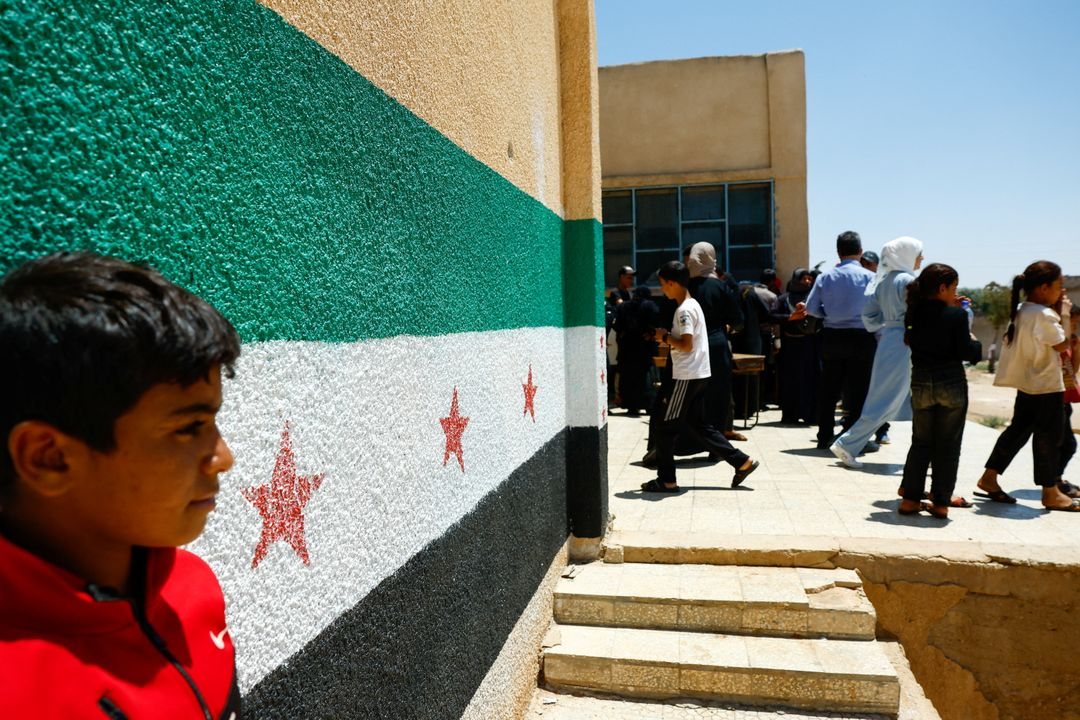
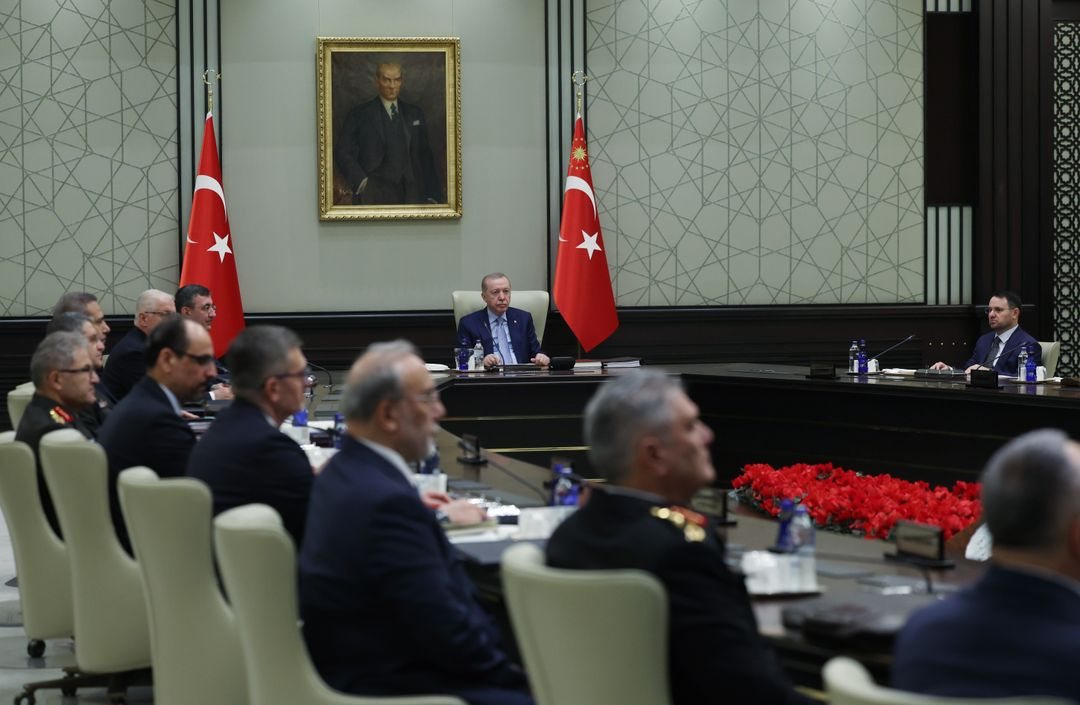
Ankara’s primary objective is to prevent Syria from becoming embroiled in confrontations with regional militias or domestic actors that can plunge Syrian society into conflict and ease Israel’s path to intervention, analysts say.
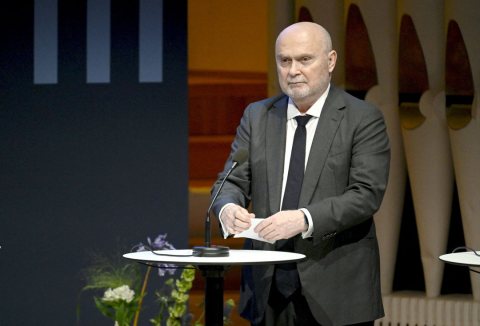
Turkish Foreign Minister Hakan Fidan has said Israel is supplying weapons and ammunition by helicopter every week to one of the three Druze factions in southern Syria to provoke the Syrian army into a direct military confrontation.
The Druze are an Arabic-speaking community spread across Syria, Lebanon, Israel, and the Syrian territory of the Golan Heights that Tel Aviv has illegally occupied since 1967.
In February 2025, Israel bombed the Druze-dominated Sweida in southern Syria, followed by another major escalation in July of the same year, on the pretext of ‘protecting’ the Druze community.
Syrian officials have said Damascus is determined to reach a “diplomatic solution” with Tel Aviv despite repeated Israel’s illegal military incursions into Syrian territory since 2025.
Saying that Israel cannot ensure its own security by harming its neighbours, Fidan reiterated that Tel Aviv’s actions in Syria pose a threat to the security and connectivity architecture that Türkiye and other regional countries were seeking to establish.
Syrian Foreign Minister Asaad al Shaibani has also called out Israel for providing weapons and funding to armed militias operating outside state authority in Suwayda to pursue an “agenda of chaos”.
He demanded that Israeli forces withdraw to the lines held before December 2024, while reaffirming that the Druze community will remain an “integral part” of the Syrian Arab Republic.
Experts say Israel is instrumentalising a minority Druze faction to manufacture pretexts for wider intervention and permanent fragmentation of southern Syria.
Oytun Orhan, coordinator for Levant Studies at Ankara’s Centre for Middle Eastern Studies (ORSAM), tells TRT World that Israel’s efforts to arm a particular Druze faction are meant to strengthen separatist aspirations in Suwayda.
Israel wants to prevent the Syrian government under President Ahmad al Sharaa – whose forces booted out the 54-year-long Assad regime from Damascus two years ago – from establishing control over the province, he adds.
The goal is to provoke an armed confrontation between the Syrian government and Druze factions, creating an opportunity for Israel to conduct a direct military intervention, he says.
Orhan describes a broader objective of establishing a corridor from Quneitra through Daraa to Sweida, effectively creating a “militarised security zone” from which Syrian government forces would be excluded.
Israel wants to depopulate parts of southern Syria and bring them under its direct occupation, while Suwayda stays under pro-Israeli armed factions, he says.
Tuba Yildiz, an academic and analyst of Middle Eastern politics, tells TRT World that Israel’s influence over Sweida is meant to demonstrate that its security strategy along its northern border remains unchanged.
She says that militia groups led by Hikmat al Hajari – a shape-shifting factional leader who has described the Druze as an “inseparable part” of Israel – were preparing for renewed clashes with Syrian security forces.
“The Syrian Druze currently constitute the most convenient instrument for Israel, which will continue to exploit this community to undermine Syria’s security,” she says, while stressing that an inclusive Syrian state approach remains essential to limit lasting damage to social cohesion.
Patterns of escalation
Orhan identifies a series of interconnected Israeli policies since the fall of the Baathist Assad regime two years ago.
Israel first targeted Syria’s strategic military infrastructure, then carried out airstrikes on Sweida and Damascus in July 2025 that prevented the government from re-establishing sovereignty over the province.
It subsequently strengthened the separatist demands of the al Hajari faction through military support, expanded its occupation beyond the Golan Heights along a line parallel to the Lebanese border, and seized the strategically important Mount Hermon, he notes.
Almost daily ground incursions, artillery shelling, and detentions in Quneitra’s border areas appear designed to render parts of southern Syria “unsafe and uninhabitable”, laying the groundwork for further occupation.
“The recent significant increase in the frequency of Israeli attacks and ground incursions, combined with the growing military support provided to the al Hajari faction, should be viewed within this broader strategic framework,” Orhan says.
“Taken together, these developments are strong indications that Israel may seek to expand its occupation of southern Syria in the near future, using the protection of the Druze community as a pretext,” he says.
Yildiz highlights the sequence of helicopter surveillance, subsequent arms deliveries, and public statements by al Hajari emphasising historical ties with Israel as evidence of a systematic plan aimed at establishing an autonomous Druze region.
“There is, therefore, a systematic strategy aimed at the fragmentation of Syria, and conflict is a prerequisite for its implementation,” she says.
She notes that around 1,000 Syrian soldiers have already been deployed to western Sweida, bringing government troop numbers there to 3,000, even as Damascus seeks to avoid falling into a provocation trap.
Ankara’s diplomacy in action
According to Orhan, there are three main elements of Ankara’s diplomatic efforts for Syria.
The first is facilitating a security agreement between Syria and Israel that updates the 1974 Disengagement of Forces Agreement, provides mutual security guarantees and prevents interference in each other’s internal affairs.
Türkiye is using its influence in Washington to encourage US pressure on Israel and mediation, he says.
The second pillar of Ankara’s ongoing diplomacy is strengthening Syria’s central authority.
“Türkiye supports the Syrian government’s efforts to gain diplomatic recognition and international legitimacy, while also helping to strengthen its institutional and state capacity,” Orhan says.
Turkish support on the issue of the SDF – a disbanded terrorist group – has been particularly significant, he says.
“By helping to eliminate what I consider to have been the greatest threat to Syria’s territorial integrity, Türkiye has also strengthened the Syrian government’s position regarding the Druze issue and dealt a serious blow to Israel’s efforts to destabilise Syria through the instrumentalisation of Druze factions,” he says.
The third pillar is developing effective Syrian military capacity, so that Damascus can address security challenges in Sweida and respond to Israeli attacks when necessary, Orhan notes.
Yildiz says Ankara’s primary objective is to prevent Syria from becoming embroiled in confrontations with regional militias or domestic actors that can plunge Syrian society into conflict and ease Israel’s path to intervention.
Ankara attaches particular importance to the Syrian state’s engagement with Druze representatives other than al Hajari – most of whom oppose Israel – and is prepared to play a leading role in mediation, she says.
“The Turkish government firmly believes that the Druze are an integral part of Syria,” she notes.
TRT World / Kazim Alam — TRT World