UN agency warns El Nino could displace 3 million people in east Africa as 2026 wraps
Editor:
Halimatou HAMADOU DJIBO


UNHCR said weather-related disasters had triggered more than 255 million internal displacements worldwide over the past decade.
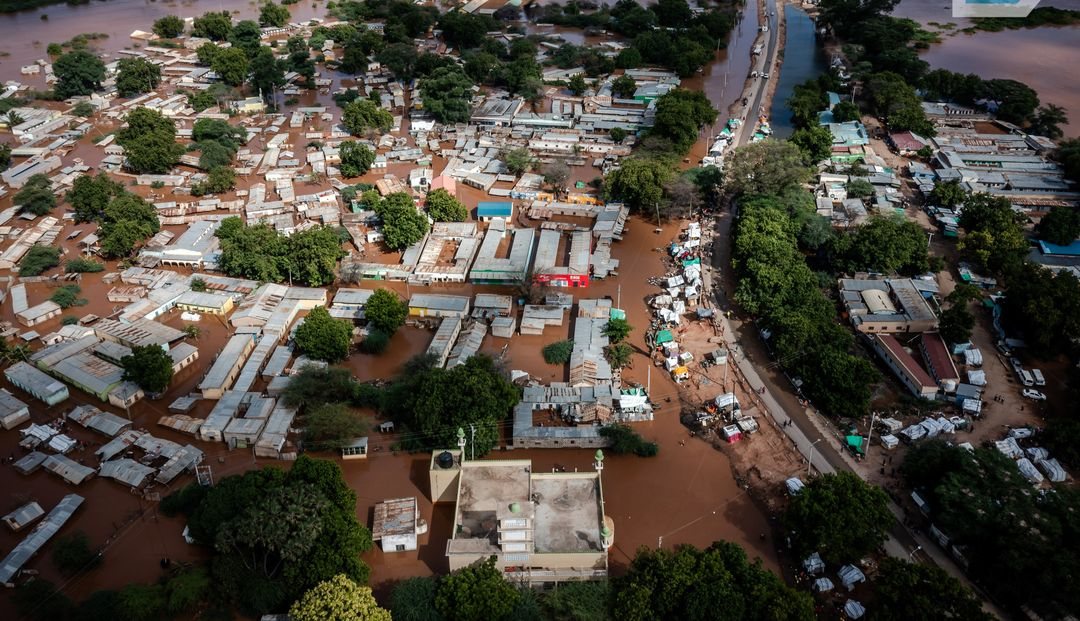
Nearly 90 million forcibly displaced people worldwide face severe climate-related hazards, including droughts, floods and extreme heat, the UN refugee agency warned on Friday.
“Forecasts indicate that severe flooding associated with a very strong El Nino could displace up to 3 million people across Somalia, Kenya, South Sudan and Uganda by the end of 2026, depending on the severity of the floods,” the UN High Commissioner for Refugees (UNHCR) said.
The warnings come ahead of the UN climate conference COP31, which Türkiye is set to host in Antalya from 9 to 20 November 2026.
In its latest report, UNHCR warned nearly three in four forcibly displaced people globally live in countries facing high to extreme exposure to climate-related hazards.
‘Urgent action’
The agency called for “urgent action” to protect refugees and other displaced people from worsening climate impacts ahead of the COP31 climate summit in Antalya, Türkiye.
“By 2050, one in three refugee settlements across sub-Saharan Africa could face at least 100 days of dangerous heat each year,” it further warned.
“Refugees face a double injustice. Forced to flee conflicts they did not cause, they are now on the frontlines of a climate crisis they have contributed least to,” said Anton Leis Garcia, UNHCR’s assistant high commissioner for operations.
Leis Garcia said climate change was not a “distant threat” for millions of people but was already undermining their livelihoods.
He warned that the world “cannot allow those who have already lost so much to be left behind in global climate action.”
Threat to lasting solutions
The UNHCR report also stressed that climate change was threatening the prospect of lasting solutions for displaced people.
It underlined that “more than two in three” refugees returned home during the first half of 2026 went back to countries vulnerable to climate hazards.
UNHCR said weather-related disasters had triggered more than 255 million internal displacements worldwide over the past decade, averaging around 70,000 daily.
Despite growing risks, fragile and conflict-affected countries receive only around 10% of global climate finance, the report noted.
“We need climate financing to reach the communities where the needs are greatest,” Leis Garcia said.
“Refugees and their host communities must be part of these investments, not an afterthought,” he added.
UNHCR said it would urge governments and institutions at COP31 to include refugees and displaced people in national climate plans and financing mechanisms.
TRT Afrika / Anadolu Agency — TRT Afrika / Anadolu Agency
Photo: Anadolu Agency







Top US diplomat Rubio denies plans to leave post for White House bid
Secretary of State Marco Rubio, considered potential Republican candidate in 2028 presidential race, dismisses reports of his planned departure from Trump administration.
Hegseth stands by Iran war as Vance, Trump cite it for midterm rout
Pentagon boss Pete Hegseth vows to fight efforts in Congress to impeach him and defends US war on Iran that Vice President JD Vance argues cost Republicans control of Congress.
Trump predicts deal with Russia on Ukraine and 'all of Europe' after meeting with Putin's envoy
US President Trump says the potential deal with Moscow is going to be "big" and "beautiful", adding "everyone's going to be thrilled."




All rights reserved. Newstimetr © 2026