The $45 facility is expected to produce around 77.6 million kilowatt-hours of electricity annually, enough to supply approximately 20,000 households.
Türkiye's first floating solar power plant under the Renewable Energy Resource Areas (YEKA) programme will begin generating electricity early next year, its investor told Anadolu on Tuesday.
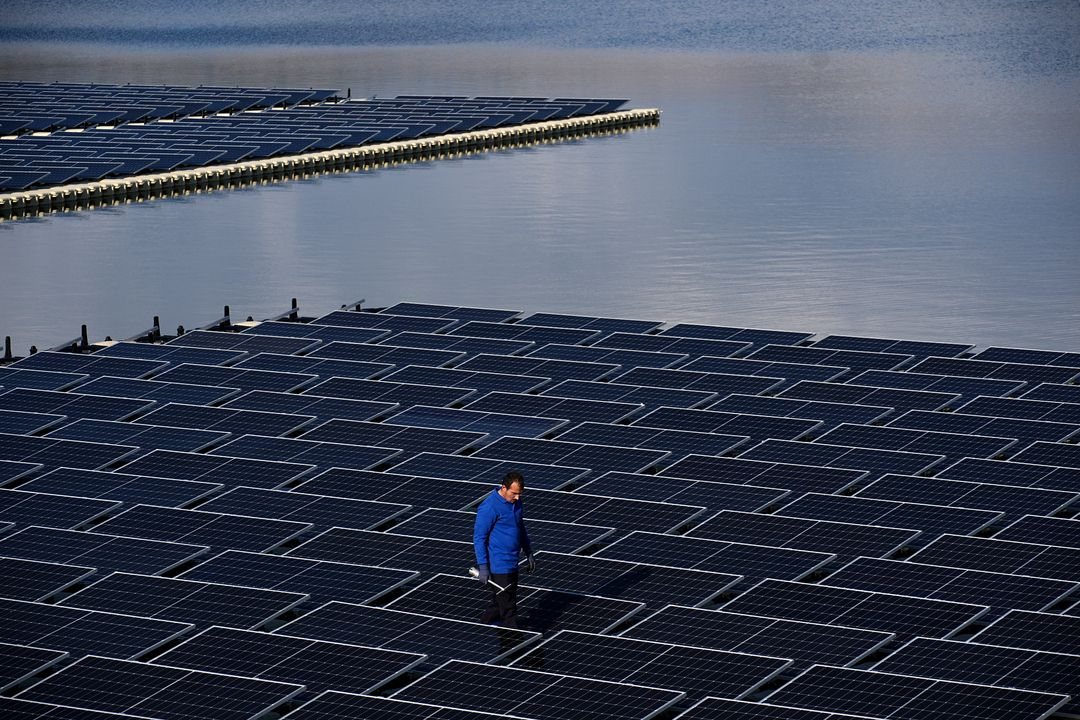
The facility is under construction on the surface of Demirkopru Dam in the Salihli district of Aegean Manisa province, covering roughly 500 decares.
Representing an estimated investment of $44.8 million, the plant will feature 91,368 solar panels rated at 550 watts each.
It will have a total installed panel capacity of 50.25 megawatt-peak and a grid export capacity of 35 megawatts, targeting roughly 77.6 million kilowatt-hours of annual output.
Following a pre-license issued on July 23, fieldwork began three months ago, and the first panels were lowered onto the water in October.
Workers assemble the multi-panel platforms onshore before towing them by boat to the dam's interior sections.
Engineers designed the 8,000-ton floating system with flexible mooring lines and extra cable slack to adapt to changing water levels, winds, and waves.
Moisture- and sunlight-resistant panels will be monitored remotely alongside wind and water conditions, while regular water sampling tracks fish populations.
The project's Environmental Impact Assessment report has been approved by the Ministry of Environment, Urbanisation and Climate Change.
Investor firm chairman Muhammet Balkaya told Anadolu that all engineering and material phases were carried out meticulously because the facility is Türkiye's first such installation.
"We will commission the plant in phases and plan to begin generating the first 9 megawatts of electricity between late January and mid-February 2027," Balkaya said.
He added that the entire facility will be operational by the end of May, providing enough electricity for approximately 20,000 households.
Balkaya emphasised that floating solar plants avoid using forest or agricultural land, curb water evaporation, and support underwater flora and fish diversity.
Türkiye's UN envoy says a new maritime safety mechanism aims to secure shipping routes and safeguard food supplies for countries dependent on Black Sea exports.
The British prime minister insists voters must decide on any return to the EU while defending renewed discussions on the country's future relationship with the bloc.