Trump Says Nuclear Deal With Iran Is ‘Over’ as Regional Tensions Escalate
Editor:
Tuğçe Nur Kaya


U.S. President Donald Trump declared that he no longer seeks a nuclear agreement with Iran, saying the possibility of a new deal is "over" following renewed tensions between Washington and Tehran.
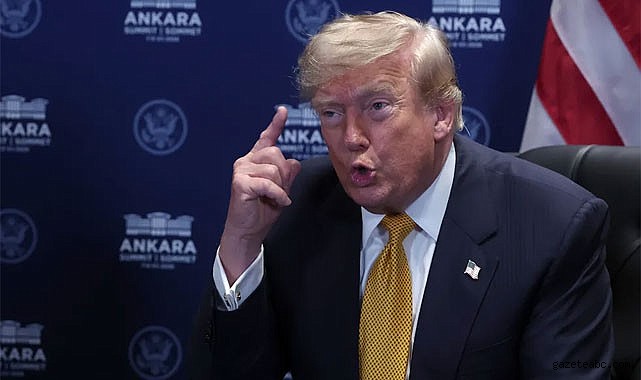
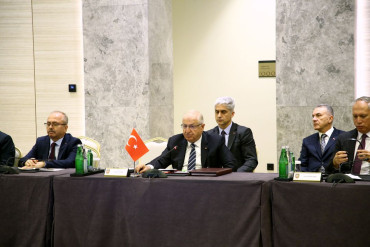
Speaking alongside NATO Secretary General Mark Rutte ahead of the 36th NATO Heads of State and Government Summit in Ankara, Trump delivered some of his strongest remarks yet on Iran, while regional developments involving Lebanon, the Strait of Hormuz and European diplomacy underscored growing instability across the Middle East.
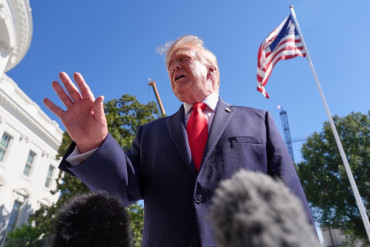
Addressing reporters before the NATO summit, Trump dismissed the prospect of further negotiations with Tehran.
"As far as I'm concerned, it's over. I don't want to make a deal with them anymore," Trump said.
He accused Iran's leadership of acting in bad faith and questioned the value of continuing diplomatic engagement.
Trump argued that negotiating with Tehran would be "a waste of time," describing Iranian officials as dishonest and saying previous efforts had failed to produce lasting results.
The U.S. president also repeated his longstanding concerns over Iran's nuclear ambitions, claiming that Tehran would use nuclear weapons if it obtained them.
His comments mark one of the clearest indications yet that Washington's approach toward Iran has hardened amid rising regional tensions.
Trump's remarks come as relations between the United States and Iran continue to deteriorate following a series of military and diplomatic developments.
The United States recently revoked a license that had temporarily allowed the sale of Iranian oil, increasing economic pressure on Tehran.
At the same time, reports in U.S. media claimed that Iran launched missile attacks against two commercial vessels transiting the Strait of Hormuz, one of the world's most important maritime energy routes.
Iranian officials have maintained their opposition to U.S. policies in the region.
Iranian Parliament Speaker Mohammad Bagher Ghalibaf recently stated that Tehran has no peace with the United States and will not formally recognize Israel.
These developments have further complicated efforts to revive diplomatic dialogue between the two countries.
Meanwhile, Lebanon has announced preparations for a high-level diplomatic visit to the United States.
A senior Lebanese official told Anadolu Agency that President Joseph Aoun has received an official invitation to visit Washington on July 21, with the invitation expected to be formally delivered by U.S. Ambassador to Lebanon Michel Issa.
According to Lebanese officials, discussions are expected to focus on bilateral cooperation, implementation of joint initiatives, Lebanon's position regarding regional conflicts, and future relations between Beirut and Washington.
Lebanon's Embassy in Washington also confirmed that President Aoun is scheduled to meet President Trump during the visit.
The two leaders are expected to discuss bilateral relations, regional security, and continued U.S. support for Lebanon's sovereignty, territorial integrity, stability and state institutions.
While diplomatic efforts intensified internationally, Lebanon's leadership continued consultations on the country's internal situation and regional security.
According to a statement issued by the Lebanese Presidency, President Joseph Aoun met Prime Minister Nawaf Salamto review the latest political and security developments.
The meeting focused on the situation in southern Lebanon, where both leaders emphasized the importance of preserving the ceasefire and securing Israel's withdrawal from areas it continues to occupy.
The two officials also reviewed government preparations aimed at reopening roads, removing war debris and repairing damaged infrastructure in affected regions.
Prime Minister Salam additionally briefed President Aoun on his planned official visit to Türkiye.
Preparations for the upcoming Cabinet meeting were also discussed during the talks.
The European Union warned that the latest exchange of attacks between the United States and Iran risks making diplomatic efforts even more difficult.
EU High Representative for Foreign Affairs and Security Policy Kaja Kallas issued a statement following military developments near the Strait of Hormuz.
Her remarks came after the U.S. Central Command (CENTCOM) announced strikes on more than 80 military targetsnear the strategic waterway in response to attacks attributed to Iran against commercial shipping.
Kallas recalled that Tehran had previously committed to keeping the Strait of Hormuz open to international navigation under earlier understandings.
However, she said recent attacks on vessels operating near the waterway appear to violate those commitments and threaten the resumption of stable global energy supplies.
"The freedom of navigation must never be obstructed," Kallas said.
She added that the latest military exchanges between Washington and Tehran have made already difficult diplomatic negotiations even more complicated.
Kallas also condemned reported Iranian attacks targeting Bahrain and Kuwait, describing them as unacceptable and warning that further escalation could undermine regional stability.
The Strait of Hormuz continues to serve as one of the world's most strategically significant maritime corridors.
A substantial share of global oil exports passes through the narrow waterway each day, making any disruption a matter of international concern.
Recent reports of attacks on commercial vessels, combined with military operations carried out in the surrounding area, have renewed concerns about shipping security, energy markets and broader regional stability.
Governments across the region and beyond continue to monitor developments closely as tensions remain high.
Although the NATO Summit in Ankara is primarily focused on collective defense, increased military spending and transatlantic security, developments in the Middle East have emerged as a major topic on the sidelines of the gathering.
Trump's remarks on Iran highlighted the extent to which regional security challenges continue to influence discussions among NATO allies.
The latest tensions involving Iran, commercial shipping in the Strait of Hormuz and the broader security environment have reinforced concerns over the potential impact of instability on global energy supplies and international trade.
Officials attending the summit have stressed the importance of maintaining regional stability while continuing diplomatic efforts where possible.
Trump's declaration that he no longer wishes to negotiate with Tehran introduces additional uncertainty into future U.S.-Iran relations.
While Washington has continued to increase economic and military pressure on Iran, European officials have maintained that diplomacy remains the preferred path to reducing regional tensions.
The latest developments suggest that prospects for renewed negotiations have become increasingly uncertain as both sides exchange accusations and military confrontations continue.
Analysts say future diplomatic initiatives will largely depend on whether tensions in the Gulf region can be contained and whether both parties show willingness to return to dialogue.
The combination of military incidents, diplomatic disputes and competing strategic interests continues to place significant pressure on security across the Middle East.
Developments involving Iran, Lebanon, Israel and Gulf states remain closely interconnected, with each new escalation carrying wider implications for international security.
The situation has also drawn increased attention from European governments, which fear that prolonged instability could threaten energy security, maritime trade and broader geopolitical stability.
As the NATO Summit continues in Ankara, attention is expected to remain focused not only on alliance decisions but also on Washington's next moves toward Tehran.
At the same time, Lebanon's planned diplomatic engagement with the United States and the European Union's calls for restraint reflect ongoing efforts to prevent further escalation.
Whether diplomatic channels can be revived remains uncertain, but recent statements from political leaders indicate that tensions between the United States and Iran are likely to remain a key issue on the international agenda in the coming weeks.



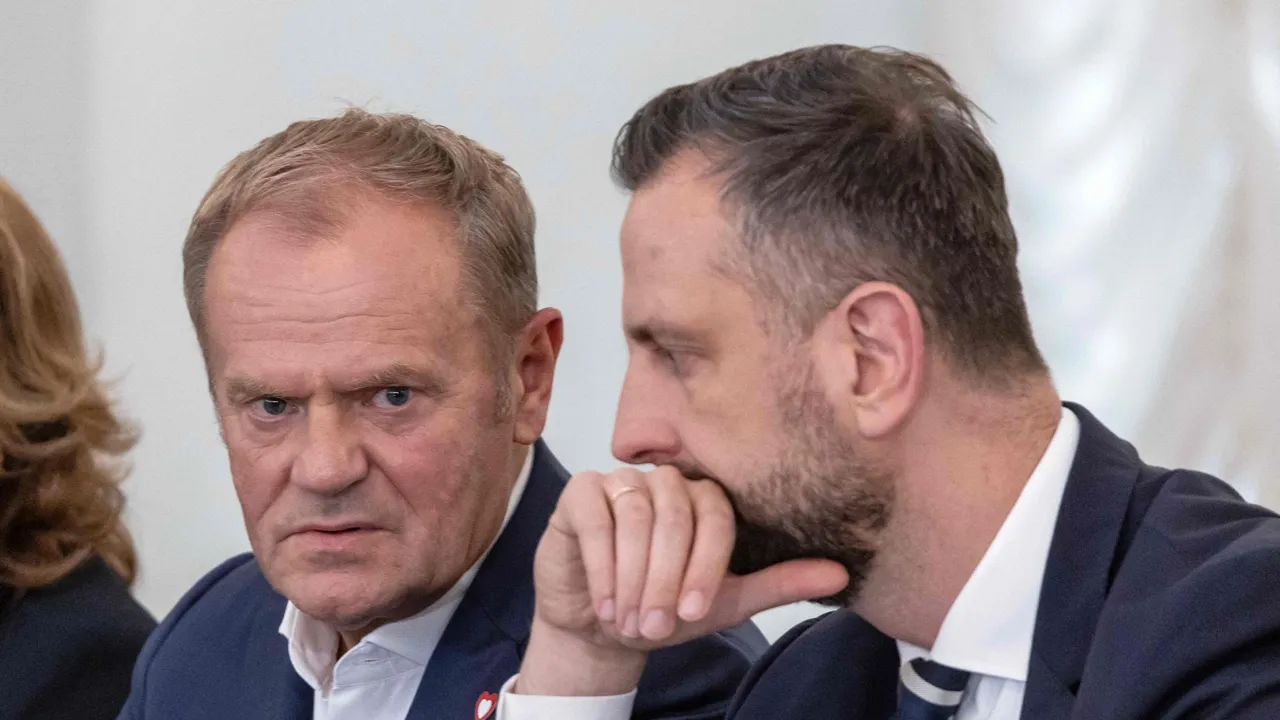




Poland warns of assassination attempt on PM, defence minister
Security officials say there is a strong likelihood the threats could be carried out, as authorities order action.
Türkiye 'strongly' condemns deadly Houthi militia attack on Riyadh airport
Ankara says attacks targeting civilians and civilian infrastructure violate international law.
Djibouti migrant boat tragedy kills at least 109 people, including 15 children
At least 109 migrants died, including 15 children, and approximately 116 others went missing when a boat sank off the shores of Djibouti overnight on October 8-9.




All rights reserved. Newstimetr © 2026