Africa’s four richest people have more wealth than 750 million people combined - that’s half of the continent’s entire population.
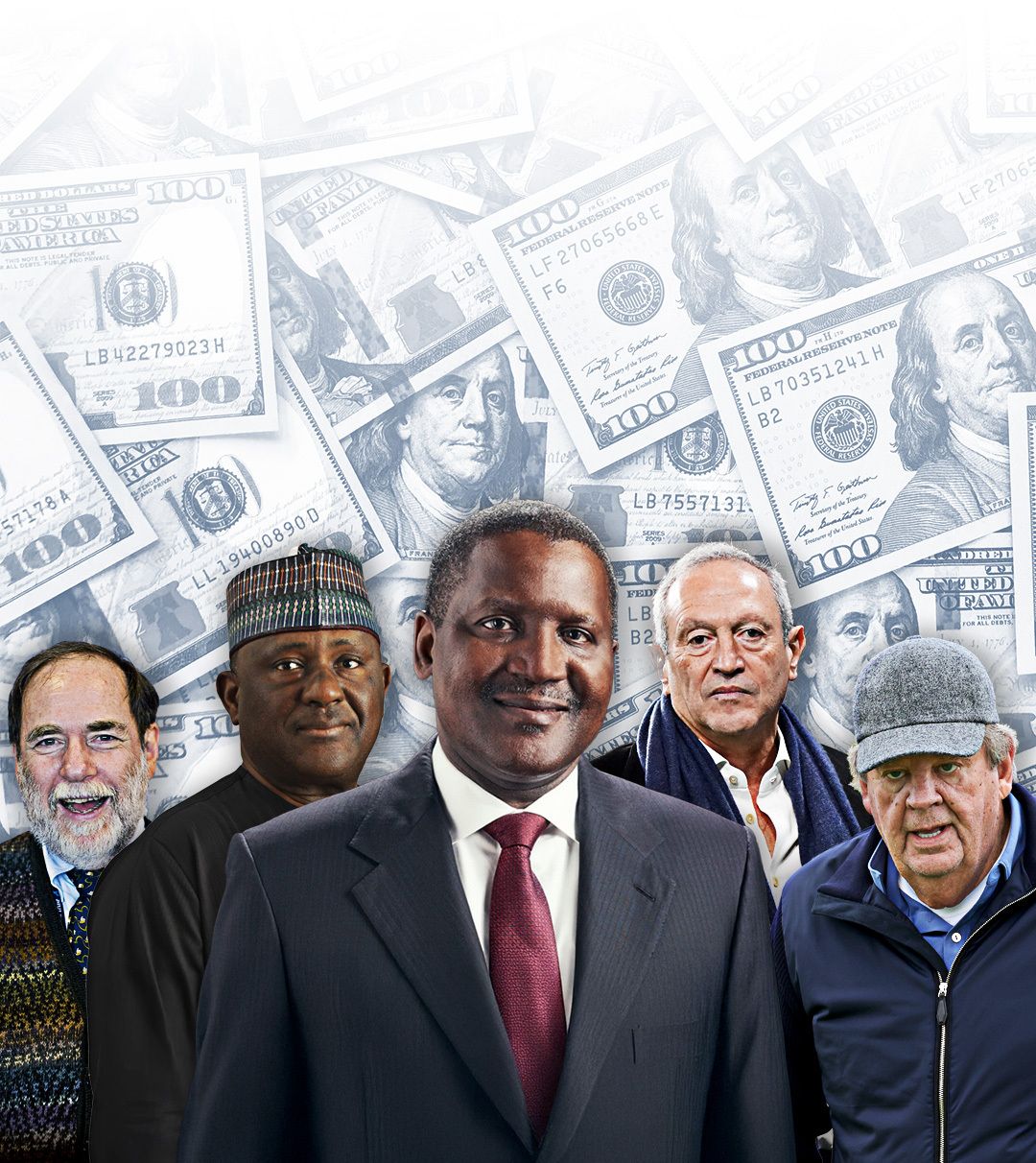
The wealth of African billionaires is ballooning. It has increased by at least 56% in the past five years alone.
In sharp contrast, the poor are becoming poorer too. According to a 2025 report by Oxfam International, Africa’s four richest people had more wealth than 750 million people combined. That’s half of the continent’s entire population.
Africa had no publicly listed dollar billionaire as of 2000. Now there are at least 23.
According to Forbes, they are cumulatively worth $126.7 billion as of May 2026. That’s 21% up from the previous year.
From Nigeria’s Aliko Dangote and Abdul Samad Rabiu to South Africa’s Johann Rupert and Nicky Oppenheimer, and Egypt’s Nassef Sawiris and others, the super-rich continue to build business empires.
Global reality
But this is not just an African matter. It is a global reality. The 2026 World Inequality Report by the UN-backed World Inequality Lab says wealth disparity remains “extreme and persistent” worldwide.
It says “the top 10% of global income-earners take home more than the remaining 90%.”
But why?
The World Inequality Report says the problem is driven by weak taxation of the rich, extreme concentration of capital, and unequal access to education and opportunity.
Some of the super-rich also use “political influence” to sway governments. This lets the wealthy block reforms that could benefit the poor, to protect their business interests.
Their businesses also account for most carbon emissions that pollute the environment and hit the poor hardest.
More than 460 million people in Africa were living in ‘’extreme poverty’’ in 2025. That’s according to the World Bank.
Financial systems
Experts say poverty is not a lack of money in society. There’s plenty of money. The challenge is how it flows. Some of the rich create jobs, give donations, and fund education and healthcare.
But researchers say global financial systems are faulty, allowing the super-rich to accumulate wealth more easily. That imbalance needs to be fixed. The World Inequality Report stresses this is not just about handouts.
There must be universal access to education – no difference between the children of the rich and the less privileged.
It also advocates ending tax systems that favour the rich, and massive investments locally to create more jobs, while governments implement mass-friendly economic policies and tackle corruption.

South Africa searches for another woman, Ramaphosa prepares national address
Police urged anyone with information to come forward and stressed that there is no waiting period.
DR Congo's North Kivu Province predicted as new Ebola hotspot
Frontline health workers said cases were continuing to emerge in new areas that were not adequately prepared to respond.
Ethiopia, Djibouti and Dangote launch petroleum pipeline, storage
The 120-kilometre pipeline will connect Djibouti’s Damerjog port to Ethiopia, cutting fuel transport times and strengthening one of East Africa’s most important trade corridors.