Seoul says Russian military aircraft entered its air defence identification zone over Sea of Japan but did not violate South Korean sovereign airspace.
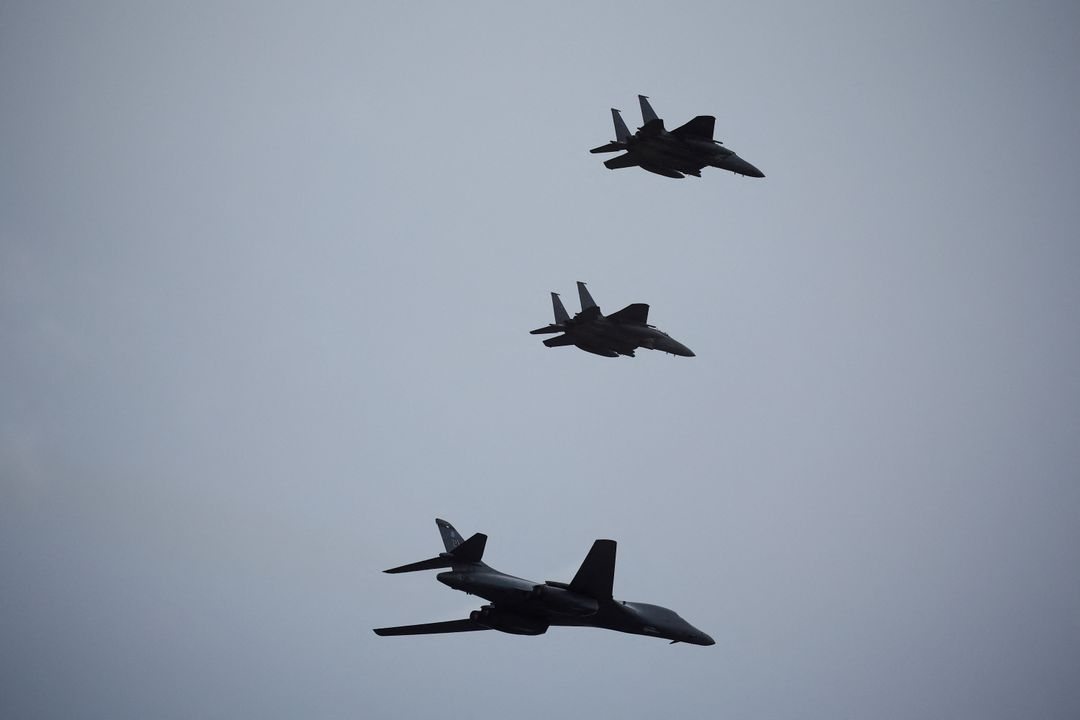
South Korea has deployed fighter jets and executed tactical manoeuvres after several Russian military aircraft entered its air defence identification zone, military authorities in Seoul confirmed.
The Joint Chiefs of Staff (JCS) in Seoul stated that an unspecified number of Russian aircraft entered and subsequently exited the Korea Air Defence Identification Zone (KADIZ) over the East Sea, also known as the Sea of Japan, during the early hours of Tuesday morning.
"Our military detected the Russian aircraft before they entered the KADIZ and deployed Air Force fighter jets, taking tactical measures to prepare for any contingency," the JCS said in an official statement.
Airspace boundaries
An air defence identification zone is not sovereign territorial airspace, but an internationally designated buffer zone within which coastal states require approaching foreign military aircraft to identify themselves for national security purposes.
Whilst foreign military aircraft are customarily expected to notify the respective nation prior to entering its air defence perimeter, such advance notification is not legally binding under international aviation law.
Seoul confirmed that the Russian aircraft did not violate South Korea's sovereign airspace at any point during the incident.
The encounter follows a similar military incident in June, when more than 10 Chinese and Russian military aircraft entered South Korea's air defence zone, prompting Seoul to scramble fighter jets to shadow the formation.
Those aircraft likewise did not breach sovereign territorial skies.
At the time, Beijing characterised the combined naval-aviation manoeuvres with Moscow as a routine "strategic air patrol" across the Sea of Japan, the East China Sea, and the western Pacific Ocean, describing them as operations intended to maintain "regional peace and stability" without specifically referencing South Korea or its designated air defence zone.
The initiative would allow transferred irregular asylum seekers to integrate into Rwandan society or voluntarily travel to their countries of origin or other countries where they can legally reside.
An industry representative says Türkiye’s established climate laws and regulatory framework give the country a significant regional advantage in the green transition.