
The recent killings come against a deeply troubling South African history, reviving memories of Moses Sithole, one of the country's most notorious serial killers.
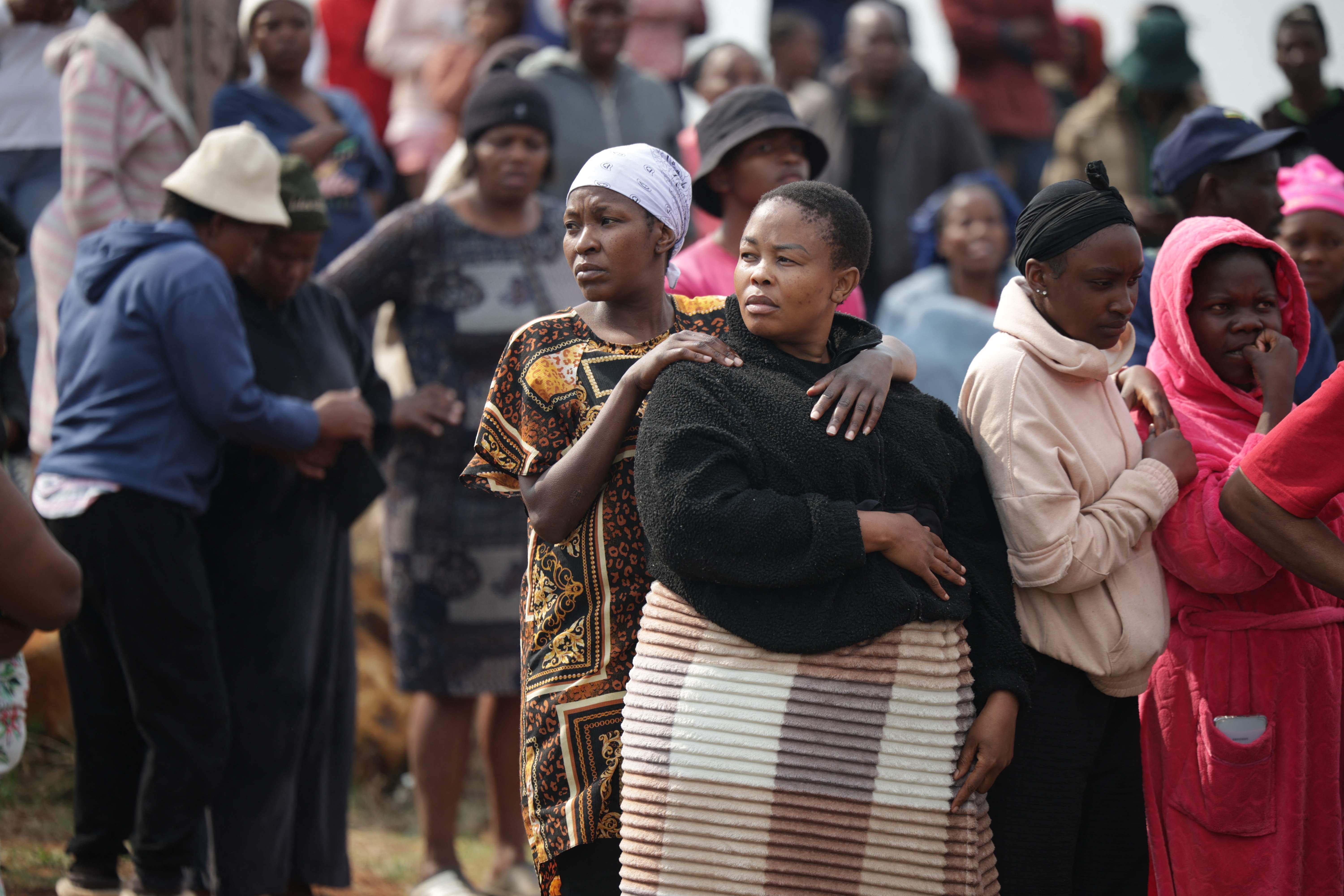
The search for whoever is killing women in and around Johannesburg has taken a new turn.
Three people — a man and two women — are now in police custody in connection with the murder of one of the nine women whose bodies were discovered in the Ekurhuleni area.
Authorities have described this as a breakthrough in a case that has gripped South Africa with fear.
But as investigators try to establish whether the killings are connected and hunt for whoever may be responsible, another question is increasingly being asked: could technology help prevent the next woman from becoming a victim?
The question has gained urgency after nine women's bodies were discovered across Ekurhuleni in less than two months, prompting President Cyril Ramaphosa last week to declare the deaths a national crisis.
The discovery of the bodies, some of them dumped in isolated or roadside locations, has intensified pressure on police to identify the person or people responsible.
Acting national police commissioner Lieutenant General Puleng Dimpane said investigators were working relentlessly to establish what happened to the victims. Meanwhile, Police Minister Firoz Cachalia cautioned there was still no conclusive evidence that the killings were the work of a serial killer.
But for women living in the affected communities, the uncertainty of not knowing who is responsible is itself frightening.
"This spate of murders that we've seen in Gauteng's East Rand, specifically the Ekurhuleni area, has caused a lot of shock, a lot of anger and a lot of fear," South African journalist and anti-crime activist Yusuf Abramjee tells TRT Afrika.
Vast killing area
The locations where the women were found stretch across a large part of Ekurhuleni.
Five of the nine victims were found in the Kempton Park area, a major urban centre northeast of Johannesburg and close to OR Tambo International Airport.
Another victim, Itumeleng Kekana, was found along Great North Road, while Elizabeth "Tsontso" Moselakgomo was discovered behind a hotel in Rhodesfield, also close to Kempton Park and the airport.
Other bodies were found around Olifantsfontein, Clayville and Tembisa.
Then, on September 20, another woman's body was found outside Ekurhuleni, in Moroka, Soweto.
Her body was discovered wrapped in a duvet and dumped in a dam.
Police have not established that her death is connected to the nine Ekurhuleni cases and have warned women to remain vigilant.
Analysts tell TRT Afrika that frustration with uncertainty is making women turn to technology for help.
Can technology help?
As news of the killings spread, social media campaigns have urged women and other members of the public to remain alert, while safety and emergency applications were promoted as tools that could help people summon assistance, share their location or alert contacts when they feel threatened.
For South African community rights activist Itumeleng Moabi, who has galvanised women through the Women Water Caucus, the question is not simply whether such technology exists, but whether it can deliver help quickly enough when a woman is in danger.
The 1-in-9 app, developed locally, she says, is one of the technologies being considered by the women she works with.
"We're looking at various options available to us that can guarantee a quick response. The one by 1-in-9 has a 10-second response time. From the time you press the panic button, it will count down 10 seconds, and immediately someone from a security agency will call you back to confirm that you are okay."
But access is a major concern.
A safety tool that depends on a woman's ability to afford data, airtime or a subscription may not be accessible to the women who need it most.
"We don't want options that will further put an economic burden on women, so it should be open-source access technology. We prefer to work with developers who are mindful of the cost. We don't want to utilise or introduce an app to our women that will require them to have money in their cell phone or data accounts. Those are some of the things we are working on while considering our options."
The recent killings come against a deeply troubling South African history, reviving memories of Moses Sithole, one of the country's most notorious serial killers.
Known as the "ABC Killer", Sithole murdered at least 38 people between 1994 and 1995, including 37 women and the two-year-old son of one of his victims. He was convicted in 1997 of 38 murders, 40 rapes and six robberies and received an effective sentence of 2,410 years in prison.
Abramjee says what is changing more clearly is the way South Africans are looking to technology to navigate an environment in which danger can be difficult to predict.
"Technology is moving beyond the traditional CCTV camera and panic button. GPS location sharing, emergency applications, vehicle telematics, automated incident detection, artificial intelligence-powered video analysis and digital evidence are increasingly becoming part of the wider safety landscape."
Technology, Abramjee believes, could also give investigators another way of following the trail left behind by a suspect.
"You cannot have eyes and ears in every corner of the country. But if the major routes are covered with cameras that can, for example, recognise licence plates, even when they are cloned, it can become much easier to track where suspects are coming from and where they are going."
Experts, however, caution that technology is not a substitute for police investigations, and a camera can only help if it is positioned where something happens, functioning when it happens and its footage can be accessed and properly investigated afterwards.
Self defence
For Moabi, technology is only one part of a broader effort to equip women with practical tools to protect themselves.
"Women are now having conversations with their female children, saying, 'If you ever feel unsafe anywhere, don't be afraid to act crazy. Scream, shout, and draw attention to yourself if you are not feeling okay.'"
She also wants women to have access to self-defence training.
"The workshops I am leading also have a self-defence concept. Women must learn and know what to do to resist an attacker."
For women walking home, travelling alone, entering a vehicle or moving through an unfamiliar area, the combination of awareness, rapid-response systems and technology could provide another layer of protection where physical security may be absent, Abramjee says.
"It's very important to be proactive. Take all safety precautions, make sure that you protect yourself and your family, and make sure you use technology — whether it's live location sharing or pressing an emergency app during an emergency. Use these safety apps; they can most certainly save lives," Abramjee says.
For now, the identity of the killer — or killers — remains an unanswered question.


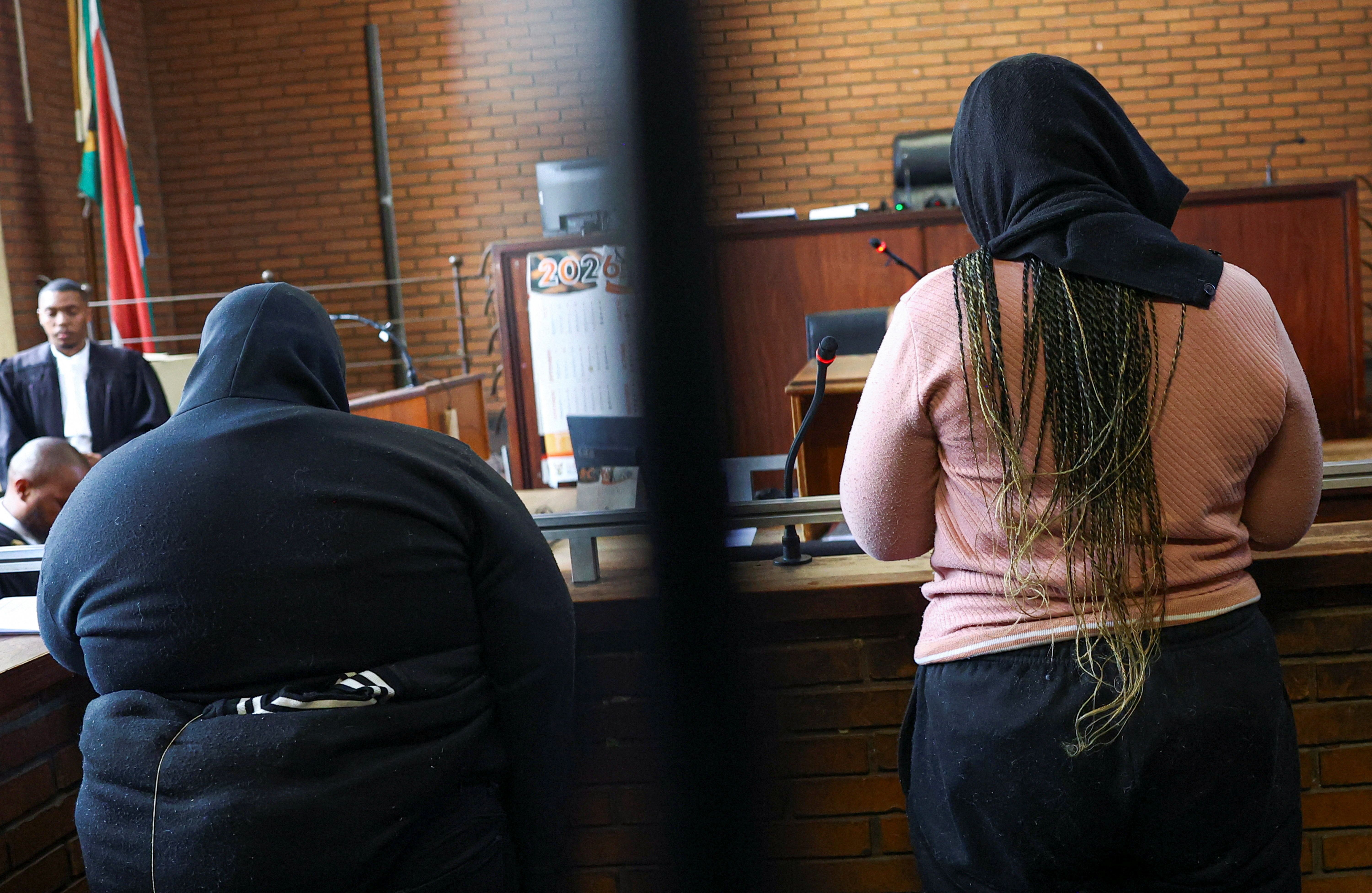
Two charged as police investigate discoveries of women bodies in South Africa
Prosecutors said the two women had been charged with murder over the killing of Jabulile Ntimba in what police described as a possible love triangle.
Head of Yahya Jammeh's 'death squad' court martialled in Gambia
Sanna Manjang, who was the head of the squad and a lieutenant colonel, is charged with deserting the armed forces when he went on the run in January 2017.
Man is first suspect charged in UK over 1994 Rwanda genocide
Vincent Brown, formerly known as Vincent Bajinya, is accused of having directed and incited acts of murder and genocide carried out by others during the 1994 genocide.