The central question facing Somalia today is not whether the Somali people are ready to vote. It is whether Somalia’s political class is ready to trust them.
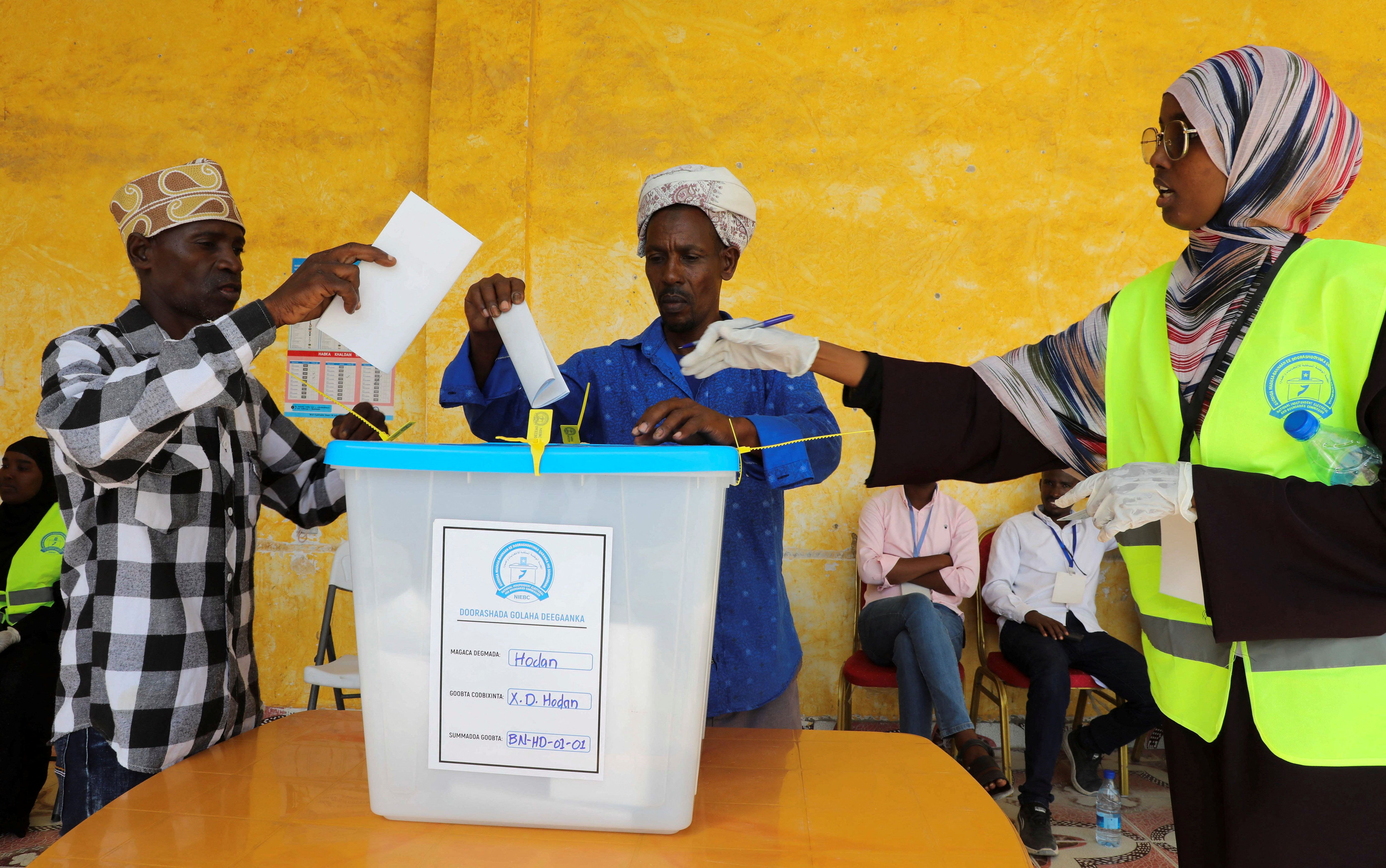
Somalia once again stands at a critical political crossroads. As debate intensifies over electoral timelines, constitutional interpretation, the mandates of federal institutions, and the future architecture of governance, the country faces a defining decision that will shape its political trajectory for years to come.
At the centre of the current impasse lies a fundamental question: should Somalia proceed towards direct popular elections, or return to the indirect electoral arrangements that have dominated its post-conflict political order?
The answer should be clear. While legitimate disagreements remain regarding constitutional amendments, electoral procedures, and institutional mandates, reverting to the previous indirect electoral model would not resolve Somalia’s political crisis. Instead, it would revive one of the principal structural causes of that crisis.
Somalia’s challenge today is therefore not whether it should transition towards direct elections, but how that transition can be implemented through an inclusive, credible, and nationally accepted political process supported by the country’s major stakeholders.
The current dispute stems from competing interpretations of Somalia’s constitutional framework. Under the previous Provisional Constitution, opposition groups argue that both the President and the Federal Parliament have reached the conclusion of their mandates.
The Federal Government, however, bases its position on recently approved constitutional amendments that extend the mandates of federal institutions to five years.
On this basis, President Hassan Sheikh Mohamud has argued that his government’s mandate expires on 15 May 2027 rather than according to the previous provisional timetable.
He has repeatedly affirmed that his administration will pursue direct elections, presenting them as a necessary departure from Somalia’s widely criticised indirect electoral model.
The opposition, meanwhile, rejects the Federal Government’s electoral roadmap, arguing that national elections cannot be organised through a process perceived as being unilaterally driven from Mogadishu.
Its demand for political consensus is legitimate in principle and reflects the importance of an inclusive constitutional settlement.
However, consensus must not become a mechanism for preserving an electoral framework that has repeatedly undermined democratic accountability.
Indirect electoral model limitations
Under the previous indirect electoral system, clan representatives nominated members of the House of the People, while state legislatures elected members of the Senate through the framework of the 4.5 clan power-sharing formula.
Originally designed as a temporary transitional arrangement to stabilise a fragile post-conflict state, the system gradually became entrenched as the principal mechanism for political succession.
In practice, however, it concentrated electoral influence among Federal Member State presidents, political brokers, and a narrow circle of elites.
Ordinary citizens were largely excluded from directly determining their political representatives and became spectators in decisions that shaped the country’s future.
The system also weakened institutional accountability. Elected officials often became more responsive to the actors who secured their political positions than to the wider public they were expected to serve.
As a result, political competition increasingly centred on elite bargaining, patronage networks, and transactional alliances rather than public policy, governance performance, or competing visions for national development.
For many Somalis, therefore, returning to this deeply flawed and exclusionary arrangement would not address the current political deadlock. It would merely reproduce the conditions that contributed to it.
What makes this crisis different
Electoral disputes are not new to Somali politics. Previous electoral cycles have been characterised by delays, contested timelines, disagreements over procedures, and instances where federal institutions remained in office beyond their original mandates. In that sense, the current confrontation follows a familiar pattern.
What distinguishes the present moment, however, is the emergence of new political realities that have fundamentally altered Somalia’s constitutional and institutional landscape.
The first is the constitutional amendment process itself. In March, the Federal Parliament approved long-delayed amendments to the Federal Constitution. The Government presents these reforms as an effort to resolve constitutional ambiguities that have repeatedly fuelled tensions between the Federal Government and Federal Member States.
The opposition, however, argues that the process lacked sufficient inclusivity and accuses the President of exerting excessive political influence over the constitutional review process.
Regardless of differing views on the amendments, the consequence is clear: Somalia is now facing not only an electoral dispute but also a constitutional dispute. Competing interpretations of legality have become intertwined with competing visions for the country’s future political order.
The amended Constitution provides five-year mandates for federal institutions, which the Government argues applies to the current administration. The opposition rejects this interpretation and maintains that mandates should continue to be assessed according to the previous provisional framework.
The amendments also grant a central role to the federal electoral commission in organising nationwide elections. While supporters view this as a necessary institutional foundation for direct elections, some opposition actors and Federal Member States fear that it may further strengthen the authority of the Federal Government at their expense.
New political dynamics
The second major development is the emergence of the Justice and Solidarity Party (JSP), which represents a potentially significant shift in Somalia’s political landscape.
Led by President Hassan Sheikh Mohamud and joined by several Federal Member State leaders, ministers, parliamentarians, youth activists, and women leaders, the JSP has positioned itself as a political vehicle for Somalia’s transition towards direct elections.
The party has already participated in local elections in Banadir, the administrative capital of Mogadishu, as well as local and parliamentary elections in South West State, performing strongly in both contests.
Its emergence signals a possible movement away from a political order defined primarily by clan alignments and elite coalitions towards a system increasingly shaped by organised political platforms and competing policy visions.
The development of political parties capable of mobilising citizens beyond traditional elite structures could represent an important stage in Somalia’s democratic evolution.
However, the success of this transformation will ultimately depend on whether political competition becomes centred on governance programmes, public accountability, and national priorities rather than narrow political interests.
The deeper challange in Somali Politics
Beneath the constitutional and electoral disputes lies a more profound challenge.
Somali politics has long been shaped by parochial calculations, shifting alliances, and political coalitions formed more around access to power than coherent policy programmes.
The pursuit of office, patronage, and personal advantage has often taken precedence over the broader imperatives of state-building, institutional development, and public responsibility.
This political culture has confined Somalia within a cycle where institutions are negotiated primarily among elites rather than constructed around the aspirations and participation of citizens.
Such dynamics have made meaningful reform exceptionally difficult. Every attempt at political transformation encounters resistance from those who benefit from existing arrangements.
Every proposal for institutional change is viewed through the lens of political competition. Reform becomes trapped between the necessity of transformation and the interests determined to preserve the status quo.
Yet there is growing recognition across Somalia’s political spectrum that the country cannot remain indefinitely within a system that excludes citizens from choosing their leaders directly.
A more inclusive, accountable, and sustainable model of governance is no longer simply desirable; it has become essential for the next phase of Somali state-building.
External dynamics further complicate this environment. Some regional and international actors continue to exploit Somalia’s political fragmentation for geopolitical advantage, often cultivating domestic partnerships that may align more closely with external interests than with Somalia’s national priorities.
This reality reinforces the importance of achieving a durable domestic political settlement capable of strengthening national unity and safeguarding sovereignty.
Why consensus is paramount
Somalia’s political debate is unfolding amid multiple interconnected national challenges. The terrorist organisation Al-Shabaab remains an existential threat to the country’s security and stability.
Although the Federal Government, with support from the international community, has made progress in weakening the group, Al-Shabaab continues to control significant areas in southern Somalia and retains the capacity to disrupt state authority.
At the same time, increasing competition for influence in the Horn of Africa among regional, middle, and global powers presents serious risks to Somalia’s territorial integrity and political independence. Israel’s recognition of Somaliland as an independent state demonstrates the types of geopolitical challenges Somalia may face if internal divisions remain unresolved.
Somalia is also confronting a severe humanitarian and food-security crisis, further highlighting the necessity of political consensus. According to recent United Nations assessments, approximately six million people in Somalia face acute food insecurity between April and June 2026, while nearly 1.9 million children under the age of five are projected to suffer from acute malnutrition during the year. The crisis has been driven by prolonged drought, inadequate rainfall, rising food prices, insecurity, displacement, and significant reductions in humanitarian funding.
These challenges make it imperative for Somali political leaders to reach constructive political settlements on fundamental national questions. At this critical moment, consensus is not merely preferable; it is essential for preserving Somalia’s stability, unity, and sovereignty.
The way forward
Somalia requires a new political equilibrium that protects the constitutional right of citizens to determine who exercises authority over them.
Achieving this objective requires an inclusive national dialogue focused not on preserving elite arrangements, but on safeguarding the political rights and democratic aspirations of the Somali people.
Two essential principles should emerge from such a process.
First, there must be a national understanding that Somalia’s future lies in direct nationwide elections based on popular participation.
Second, there must be consensus on the legal, constitutional, and institutional framework governing those elections, including the procedures and safeguards required to ensure credibility, transparency, and inclusiveness.
The dispute between the previous Provisional Constitution and the recently approved amendments remains legally and politically significant. However, it should not be allowed to obstruct Somalia’s democratic transition indefinitely.
One possible compromise would be to defer the most divisive constitutional questions to the next administration, one that derives its legitimacy directly from the votes of Somali citizens.
What matters most at this stage is protecting the principle that political authority must ultimately flow from the consent of the people.
Reconciling the 4.5 clan-based power-sharing formula with direct elections remains one of Somalia’s most complex political challenges. Nevertheless, it is not an insurmountable one.
Through political will, careful institutional design, and a transitional framework that balances representation with democratic participation, Somalia can gradually expand citizen involvement while addressing legitimate concerns regarding inclusion.
International partners, particularly Türkiye, which enjoys broad trust across Somalia’s political landscape, can play a constructive role in facilitating dialogue between the Government and opposition and supporting efforts to build consensus around a nationally accepted electoral framework.
Somalia should not return to the flawed indirect electoral model. However, it must also avoid pursuing direct elections through a process that deepens political mistrust or excludes key stakeholders.
The path forward lies in combining democratic principle with political pragmatism: a firm commitment to universal suffrage alongside a negotiated framework capable of securing broad national legitimacy.
The central question facing Somalia today is not whether the Somali people are ready to vote.
It is whether Somalia’s political class is ready to trust them.
The author, Abdiwali Sayid, is a researcher and university lecturer in International Relations, as well as an analyst of the Horn of Africa, with a particular focus on geopolitics and security.
Disclaimer: The views expressed by the author do not necessarily reflect the opinions, viewpoints and editorial policies of TRT Afrika.


Ethiopia's army says it has foiled attacks by Tigray rebels
The army said it inflicted heavy personnel and equipment losses on the TPLF rebels.
The cost of UNGA: Who pays and who profits?
Member states make mandatory annual contributions based on capacity to pay, factoring in gross national income, external debt burden and per-capita income.
Sudan rejects US remarks questioning government legitimacy amid Burhan visa dispute
Khartoum urges Washington to respect Sudan’s sovereignty as activists and journalists criticise the reported linking of Transitional Sovereignty Council Chairman Abdel Fattah al-Burhan’s UN visa to a proposed 90-day truce.