Russia on Monday, America on Tuesday: Mali’s diplomatic week
Editor:
Halimatou HAMADOU DJIBO
A Russian security presence, an American diplomatic opening and Turkish industrial participation can all exist at the same event. Their terms, costs and long-term consequences remain quite different.

On Nov. 9, Mali’s transitional President Assimi Goïta received a Russian delegation in Bamako and decorated Lt. Gen. Andrei Averyanov for his contribution to relations between the two countries.
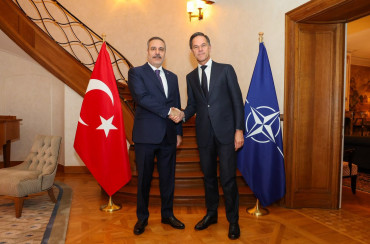
A day later, Goïta met Gen. Dagvin Anderson, the commander of U.S. Africa Command. Both visits took place during BAMEX, a defense exhibition organized by Mali’s Defense Ministry and The Peak Defense.
The two receptions came against very different histories. Russia has personnel on the ground in Mali, while Washington completed its military withdrawal from neighboring Niger in 2024.
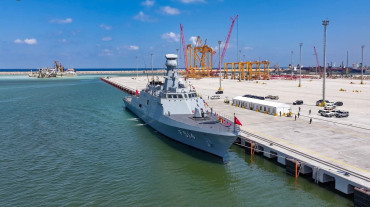
Türkiye has supplied defense equipment and helped make BAMEX an international event. In the middle of these very different relationships sits Bamako, receiving foreign officials without promising any of them a privileged place.
A busy week at Koulouba
Mali's President Assimi Goïta had met Russian President Vladimir Putin at the Kremlin on Oct. 30. The Nov. 9 ceremony for Averyanov, a Russian presidential adviser, came shortly afterward. Mali’s presidency presented the honor as recognition of cooperation in security and defense. Those ties have practical weight: Russia’s Africa Corps continued its operations in Mali after the Wagner Group announced its departure in 2025.
Anderson’s meeting the following day belonged to another diplomatic track. According to Mali’s state newspaper, the discussion concerned security conditions in Mali and the Sahel, as well as possible cooperation. No renewed military deployment or formal agreement was announced. That distinction matters when a single meeting attracts so much attention.
The U.S. withdrew its forces from Niger in September 2024, leaving behind the Agadez air base, which had supported American operations across the Sahel for years. Washington lost an important base for surveillance and counterterrorism missions. Anderson’s visit to Bamako came two years after that withdrawal. His meeting with Goïta brought the two sides into direct contact, although neither government has announced plans to resume military cooperation.
There was also a regional visitor at Koulouba on Nov. 9. Senegal’s foreign minister, Cheikh Niang, carried a message from President Bassirou Diomaye Faye and discussed African integration with Goïta. His visit has received less attention than the Russian and American contacts, although it may prove important for Mali’s relations with its West African neighbors.
Why the exhibition matters
BAMEX began in 2025 as a gathering closely associated with Turkish defense manufacturers. The second edition, running from Nov. 9 to 13, has attracted participants from Türkiye, Russia, China, USA, Germany and also Niger, Burkina Faso, Sudan, Algeria, Zambia and Mauratina from Africa. The Peak Defense, a Turkish company, is organizing the fair with Malian authorities. It is designed for official delegations and accredited buyers. The first three days are reserved for displays and meetings, followed by field demonstrations near Koulikoro.
Mali’s prime minister, Abdoulaye Maïga, set out the government’s thinking in his opening address. He spoke about intelligence, anticipating attacks and developing national expertise. He also defended cooperation with different partners, provided Mali retained the freedom to choose its course. His remarks placed the country’s security priorities ahead of any manufacturer’s sales pitch.
For Malian officials, the format has a diplomatic advantage. They can speak to manufacturers and visiting delegations without treating a contract as a declaration of political allegiance. A Russian security presence, an American diplomatic opening and Turkish industrial participation can all exist at the same event. Their terms, costs and long-term consequences remain quite different. Anderson welcomed local production; Burkina Faso’s delegate valued examining equipment firsthand.
The Turkish role is particularly interesting. A Turkish business has helped establish a meeting place where Mali can receive other powers, including states whose interests often conflict with Ankara’s own partners. It gives Turkish firms access to African officials while leaving the host government in charge of its invitations. The arrangement works because Mali wants options and Turkish organizers have helped provide the venue.
China and the economic calculation
China’s position in Mali is rooted in projects and institutions that predate BAMEX. In July, Malian officials met the new Chinese ambassador and discussed infrastructure, transport, electricity, mining, farming and investment. The government’s account referred to the strategic partnership agreed by Goïta and Chinese President Xi Jinping in 2024.
China’s presence cannot be judged by the equipment on its stand. Mali may buy surveillance equipment from one supplier, seek investment in electricity from another and maintain security consultations with a third. Those choices involve different ministries, payment schedules and political obligations. Calling them all a contest for influence would conceal what Mali is actually negotiating.
Foreign Minister Abdoulaye Diop gave that approach a clear explanation at BAMEX. He wants technology transfer alongside equipment purchases and invited Turkish investment in civilian sectors. Speaking to Anadolu and TRT Afrika, he also said partnerships should allow Mali to build its own capabilities.
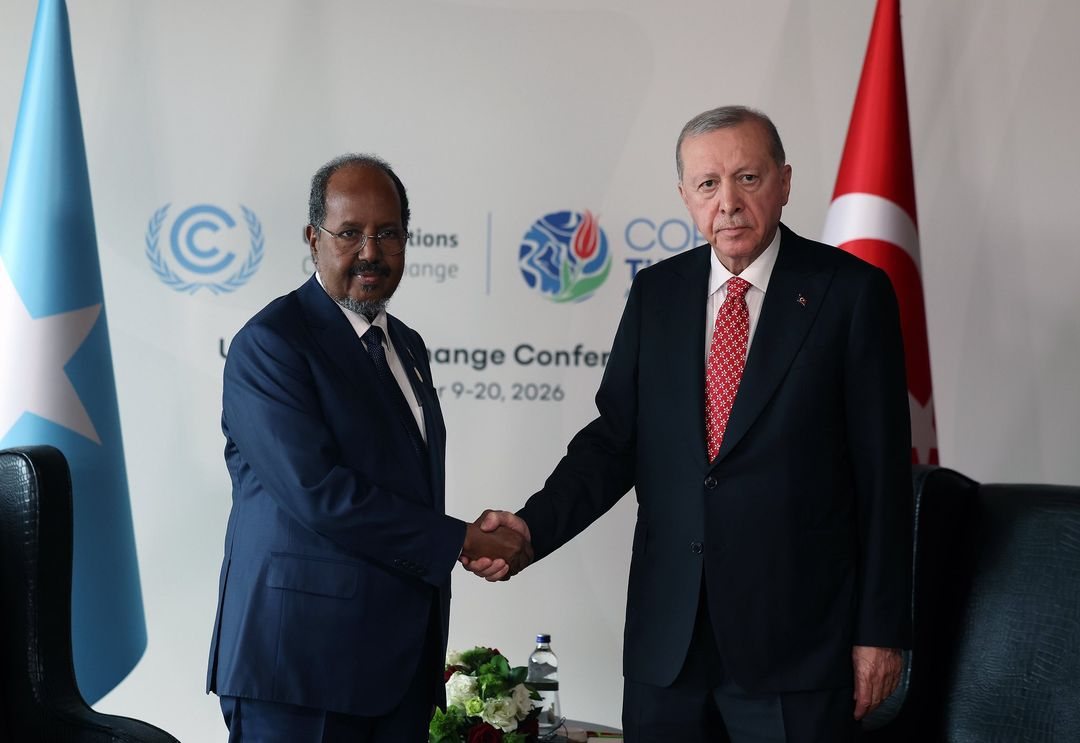
The request is understandable, but it will be the terms of future contracts that show how much responsibility Malian institutions receive. Maïga discussed defense, mining and energy with Turkish Vice President Cevdet Yılmaz in Antalya during COP31.
The neighbor question
Mali’s diplomacy also has an African dimension that is easy to miss amid the visiting generals. Burkina Faso and Niger have joined it in the Alliance of Sahel States (AES). In July, the three governments approved the legal status of a joint force. They have also left the Economic Community of West African States (ECOWAS). Yet people and goods still move across borders that neither organization can afford to ignore.
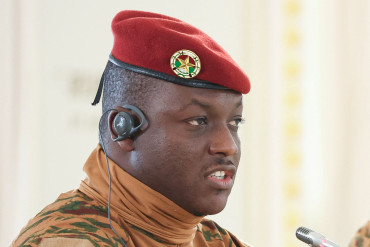
On Nov. 5, Goïta visited Ouagadougou for talks with Burkina Faso’s leader Ibrahim Traoré. Their joint statement placed the fight against armed groups alongside bilateral cooperation and relations between the two populations.
The meeting preceded BAMEX by four days. Mali’s regional commitments were already being negotiated before the first foreign delegation reached the exhibition.
Foreign ministers from the AES and ECOWAS met in Dakar on Oct. 17. Senegal’s foreign ministry confirmed that the talks sought principles for future cooperation, following discussions in Bamako.
At BAMEX, Mali’s foreign minister Diop made Mali’s position explicit: the objective was coexistence between two sovereign organizations, rather than an AES return to ECOWAS. He identified the movement of people and goods as among the matters requiring agreement.
Niang’s visit therefore had a purpose beyond protocol. Bamako needs working relations with neighbors that do not belong to the AES. Commercial routes, ports and cross-border trade cannot be organized through defense partnerships alone. Senegal’s role is particularly important because the Dakar–Bamako corridor links Mali’s landlocked economy to the Atlantic.
The security pressures are immediate. A November report found that JNIM terrorist group was exerting economic pressure around Kayes and attacking along the RN6 corridor. It also recorded insurgent drone attacks on villages in the preceding week.
Terrorist groups can disrupt supplies without controlling an entire city. Governments negotiating military assistance still have to contend with roads, civilian movement and the local grievances that terrorists exploit.
What Bamako can gain
Bamako has gained new openings, though every supplier brings its own conditions. Negotiating with several countries can improve its choice of equipment and keep communication open during disagreements.
It can also leave the state dealing with incompatible equipment, competing contractual conditions and advisers who do not answer to the same authorities. Independence in foreign policy eventually has to be reflected in the ability to manage those relationships.
BAMEX offers a public setting for some of those negotiations. It cannot settle the conflict or guarantee that promised technology will reach Malian institutions. The field demonstrations scheduled for Nov. 12 and 13 may help officials evaluate equipment; they will say much less about financing, training obligations and the political conditions of cooperation.
The more revealing meetings may have taken place away from the exhibition stands. Within two days, Goïta honored a Russian official, met the U.S. military commander for Africa and received a message from Senegal.
Those encounters point to different needs and different histories. For Mali, keeping the channels open creates room to negotiate. What it achieves with that room will matter long after BAMEX closes.
Disclaimer: The views expressed by the author do not necessarily reflect the opinions, viewpoints and editorial policy of TRT Afrika.
TRT Afrika / Göktuğ Çalışkan — TRT Afrika
Africa




Cabo Verde elections: President Neves eyes second term as party builds on legislative win
Neves is backed by the African Party for the Independence of Cape Verde (PAICV), which won 37 out of 72 seats in legislative elections in May.
Saudi-led coalition intercepts Houthi militia drone over eastern Saudi Arabia
The latest interception comes amid rising tensions between the Houthi militias and Riyadh, with repeated reports of missile and drone threats targeting the kingdom.
Ghana unveils $10 billion 'New Economy' plan
The four-year plan begins with Ghana's 2027 budget.



All rights reserved. Newstimetr © 2026