Netanyahu faces accusations of using unity talks to prolong his hold on power and fresh scrutiny over his office’s role in election-day arrests of Arab activists
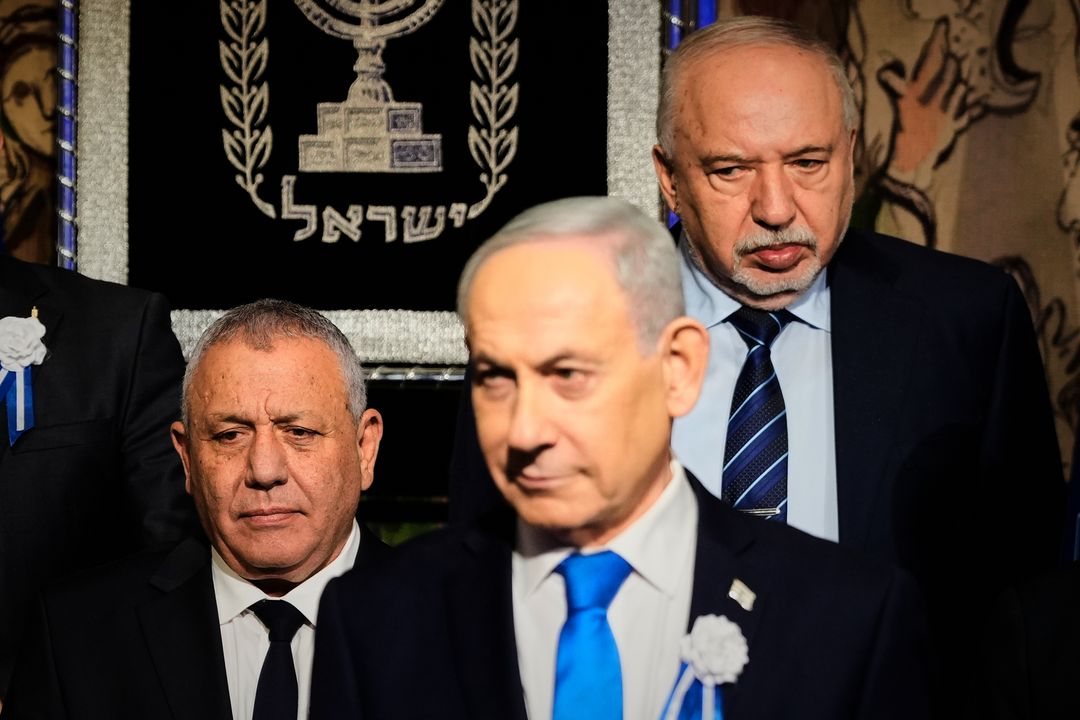
Negotiating teams representing Gadi Eisenkot's Yashar party, Naftali Bennett's Together party, and Benjamin Netanyahu's Likud have concluded exploratory talks amid opposition warnings that Netanyahu is seeking to preserve his political position after his bloc failed to secure a parliamentary majority.
The Herzliya meeting followed caretaker Prime Minister Benjamin Netanyahu's public appeal for unity talks without preconditions, whilst rejecting any parliamentary reliance on Arab factions.
However, Eisenkot swiftly rejected the overture, branding it a political "bluff" aimed at stalling government formation and preserving Netanyahu's political survival.
The political arithmetic reveals a deadlocked Knesset: Netanyahu's right-wing bloc holds 53 seats, Eisenkot's change-seeking bloc controls 48, and Arab parties command 19 seats.
Deep mutual recriminations, partner vetoes, and fierce public resistance make the realisation of a unity government highly improbable.
Netanyahu’s role stalls unity push
Parties allied to Eisenkot fiercely oppose partnering with Likud.
Avigdor Lieberman's Yisrael Beiteinu affirmed on Sunday that it will refuse to serve under Netanyahu.
MK Rafi Ben Shitrit stated: "The Likud has an entire book full of suckers Netanyahu has led down the garden path. The people of Israel need a stable government that works for the benefit of the country's citizens, not for political survival."
Similarly, Democrats leader Yair Golan urged Eisenkot to shun Likud, meet with Arab factions, and "stop letting Netanyahu and his poison machine decide who is legitimate."
Outside the meeting venue, Darkenu movement activists displayed mobile screens reading: "Gadi, you don't do business with scorpions. Voters gave 67 seats for change."
Eisenkot challenged Netanyahu and Finance Minister Bezalel Smotrich to prove their sincerity by supporting Yashar's Matan Kahana in Tuesday's vote for Knesset speaker.
"Nice try, but these tricks don't work on me," Eisenkot said, accusing the premier of calling for unity whilst continuing to divide the nation.
Election interference allegations
Tensions escalated dramatically following a Channel 12 investigation accusing Netanyahu's office of feeding deceptive intelligence to police on the eve of the October 27 elections to engineer the arrest of three United Arab List (Ra'am) activists without valid warrants.
The report revealed that Netanyahu's chief of staff, Ido Norden, coordinated the complaint, which was subsequently weaponised throughout election day to claim Arab factions were stealing the vote.
The probe further reported that Shin Bet chief David Zini sought authorisation to wiretap five Arab lawmakers on election day—a request blocked by Attorney-General Gali Baharav-Miara.
Eisenkot condemned the revelations, warning that Netanyahu poses a "direct and immediate threat" to democracy and declaring he must not remain in power "even one minute longer."
He pledged to establish a formal commission of inquiry, insisting: "As long as he is in office, there will no longer be fair and lawful elections in Israel."
Eisenkot, tasked on November 8 with forming a government, holds an initial 28-day mandate to assemble an alternative majority.
New regional framework seeks to strengthen accountability and address emerging vulnerabilities in labour migration, safeguarding millions of workers across Southeast Asia.
The Sudanese army and allied forces took control of three areas and several villages east of Al Nuhud in West Kordofan state on Saturday, military sources told Anadolu.