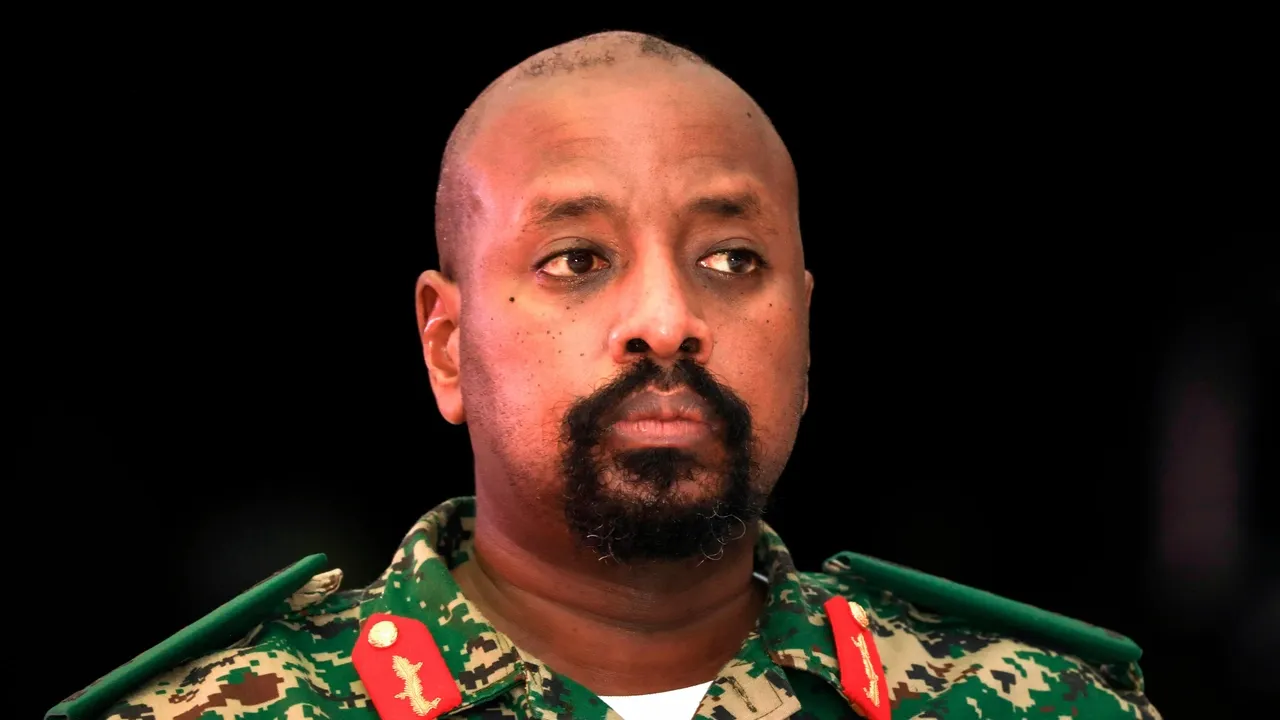
Uganda has defended the country's military chief, General Muhoozi Kainerugaba, after the New York Times published an article on October 8 suggesting that Kainerugaba had committed human rights abuses in the East African nation.
Uganda has defended the country's military chief, General Muhoozi Kainerugaba, after the New York Times published an article on October 8 suggesting that Kainerugaba had committed human rights abuses in the East African nation.
The New York Times article, titled "The Authoritarian Future is Already Here", also suggested that Kainerugaba was being propped up to succeed his father, President Yoweri Museveni, who has been in power for 40 years.
According to Uganda's Ministry of Defence and Veteran Affairs spokesperson, Colonel Chris Magezi, "the author of the article regurgitates long-held, twisted opposition and activist narratives against the government in Kampala, and in doing so, levels disparaging, unfounded, and utterly scandalous allegations against the person of General Muhoozi Kainerugaba."
In a press statement dated Saturday, October 10, 2026, Magezi said: "The latest publication in the New York Times is continuation of a vile campaign in recent years by western media conglomerates against General Muhoozi Kainerugaba, for quite obviously imperialistic reasons."
The defence ministry spokesperson said that the Western media's coverage of Kainerugaba is often "trivial, sensational, and low on substance."
'Not their preferred successor'
"What is clear though is that General Muhoozi Kainerugaba is not their (western media) preferred successor of choice to a post-Museveni Uganda. They would rather have Robert Kyagulanyi in charge, or others of similar kin. However, the future of Uganda is a choice that will be firmly determined by Ugandans when the time comes."
Magezi emphasised that "baseless and unfounded character assassination" was being meted out on Kainerugaba and other African leaders by the foreign press.
"Nonetheless, the Uganda People's Defence Force (UPDF) wishes to reiterate that General Muhoozi Kainerugaba is a decorated military officer with decades of dedicated service and outstanding achievements in his field. To reduce him and his substantial achievements based on social media banter, misguided, and false media reports is absurd and a desperate attempt to satisfy prejudiced western audiences about the supposed failings of Africa."
The defence ministry spokesperson added that: "The allegations of human rights abuses attributed to General Muhoozi Kainerugaba are presented without proper verification and rigorous scrutiny. It is hearsay. Serious accusations require serious evidence, not reliance on anecdotal, or politically motivated sources."
'External interference'
According to Uganda, its military "operates within the confines of the law", and that it "will continue its constitutional obligation to extend support to the civil authorities when requested or required."
Magezi concluded his statement by saying Uganda "will not tolerate external interference" in its internal affairs.
As part of its proof of human rights abuse claim against Kainerugaba, the New York Times published allegations by exiled Ugandan writer Kakwenza Rukirabashaija, who claimed he had been tortured by Kainerugaba.
The Ugandan defence ministry termed Rukirabashaija's allegations "laughable" due to "inconsistencies" in his claims.
Kainerugaba, 52, has served as the Chief of Uganda People's Defence Force (UPDF) since March 2024. The military chief often publishes his thoughts on X network, often drawing criticism over their controversial nature. Magezi termed such posts "online remarks", "jokes" and "social media banter."