US vice president's admission that discontent over Israel ties contributed to Republican midterm losses reveals tensions in Trump's America First movement.
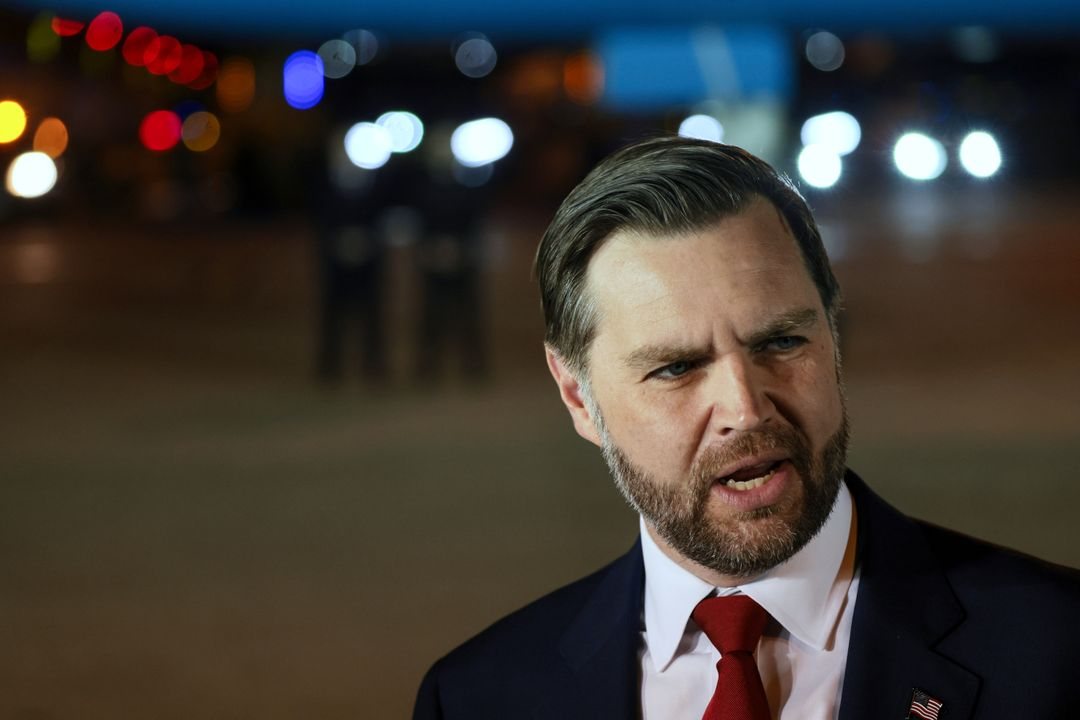
US Vice President JD Vance has identified Washington's relationship with Israel as one of the reasons Trump voters turned against Republicans in the midterm elections, offering a rare acknowledgement from within the administration that US support for Israel has become a political liability.
In a lengthy post on X on Wednesday, Vance attributed the Republican Party's heavy losses to four demands he said had emerged from conversations with voters who backed Donald Trump in 2024 but voted Democrat in this week's elections: ending the war on Iran, tackling the cost of living, putting America first and changing the US relationship with Israel.
"Our voters showed up. And the above four reasons are why many of them voted for Democrats," he wrote.
While the vice president blamed the Iran war for the Republican defeat, he also acknowledged that voter dissatisfaction extends beyond the immediate war to the broader relationship between Washington and Tel Aviv.
Elected on the promise to put American interests first, the Trump administration has drawn the country into another costly war in the Middle East while maintaining close ties with Israel, despite growing voter disillusionment with that relationship.
Vance’s remarks reflect a wider rift within the Republican Party, according to political analyst and communications strategist Klaus Jurgens.
“What Trump has overlooked is that the American public has become much more educated about politics and global affairs,” Jurgens tells TRT World.
“A president cannot simply wake up one morning and decide to invade another country, claiming to defend American interests abroad. This may have worked 20 or 30 years ago, but certainly not anymore.”
“If they really want to win another election, or elect another Republican president, they have to stop financing the Israeli government,” Jurgens adds.
A growing rift over Israel
For years, unconditional support for Israel has been a defining feature of Republican foreign policy.
But Trump's America First movement has challenged that consensus, attracting voters who oppose costly foreign wars and want Washington to prioritise domestic concerns.
The war on Iran has pushed those underlying tensions to the surface.
For voters who supported Trump's promise to avoid new wars and prioritise domestic problems, the war represents a departure from the political message that helped return him to the White House.
“Continued support for foreign powers, be it Israel or NATO members, never featured prominently on Donald Trump's agenda two years ago. All of a sudden, he turned his own MAGA approach into a belief that the world was his oyster,” Jurgens says.
“But what he didn't understand is that the American public no longer buys into this. Americans simply do not want boots on the ground anywhere outside the US.”
“I think this is a huge development, a change of mindset among the US population. Americans want to see MAGA, but not at all costs. They don't want to engage in wars on foreign territories,” he adds.
Vance's call to "change our relationship to Israel" is particularly significant because it comes from a sitting vice-president, rather than from an opposition politician or a marginal voice on the Republican right.
Yet he offered no details on what such a change would entail, leaving open whether he meant conditioning military assistance, reconsidering diplomatic support, or pursuing a more independent foreign policy towards Israel.
His remarks also drew criticism from New York City Mayor Zohran Mamdani, who accused Vance of speaking about the administration's failures as though he were an outside observer, despite being part of the government responsible for the war.
"He's the vice president of the United States of America. He is not just some commentator online," adding that the administration had started the war and had the power to end it.
Jurgens points to Israel's genocide in Palestine as one of the main sources of growing disillusionment with the US administration.
“The US public is beginning to realise that something has gone dramatically wrong in Palestine, despite the close ties between the Republicans, the Democrats and the Israeli lobby, including AIPAC,” Jurgens says.
“Perhaps even the Israeli mainstream public is slowly beginning to realise that something is very wrong,” he adds.
A political calculation?
Vance's post may also serve a domestic political purpose, allowing him to distance himself from the administration's unpopular decisions and to consider a possible presidential bid in 2028, experts say.
Looking ahead, Jurgens views Vance as one of the key potential contenders for the Republican presidential nomination, alongside Secretary of State Marco Rubio, who could also be a strong candidate.
“Whoever wins in two years, the outcome is far from certain,” he adds.
Although Vance has been widely reported to have expressed reservations about a war on Iran, he remained part of the administration that continued the conflict.
His criticism of the election result also leaves unanswered questions about his own role in shaping or defending the policies he now identifies as politically damaging.
“Has Trump actually become a problem for the Republican Party? Listening to JD Vance, the answer is yes,” Jurgens says.
“Trump has already said he has changed MAGA to VETO. But if he vetoes everything Congress or the Senate proposes, his advisers will warn him that Republicans will lose support for his successor.”
“We only have to hope that President Trump does not resort to some last-minute gasp, such as invading another country to make America great again,” he adds.
TRT World / Zeynep Conkar — TRT World
Photo: AP