A conflict raging far from its shores is threatening to draw Libya into a cesspool. It cannot be allowed to happen at any cost.
The Russia–Ukraine war is increasingly extending beyond its traditional geographical theatre, with the Eastern Mediterranean emerging as a new arena of confrontation.
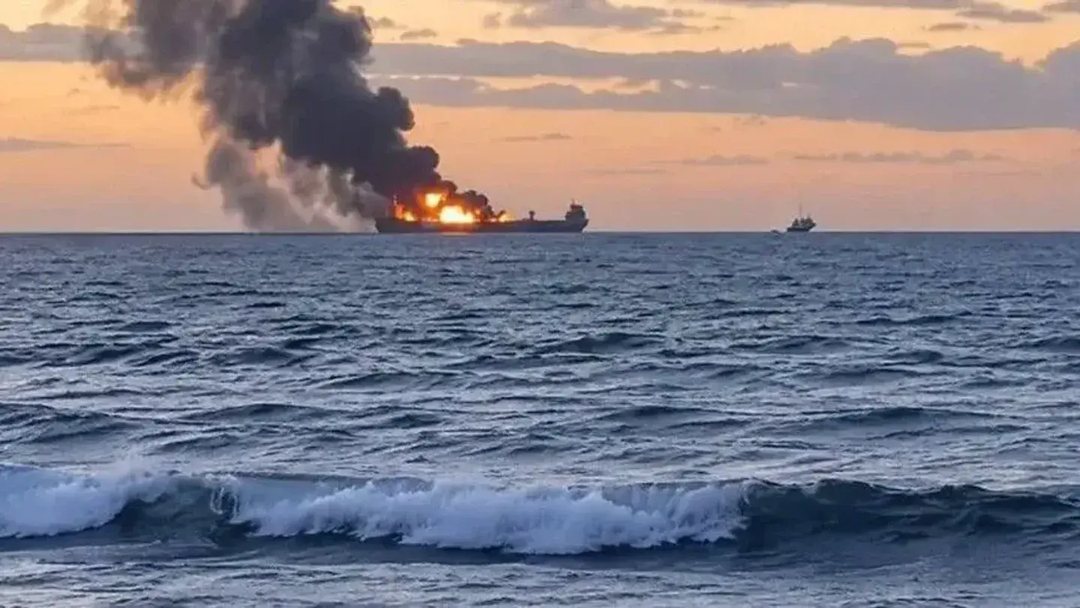
Ukraine's recent naval drone strikes against Russian vessels in the Libyan port of Benghazi demonstrate how the conflict is acquiring a wider geographical dimension, bringing the security of North Africa and the Mediterranean into its orbit.
While Kiev maintains that its operations target Russian military assets, conducting such attacks on Libyan territory risks drawing a country already seeking political reconciliation into a war that is not its own.
The implications extend well beyond the immediate military damage. Libya holds Africa's largest proven oil reserves, giving it a distinctive position among global energy producers.
Its geographical location further strengthens this advantage: proximity to European markets, particularly southern European ports, gives Libyan oil a logistical edge over supplies from more distant Middle Eastern producers by lowering transport costs.
Its location along key Mediterranean maritime routes also makes Libya's security a wider regional concern. Any escalation involving foreign military actors on Libyan soil therefore carries consequences for Mediterranean security, energy supplies and the stability of Europe's southern neighbourhood.
Moscow’s moves in the Mediterranean
Russia's presence in Libya reflects its broader effort to maintain a strategic foothold in the Mediterranean and to extend its influence across parts of Africa.
Since 2015, Moscow has developed relations with eastern Libyan actors, including Khalifa Haftar, and has maintained a military presence through networks involving paramilitary groups operating in the country.
However, Libya's eastern leadership has also sought to diversify its international relationships. Its foreign relations should therefore be understood within a wider and evolving geopolitical landscape, rather than through its ties with Moscow alone.
Libya's ongoing political divisions remain a significant obstacle to achieving lasting stability. More than a decade after the 2011 uprising, the country remains divided between rival administrations and security structures.
Although the 2020 ceasefire ended large-scale fighting, institutional fragmentation and the absence of a unified executive have blocked a lasting political settlement.
The recent attacks in Benghazi underscore the need to strengthen Libya's institutions and safeguard its sovereignty amid an evolving regional security environment.
Ukraine's operations against Russian assets in Benghazi introduce a further risk.
Whatever the military rationale behind the strikes, operations connected to the Russia–Ukraine war must not compromise Libya's sovereignty or turn its territory and territorial waters into an arena for external confrontation.
The United Nations Support Mission in Libya (UNSMIL), in a statement following the attacks on November 22, stressed that Libya's sovereignty, territorial integrity and the security of its citizens and assets must be respected.
It called for an immediate, independent and transparent investigation, urged restraint and warned against actions that could draw the country into wider regional or international confrontations.
Its message was clear: Libya must not become a battleground for foreign conflicts.
At this critical juncture, Libya needs national unification and reconciliation rather than another escalation of external confrontation.
Meaningful progress requires a unified government, stronger and independent state institutions, restructured security bodies and a credible electoral framework that allows Libyans to determine their own political future.
The country's natural resources should serve national development and the interests of its population, rather than become instruments of political competition or external leverage.
What Türkiye offers
Türkiye's growing diplomatic engagement with both eastern and western Libya offers an important dimension to these efforts.
Ankara has maintained its relationship with the Tripoli-based authorities while expanding its contacts with political and military actors in the east.
President Recep Tayyip Erdogan's meeting with Khalifa Haftar in Ankara on November 25 marks a significant development in this expanding engagement.
It reflects Türkiye's willingness to maintain dialogue with different centres of influence in Libya and its recognition that the country's political future cannot be addressed through engagement with one side alone.
This approach is consistent with Türkiye's support for a unified Libya, political reconciliation and the preservation of the country's territorial integrity.
Recent developments surrounding the 2019 Türkiye–Libya maritime delimitation agreement also illustrate the changing nature of these relations.
On October 20, Libya's eastern-based House of Representatives unanimously approved the agreement, which was signed by Türkiye and the UN-backed Government of National Accord in November 2019.
The decision is significant because the agreement had previously faced opposition in eastern Libya, including its rejection by the House in 2020.
Its approval indicates broader political acceptance within Libya and reflects the progress made in Türkiye's engagement with actors in the east.
Türkiye's diplomatic efforts should be viewed within the broader objective of advancing political unity and lasting stability.
Its engagement with different Libyan actors, alongside cooperation based on bilateral agreements, can help sustain channels of dialogue and create opportunities for practical cooperation.
Nevertheless, lasting stability ultimately depends on Libyan ownership of the political process, the unification of state institutions and progress towards credible national elections.
Türkiye's continued support for a "One Libya" approach can contribute to these efforts by encouraging cooperation across the country's political divide.
Ultimately, Libya's stability is a shared regional and international interest. The UN’s political roadmap provides an important framework for unifying state institutions, establishing a unified government, advancing national reconciliation and preparing for presidential and parliamentary elections.
These efforts require sustained support and coordinated engagement by regional and international actors. They must avoid actions that undermine the political process or encourage competing military agendas.
The Mediterranean must not become another theatre for the Russia–Ukraine war. Libya has already paid a heavy price for years of internal conflict and external interference.
Its future should be determined through national dialogue, institutional unification and democratic legitimacy, not through the military calculations of competing international powers.
The priority must be to preserve Libya's sovereignty and support national reconciliation.
TRT World / Ferhat Polat — TRT World
Photo: AA