Historic 48-Team Tournament Promises Unprecedented Excitement, New Nations, and a Record-Breaking Spectacle
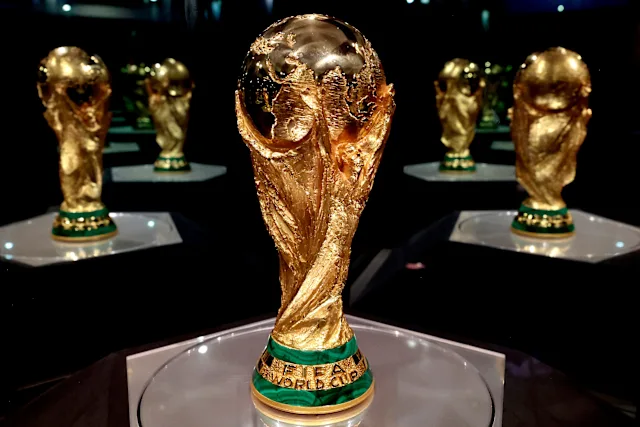
The countdown is over. The 2026 FIFA World Cup officially kicks off tomorrow, ushering in a transformative chapter in football history. For the first time ever, 48 national teams will compete in the world's most prestigious sporting event, hosted jointly by the United States, Mexico, and Canada.
Spanning six weeks, featuring 104 matches across 16 iconic stadiums in three nations and four time zones, the tournament represents FIFA's most ambitious World Cup project to date. Beyond football, the competition symbolizes globalization, economic opportunity, cultural exchange, and the emergence of new footballing nations on the world stage.
From Mexico City's historic opening ceremony to the final showdown at New York New Jersey Stadium on July 19, billions of fans worldwide are preparing for a tournament unlike any previous edition.
A Historic Expansion: Football's Biggest Stage Gets Bigger
The FIFA World Cup has continuously evolved since its inception in 1930. Yet few changes have been as significant as the expansion from 32 to 48 participating teams.
For FIFA President Gianni Infantino, the expanded format reflects football's growing global appeal and its mission to increase inclusivity within the sport.
The numbers alone highlight the scale of this transformation:
- 48 national teams
- 104 total matches
- 16 host stadiums
- 3 host countries
- 4 different time zones
- More than 6 weeks of competition
This expansion creates new opportunities for emerging football nations while presenting fresh competitive dynamics.
The World Cup is no longer reserved exclusively for traditional football powers.
Instead, it becomes a truly global celebration where new stories can emerge.
The expanded format also introduces additional challenges.
Players face longer tournaments, coaches must manage larger squads strategically, and organizers confront unprecedented logistical demands.
However, FIFA believes these adjustments will ultimately strengthen football's worldwide development.
North America Takes Center Stage
For the first time in World Cup history, three nations will jointly host the tournament.
The United States, Mexico, and Canada each bring unique football cultures, infrastructure capabilities, and passionate fan bases to this historic collaboration.
The United States serves as the tournament's primary host, staging 78 of the 104 matches.
With state-of-the-art stadiums, extensive transportation networks, and significant experience hosting major sporting events, America aims to showcase football's expanding influence within the country.
Canada enters the tournament amid growing enthusiasm for the sport.
The national team's recent success has energized supporters and strengthened domestic football development.
Mexico, meanwhile, reinforces its position as one of football's spiritual homes.
No country understands World Cup passion quite like Mexico.
Its football heritage stretches across generations, making it a fitting venue for another historic chapter.
The three host nations collectively represent diversity, multiculturalism, and football's increasing globalization.
Mexico City Stadium: A Venue Immortalized in Football History
Few stadiums in world football carry the historical significance of Mexico City's iconic arena.
With a capacity exceeding 83,000 spectators, the stadium will become the first venue ever to host three separate World Cup opening matches.
Its remarkable legacy includes:
- Mexico vs Soviet Union (1970 Opening Match)
- Italy vs Bulgaria (1986 Opening Match)
- Mexico vs South Africa (2026 Opening Match)
Beyond opening ceremonies, the stadium has witnessed some of football's greatest moments.
It was here that Pelé lifted the World Cup trophy in 1970, cementing Brazil's place among football's immortals.
It was also here that Diego Maradona delivered two of football's most unforgettable moments during the 1986 quarterfinal against England.
The "Hand of God" goal and the breathtaking "Goal of the Century" transformed Mexico City Stadium into sacred ground for football supporters worldwide.
Tomorrow, another chapter will be written as Mexico faces South Africa to launch the largest World Cup ever organized.
The Economic Powerhouse Behind Football's Greatest Event
The FIFA World Cup extends far beyond sport.
It represents one of the largest commercial enterprises in global entertainment.
FIFA generated approximately $7 billion during the 2022 Qatar World Cup.
For 2026, projections indicate revenues could reach an unprecedented $11 billion.
Several factors contribute to this expected growth:
Expanded participation increases global audience engagement.
Additional matches create more broadcasting opportunities.
Commercial partnerships continue expanding internationally.
Ticket sales benefit from larger stadium capacities.
Tourism generates billions in economic activity across host nations.
For North America, the tournament represents an extraordinary economic opportunity.
Hotels, restaurants, transportation providers, retailers, and local businesses anticipate significant financial benefits.
The World Cup has evolved into a global economic phenomenon capable of influencing regional development and international investment.
New Nations, New Dreams
Perhaps the most inspiring consequence of expansion is the arrival of first-time participants.
Several nations have secured their inaugural World Cup appearances:
- Cape Verde
- Curaçao
- Jordan
- Uzbekistan
For these countries, qualification represents much more than participation.
It symbolizes years of investment, national pride, and football development.
Cape Verde's emergence reflects African football's expanding competitiveness.
Jordan's qualification highlights growing football ambitions across the Middle East.
Uzbekistan demonstrates Central Asia's increasing presence within international football.
Curaçao's achievement showcases how smaller footballing nations can overcome structural limitations through strategic planning and talent development.
Their journeys remind supporters that the World Cup remains football's ultimate stage for dreams becoming reality.
Türkiye Returns with Ambition
Among the participating nations attracting considerable attention is Türkiye.
Drawn into Group D alongside the United States, Paraguay, and Australia, the Turkish national team enters the tournament seeking to recreate the magic of previous generations.
Turkish football supporters remember vividly the historic third-place finish achieved during the 2002 FIFA World Cup.
That remarkable campaign established Türkiye as a nation capable of competing with football's elite.
This new generation carries similar aspirations.
The opening match against Australia could significantly shape Türkiye's progression prospects.
Subsequent encounters with Paraguay and host nation United States present additional opportunities and challenges.
For Turkish supporters worldwide, qualification itself represents a major achievement.
Advancing beyond the group stage would further strengthen confidence in the team's long-term trajectory.
Traditional Giants Aim for Glory
Despite the excitement surrounding newcomers, established football powers remain the tournament favorites.
Brazil enters once again carrying enormous expectations.
Five-time world champions, the Seleção possess extraordinary talent and historical prestige.
Their group-stage encounter against Morocco promises tactical intrigue and technical excellence.
Argentina, defending world champions, seek consecutive titles.
Led by experienced stars and emerging talents, Argentina hopes to extend its recent period of international success.
France continues establishing itself among football's dominant forces.
The combination of youth development, tactical sophistication, and squad depth makes Les Bleus formidable contenders.
England, Germany, Spain, Portugal, and the Netherlands similarly possess realistic championship ambitions.
The expanded tournament format may create unpredictability.
However, experience and squad quality remain crucial advantages during knockout stages.
African Football's Growing Influence
The 2026 World Cup presents another opportunity for African nations to demonstrate their evolving competitiveness.
Morocco's historic semifinal appearance in Qatar 2022 transformed perceptions regarding African football's potential.
Several African representatives arrive with considerable ambition:
- Morocco
- Egypt
- Senegal
- Ghana
- Tunisia
- Algeria
- Ivory Coast
- Democratic Republic of Congo
- Cape Verde
These teams embody tactical evolution, improved player development pathways, and increasing international experience.
African football no longer seeks merely participation.
It pursues genuine contention.
The continent's representatives may once again challenge traditional assumptions regarding football hierarchy.
Stadiums Built for Spectacle
The tournament's infrastructure reflects North America's capacity to host events of extraordinary scale.
Dallas Stadium leads all venues with 94,000 seats.
New York New Jersey Stadium, hosting the final, accommodates 82,500 supporters.
Toronto Stadium serves as the tournament's smallest venue with 45,000 seats.
Each stadium contributes distinctive character.
Los Angeles offers entertainment prestige.
Miami combines football passion with multicultural energy.
Seattle delivers one of North America's loudest sporting environments.
Mexico City contributes historical significance unmatched elsewhere.
Collectively, these venues ensure an unforgettable atmosphere throughout the competition.
The Demands of a 104-Match Tournament
Expanding to 104 matches introduces unprecedented physical and strategic demands.
Players face compressed schedules and extensive travel requirements.
Coaches must prioritize squad rotation and recovery management.
Medical teams become increasingly important.
Maintaining peak performance across six weeks presents enormous challenges.
Depth may prove decisive.
Nations possessing multiple high-quality options could gain critical advantages during later rounds.
Mental resilience also becomes essential.
The ability to handle pressure, expectations, and adversity frequently separates champions from contenders.
The 2026 World Cup will test every aspect of elite football preparation.
Predictions and Potential Surprises
Every World Cup produces unexpected narratives.
Could Cape Verde emulate Morocco's remarkable journey?
Can Jordan become the tournament's surprise package?
Will established powers dominate once again?
Several factors suggest unpredictability:
The expanded field increases stylistic diversity.
Emerging football nations continue narrowing competitive gaps.
Advances in sports science improve preparation standards globally.
Single-elimination knockout football remains inherently unpredictable.
Supporters should therefore expect dramatic moments, emotional victories, and perhaps historic upsets.
After all, uncertainty remains football's greatest attraction.
A Celebration Beyond Football
The World Cup transcends sport.
It brings together cultures, languages, and communities from every continent.
For six weeks, billions of people share collective experiences defined by anticipation, joy, heartbreak, and celebration.
Children dream of becoming future stars.
Families gather around televisions.
Entire nations unite behind common aspirations.
Football possesses a unique ability to foster connection across borders.
The 2026 FIFA World Cup embodies this universal appeal.
It is not merely a tournament.
It is a global festival celebrating humanity's shared passion for the beautiful game.
Final Thoughts: The Dawn of a New World Cup Era
Tomorrow marks the beginning of football history.
The first 48-team FIFA World Cup promises innovation, inclusivity, and unprecedented excitement.
Traditional powers pursue continued dominance.
Emerging nations seek to challenge established hierarchies.
Host countries prepare to welcome millions of supporters.
From Mexico City's historic opening match to New Jersey's grand finale, the world will witness football at its most expansive and inclusive.
The road to glory begins now.
Only one nation will lift the trophy on July 19.
But every participant has already become part of history.
The 2026 FIFA World Cup is more than a competition.
It represents the evolution of football itself.
The countdown is over.
The world's game is ready once again.


Related stories




Saudi Arabia investigates flydubai emergency landing in Tabuk
A flight from Dubai to Tel Aviv was diverted to Saudi Arabia after an altercation in the cockpit left the captain and first officer injured.
UAE flight diverted to Saudi Arabia after pilots fight mid-air
The flight briefly transmitted a general emergency signal before switching to the code used for unlawful interference onboard.
Türkiye urges international community to take 'concrete steps' against Israel
The country's security council warns that the US-Israel-Iran war has become a vicious cycle that is creating new vulnerabilities across the region, calling for a return to negotiations.