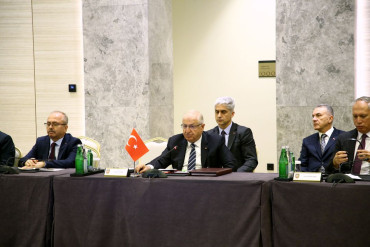
From The Hague to Ankara: What Is NATO 3.0 and Why Does It Matter?
Editor:
Tuğçe Nur Kaya


NATO leaders gathering in Ankara on July 7–8 are not simply discussing higher defense spending or new military capabilities. The summit represents a broader debate over the alliance's future role, with increasing attention focused on the concept know
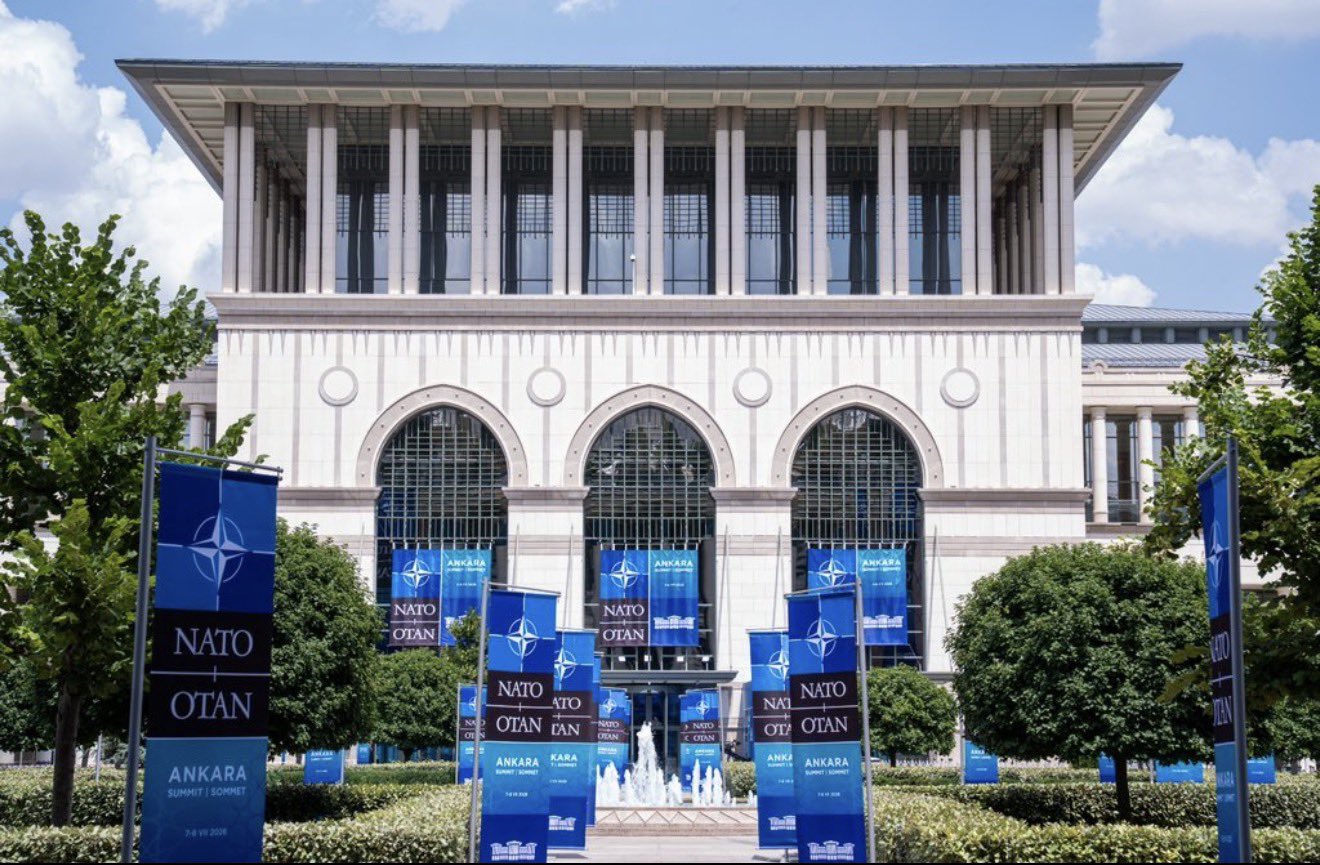
Although the term has gained momentum in recent years, analysts argue that NATO 3.0 remains more of a political framework than a fully developed strategic doctrine. It reflects ongoing negotiations over how responsibilities should be shared between the United States and its European allies as the global balance of power continues to evolve.
The debate surrounding NATO 3.0 echoes ideas first expressed more than seven decades ago.
In 1951, Dwight D. Eisenhower, serving as NATO's first Supreme Allied Commander Europe before becoming the 34th President of the United States, argued that American forces stationed in Europe were never intended to remain permanently. He maintained that the U.S. military presence was designed as temporary support while European countries rebuilt both the political will and military capability to defend themselves.
According to Eisenhower, American troops functioned as temporary scaffolding during Europe's reconstruction. Once European nations regained sufficient defense capacity, that scaffolding was expected to be removed.
Seventy-five years later, however, the opposite has occurred. Rather than withdrawing, the American military presence has become one of the alliance's central pillars.
As NATO meets in Ankara, the same fundamental question remains unresolved:
When will Europe be able to carry its own defense burden?
Washington's current answer to that question is increasingly described under the label NATO 3.0.
Rather than representing a new treaty or official doctrine, NATO 3.0 is widely viewed as a renegotiation of responsibilities within the alliance in response to shifting geopolitical realities.
The concept was articulated most clearly during NATO defense ministers' meeting in Brussels in February 2026, where U.S. defense official Elbridge Colby outlined Washington's evolving strategic priorities.
Interestingly, the term itself is not new.
Former NATO Deputy Secretary General Alexander Vershbow used "NATO 3.0" as early as 2012 following the Lisbon and Chicago summits. At that time, the phrase referred to an alliance expanding global partnerships and undertaking missions beyond Europe.
Colby's interpretation represents a significant departure from that earlier vision.
Under the new understanding of NATO 3.0, European allies would assume primary responsibility for their own conventional defense, while the United States would increasingly concentrate on homeland defense and deterring China in the Indo-Pacific region.
The goal is to transform the transatlantic relationship from one based on dependency into one built on a more balanced partnership.
Colby's interpretation divides NATO's evolution into three distinct eras.
The first phase, often described as NATO 1.0, centered on deterring the Soviet Union throughout the Cold War.
Following the fall of the Berlin Wall in 1989, NATO entered what Colby describes as NATO 2.0. During this period, the alliance shifted toward crisis management and expeditionary operations in regions such as the Balkans and Afghanistan. European allies maintained relatively modest defense budgets while relying heavily on American military capabilities.
The proposed NATO 3.0 seeks to reverse many of those post-Cold War assumptions by returning closer to the alliance's original purpose.
Instead of relying primarily on Washington for Europe's security, the new model envisions European nations taking greater ownership of their own defense while the United States reallocates strategic resources toward other global priorities.
For some analysts, this represents not a revolutionary transformation but a historical correction that brings NATO closer to Eisenhower's original vision.
Many observers have described the Ankara Summit as a crossroads for NATO.
However, alliance officials argue that the strategic direction has already been decided.
Rather than debating where NATO should go next, the summit is primarily concerned with whether allies are prepared to implement commitments already made.
NATO Secretary General Mark Rutte has repeatedly described the meeting as an implementation summit rather than a decision-making summit.
According to Rutte, making commitments and fulfilling them are two very different challenges, making Ankara potentially even more significant than last year's summit in The Hague.
The foundation for the Ankara Summit was laid during the NATO Summit held in The Hague in June 2025, where all 32 member states endorsed one of the alliance's most ambitious defense spending commitments in decades.
Under the agreement, allies pledged to allocate 5 percent of their gross domestic product (GDP) to defense and security-related investments.
The target is divided into two components. At least 3.5 percent of GDP is intended for core military capabilities, including personnel, equipment, readiness and operational requirements. The remaining 1.5 percent is designated for security-related sectors such as critical infrastructure, cyber resilience, innovation and defense industrial capacity.
For many analysts, this commitment represents the clearest indication that NATO has entered a new phase of collective defense planning.
Rather than focusing solely on expeditionary missions or crisis response, the alliance is once again prioritizing territorial defense and long-term military preparedness.
Recent defense expenditure data illustrates how NATO members have gradually adjusted their security priorities over the past decade.
Between 2015 and 2025, 31 of NATO's 32 member states increased defense spending as a share of national GDP. The United States was the only ally whose defense spending ratio declined during that period, despite maintaining by far the largest overall military budget.
European allies and Canada collectively raised defense expenditures from approximately 1.4 percent of GDP in 2014 to around 2.3 percent by 2025.
According to NATO Secretary General Mark Rutte, allied nations have invested an additional $1.2 trillion in defense over the past decade.
The acceleration has become particularly noticeable in recent years.
From 2024 to 2025 alone, NATO members increased collective defense spending by approximately 20 percent, representing an additional $139 billion.
Although political debates often highlight the influence of former U.S. President Donald Trump's calls for greater burden-sharing, analysts note that the shift had already begun following Russia's full-scale invasion of Ukraine in 2022.
Trump's second administration, they argue, accelerated rather than initiated the trend.
While defense budgets remain a central topic, NATO officials emphasize that the Ankara Summit is not simply about increasing expenditures.
Instead, the alliance is placing greater importance on ensuring that financial commitments translate into usable military capabilities.
Three priorities dominate the summit agenda:
Some allies are expected to approach or even reach the 5 percent target well ahead of schedule, potentially as early as 2026.
Nevertheless, NATO leaders argue that spending levels alone do not guarantee stronger deterrence.
Equally important is how resources are invested, whether procurement systems can deliver equipment rapidly, and whether defense industries are capable of sustaining production during prolonged crises.
This changing emphasis is reflected in the structure of the Ankara Summit itself.
A significant portion of the opening day has been dedicated to defense industry forums, production partnerships, procurement discussions and technological integration, highlighting the alliance's growing focus on industrial capacity alongside military planning.
One of the most important lessons emerging from Russia's war against Ukraine is that industrial production has become an essential component of military power rather than merely supporting it.
Modern conflicts consume enormous quantities of ammunition, missiles, armored vehicles and spare parts.
As a result, the ability to sustain production over months or years has become almost as important as battlefield performance itself.
For European governments, this realization has prompted renewed efforts to rebuild defense manufacturing after decades of relatively limited investment.
The challenge extends beyond increasing production volumes.
It also involves accelerating procurement procedures, expanding manufacturing capacity and ensuring that allied industries can respond quickly to evolving security requirements.
This industrial dimension has become one of NATO's central strategic concerns.
Despite broad political support for higher defense spending, analysts caution that the 5 percent GDP target should not be viewed as an objective in itself.
Financial investment is considered a necessary condition for strengthening collective defense, but it is far from sufficient.
The effectiveness of military spending depends on how resources are allocated, how quickly procurement systems function, how efficiently defense industries expand production, and whether European allies can reduce unnecessary duplication in weapons development.
Several major defense programs illustrate this challenge.
Europe continues to pursue parallel initiatives in areas such as next-generation combat aircraft, integrated air defense systems and armored vehicle development. Projects including FCAS and GCAP, as well as competing missile defense initiatives such as Sky Shield and SAMP/T, demonstrate both Europe's growing industrial ambitions and the difficulties of coordination.
Rather than maximizing efficiency, multiple national programs often compete for funding, industrial capacity and political support.
This fragmentation remains one of the alliance's most persistent structural challenges.
The scale of Europe's fragmentation becomes particularly visible when compared with the United States.
According to defense assessments, the U.S. military operates roughly 30 principal weapons system categories, while European allies collectively maintain approximately 178 different systems.
The disparity is equally evident in armored forces.
Whereas the United States primarily relies on a single main battle tank platform, European armies operate 17 different main battle tank models.
Although this diversity reflects national defense industries and procurement traditions, it also creates significant challenges.
Different systems require separate supply chains, maintenance procedures, ammunition standards, training programs and logistics networks.
For NATO planners, improving interoperability therefore involves much more than increasing military budgets. It also requires greater standardization, closer industrial cooperation and more coordinated procurement policies.
Without these reforms, higher spending alone may produce limited strategic returns.
Although the term NATO 3.0 has become increasingly prominent in policy discussions, many experts argue that it remains an incomplete strategic concept.
Several fundamental questions have yet to receive clear answers.
Among them are:
Until these issues are resolved, NATO 3.0 is likely to remain a political slogan rather than a fully developed doctrine.
The concept provides a direction of travel, but many of its practical details remain under negotiation.
The significance of the Ankara Summit therefore extends beyond financial pledges.
Its success will ultimately be measured by whether commitments made in The Hague can be transformed into concrete military capabilities, integrated defense industries and coherent strategic planning.
Alliance leaders increasingly acknowledge that modern deterrence depends not only on military forces but also on resilient supply chains, technological innovation, industrial production and political cohesion.
The summit is expected to demonstrate whether NATO members are prepared to translate ambitious declarations into long-term implementation.
If that transition succeeds, NATO 3.0 may gradually evolve from a political concept into a genuine strategic framework capable of guiding the alliance through a changing security environment.
If it does not, the central question facing NATO will no longer concern the amount of money allies are willing to spend, but whether the alliance possesses the political determination, industrial capacity and institutional coherence necessary to sustain collective defense over the coming decade.
As NATO enters what many describe as its most consequential period since the end of the Cold War, the debate is no longer centered solely on military budgets or troop deployments.
Instead, it concerns the future structure of the transatlantic alliance itself.
The discussions in Ankara are expected to influence not only NATO's immediate defense priorities but also the broader architecture of European security for years to come.
Whether NATO 3.0 ultimately becomes a defining strategic doctrine or remains an evolving political framework will depend on the decisions allies make after the summit—and, more importantly, on their ability to turn commitments into lasting capabilities.
End




Top US senator presses for answers on Greece envoy amid lobbying scrutiny
Senator Jeanne Shaheen demands State Department review over claims that Kimberly Ann Guilfoyle advocated for a foreign company and gave lobbyist access to official meetings.
Ronaldo vows to keep playing for Portugal after Jesus dispute
Portugal captain says he remains available for the national team despite a 'complete breach of trust' with coach Jorge Jesus.
Nigerian Air Force says no survivors after plane crash in Ondo state
Nigeria has declared three days of mourning following the military plane crash.




All rights reserved. Newstimetr © 2026