Expired 30 June deadline: What happens next in South Africa?
Source:
TRT Afrika English


The South African government said on 29 June that more than 25,000 foreigners had been repatriated ahead of the 30 June deadline, but that many others were still awaiting departure.
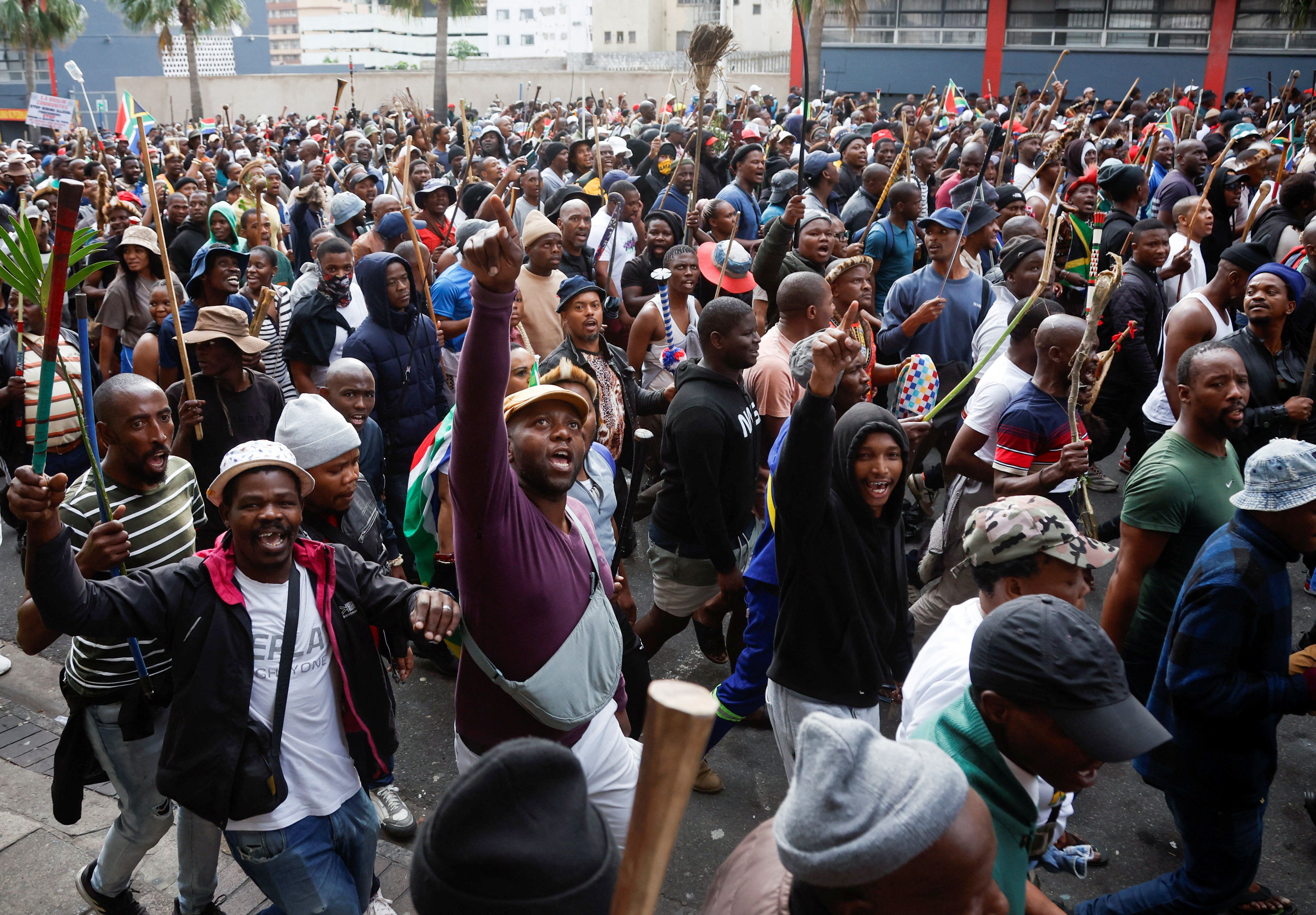
There is a growing sense of uncertainty in South Africa after the 30 June deadline given to “undocumented” foreigners to leave the country expired.
So, what happens next after the expiration of the unofficial deadline?
Well, the South African government has repeatedly said the ultimatum was unauthorised and lacked legal backing.
The June 30 ultimatum was set by anti-immigrant citizen groups, including March and March, Operation Dudula, and the Insizwa Ngobunsizwa Development Foundation.
They accuse foreigners of committing crime and taking jobs and essential services from citizens, a claim the migrants deny.
Now that the deadline has passed, they want the South African government to embark on “mass deportation” of undocumented migrants over the “next six months”.
The leader of the March and March group, Jacinta Ngobese-Zuma, told a crowd in Durban on Tuesday that they “want the government to get rid of the people who have not left.”
She vowed that her group would maintain weekly demonstrations until November, when South Africa is due to hold local elections.
It’s not yet clear whether the government will yield to the groups’ demand.
‘Illegal’ immigrants
However, the authorities say they are not taking chances over the situation and will not tolerate citizens taking the law into their own hands.
South African police said more than 900 people were arrested on Tuesday during the protests, which President Cyril Ramaphosa described as “largely peaceful”.
A deputy national police commissioner, Tebello Mosikili, also told a press conference that of the 120 marches that took place, 108 were peaceful while 12 were not.
Some of those arrested were undocumented migrants, while others were arrested for public violence, harbouring illegal immigrants, and looting.
Ahead of the ultimatum, several African countries, including Nigeria, Ghana, Malawi, Mozambique and Zimbabwe, had evacuated many of their nationals.
The South African government said on 29 June that more than 25,000 foreigners had been repatriated ahead of the 30 June deadline, but that many others were still awaiting departure.
South Africa is one of Africa’s most prosperous economies, but a high unemployment rate of 30% has exacerbated tensions between locals and foreigners, mainly from other African countries.
Some analysts say the latest unrest raises questions about pan-African solidarity and unity.







Nigeria charges man accused of running fake government agency
Prosecutors allege that Adeniyi Adeyemi had since 2024 posed as director-general of an agency the presidency says it neither established nor authorised him to lead.
'Strong indications' Iran involved in RAF Fairford incident: UK's Burnham
Andy Burnham says the investigation remains ongoing after police found no explosives at the UK airbase, where three vans had raised security concerns.
Spain, France welcome UK's intent to rejoin EU
Prime Minister Sanchez calls Brexit a "huge loss" for Britain and Europe, saying Spain would welcome the UK back "with open arms."




All rights reserved. Newstimetr © 2026