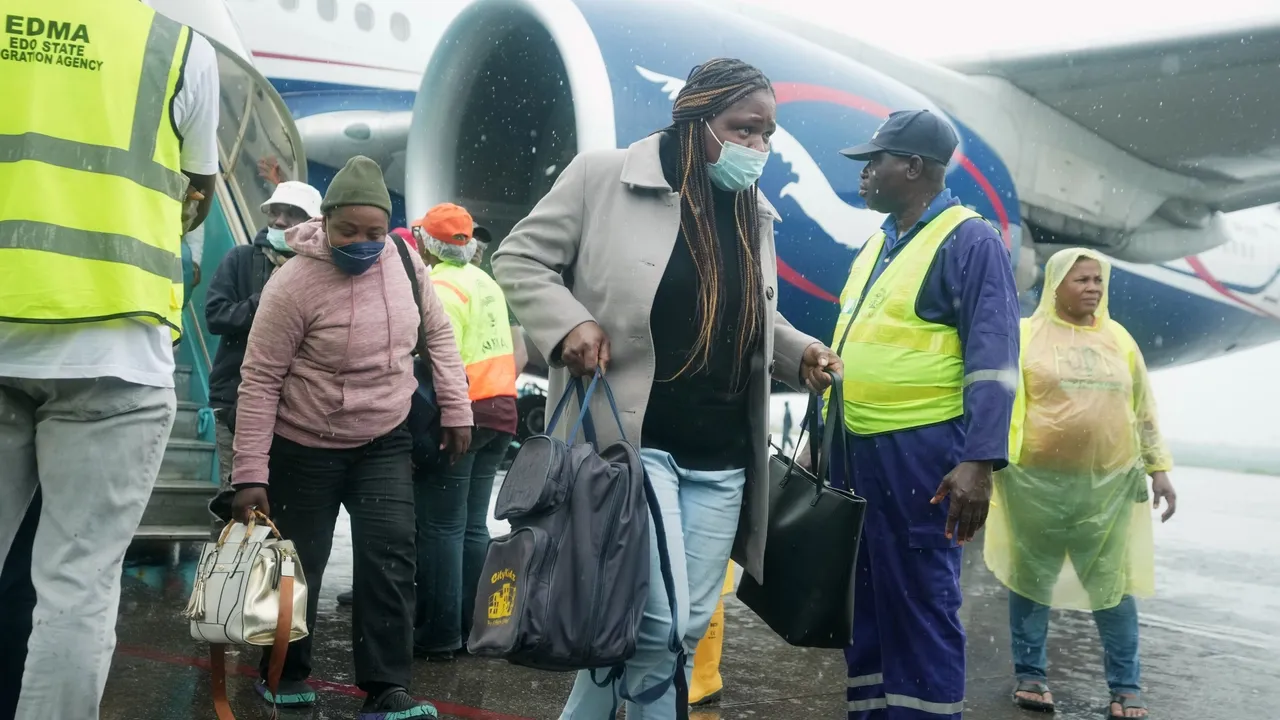
Ghana says more than 800 of its nationals have registered to be evacuated from South Africa amid anti-migrant tensions.
Ghana has postponed the evacuation of its nationals from South Africa amid a growing number of Ghanaians willing to return home.
The Ghanaian government had announced plans to start the evacuation of about 300 Ghanaians on 21 May.
However, the country’s Minister of Foreign Affairs, Samuel Okudzeto Ablakwa, said the evacuation had to be delayed because more than 800 Ghanaians had registered to be evacuated.
The minister also explained that Ghana and South Africa have agreed to ‘’defer the evacuation pending the addressing of legal, technical and logistical matters’’, including ‘’high numbers’’ of willing returnees.
He was later attended to by Ghana’s diplomatic officials, including High Commissioner Benjamin Quarshie, who assured him that he and others would not be left stranded.
Minister Ablakwa also vowed ‘’no Ghanaian desirous of returning home would be left behind’’.
The Ghanaian government has not announced a new date for the evacuation, but the minister said the delay is for a ‘’few days’’.
Pressure on jobs
The repatriation plan by Ghana comes in the wake of anti-immigrant protests in South Africa, which have sparked concern among other African countries, including Nigeria and Zimbabwe.
However, the South African government has rejected claims of xenophobia, saying the migration issue is a broader problem that needs to be addressed holistically.
South Africa is one of the continent’s most advanced economies.
According to official data from 2022, there were around 2.4 million foreign-born people living in South Africa, mainly as businesspeople or students. That’s about 4% of the population, with locals often complaining that foreigners add pressure on jobs and essential services.
Kenyan officials are scheduled to meet with counterparts from DR Congo and Uganda and the Africa CDC to investigate what transpired during the patient’s journey.
The Turkish and Russian presidents review bilateral ties and regional developments, with Ankara reaffirming its readiness to support direct dialogue between Moscow and Kiev.