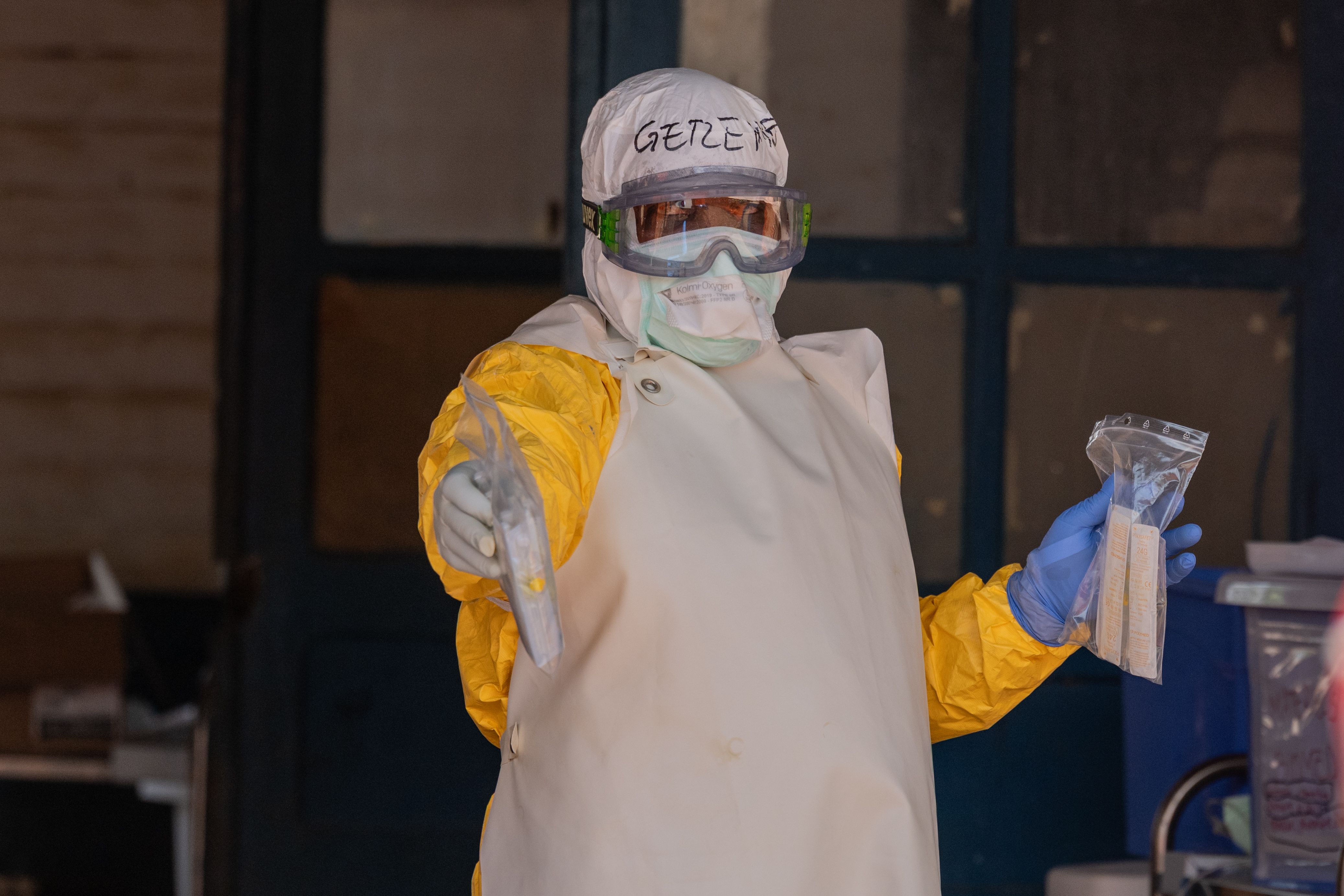
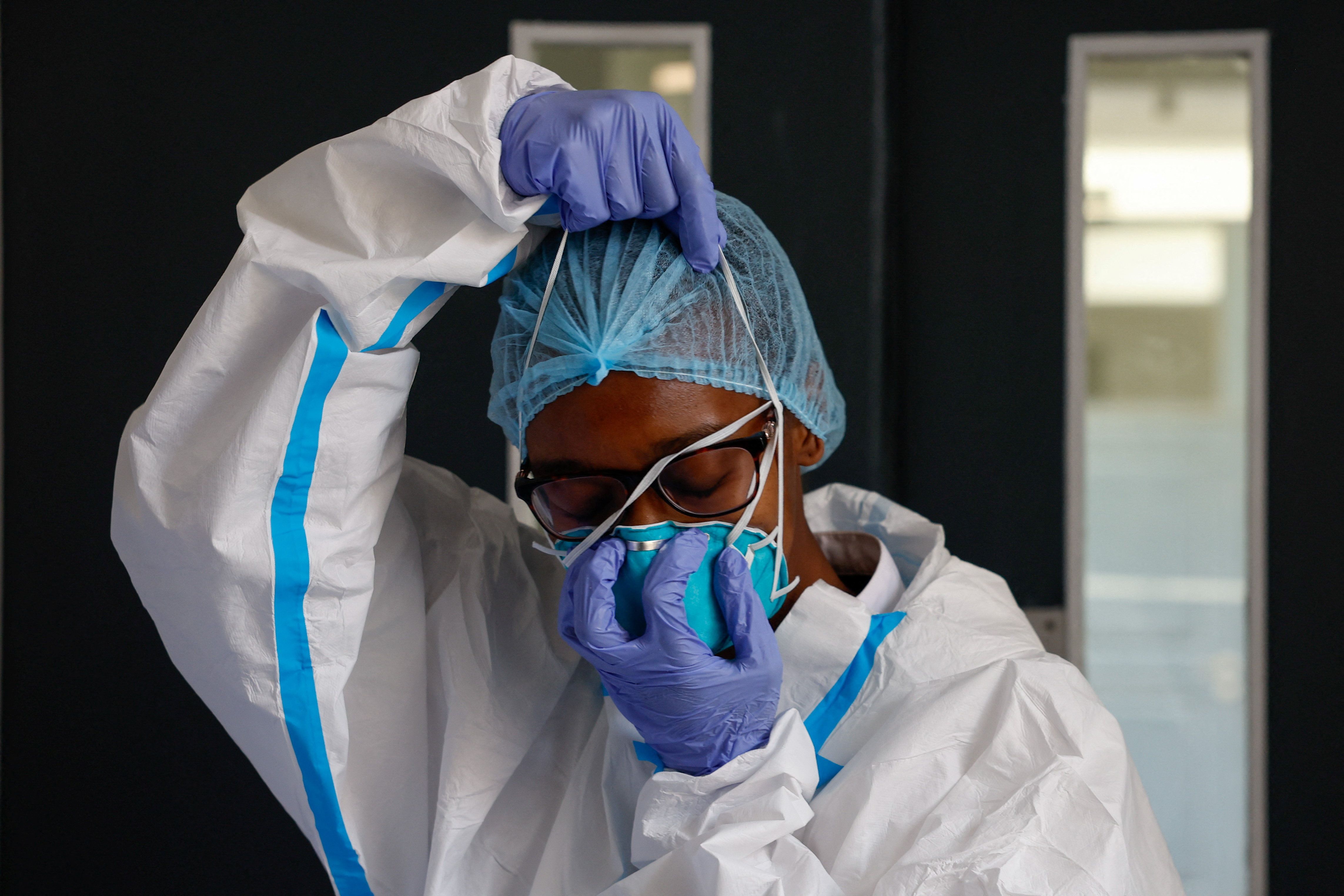
Modelling from US CDC shows the current outbreak could approach the worst Ebola outbreak in history, the West Africa epidemic in 2014-2016.
The Ebola outbreak in Central Africa could grow to 20,000 cases or more, depending on how quickly infected people are isolated to slow the spread, according to a new analysis by health officials.
The US Centers for Disease Control and Prevention published a range of scenarios generated by computer models Friday, spanning from 10,000 cases to more than 20,000.
If accurate, a worst-case scenario could approach the worst Ebola outbreak in history, the West Africa epidemic in 2014-2016 — which resulted in more than 28,000 reported cases and more than 11,000 deaths.
"That scale is possible," said Jason Asher, director of CDC's Center for Forecasting and Outbreak Analytics, during a press briefing.
Nearly 500 Ebola cases have now been confirmed in the outbreak, a WHO overview showed Saturday, amid mounting concern over the swelling scale of the epidemic.
Confirmed cases
In its daily update on the situation, the World Health Organization tallied 452 confirmed cases, including 82 deaths, in the Democratic Republic of Congo, where the outbreak was declared three weeks ago.
In neighbouring Uganda, meanwhile, it counted 19 confirmed cases, including two deaths.
The total of 471 cases and 84 deaths, based on numbers reported by the DRC and Ugandan governments, marked a hike of 100 cases and 20 deaths from a day earlier.
Ebola, which is spread through close contact and bodily fluids, has killed more than 15,000 people in Africa over the past 50 years.
The current outbreak was declared on May 15 in northeastern DR Congo, but the virus is believed to have spread under the radar for some time beforehand.
No approved vaccines
There are no approved vaccines or treatments for the rare Bundibugyo species of Ebola behind the outbreak.
The WHO and the African CDC on Friday launched a $518-million plan to battle the outbreak over the next six months, focusing among other things on boosting surveillance, laboratory testing and infection prevention.
"The outbreak is moving fast, and we are still playing catch-up," WHO chief Tedros Adhanom Ghebreyesus told reporters.
"We need to stop the outbreak where it is, support countries that are responding today, and ensure that neighbouring countries are ready to detect and act quickly if cases appear," he said.
"This is a serious outbreak and its one we know how to stop but we need to move fast and together."
The Turkish and Russian presidents review bilateral ties and regional developments, with Ankara reaffirming its readiness to support direct dialogue between Moscow and Kiev.
Damaged infrastructure, electricity shortages and restrictions on essential supplies have left most households struggling to access safe water and sanitation.