Uganda closed its western border to prevent the spread of Ebola from DRC, but the move is now hitting businesses.
Leah Masika was on the verge of tears as she thought of her valuable consignment of plantain stuck in a long convoy of trucks on both sides of the Uganda-DRC border. Her cargo, destined for Uganda, was starting to leak water, and would go bad within hours if there was no movement.
The Ugandan trader was awaiting clearance from authorities for trucks to pass through the Mpondwe border post on Thursday after they were prevented from entering or leaving Uganda as part of escalating measures to prevent cross-border Ebola contagion.
“Our things are here rotting,” she said.
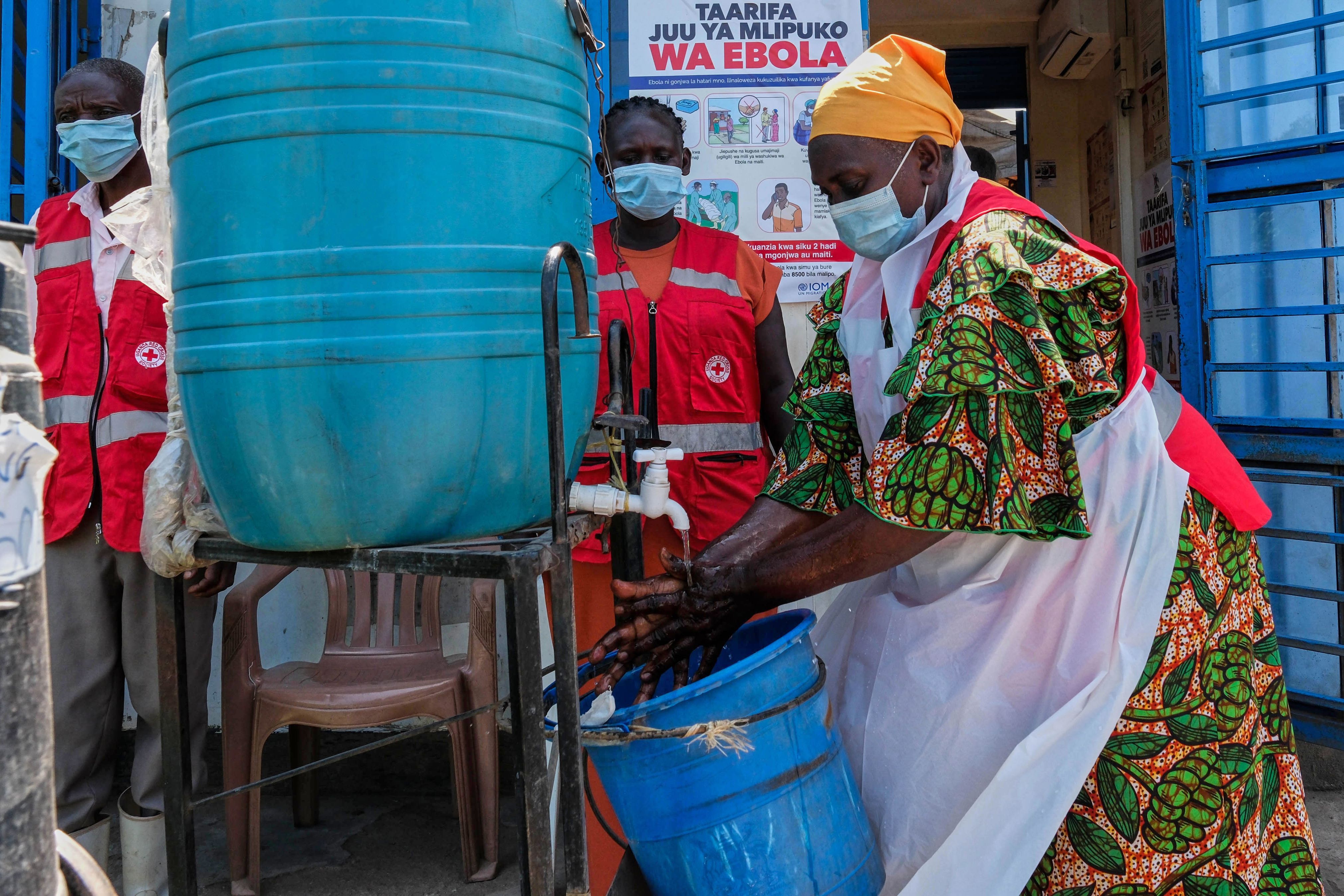
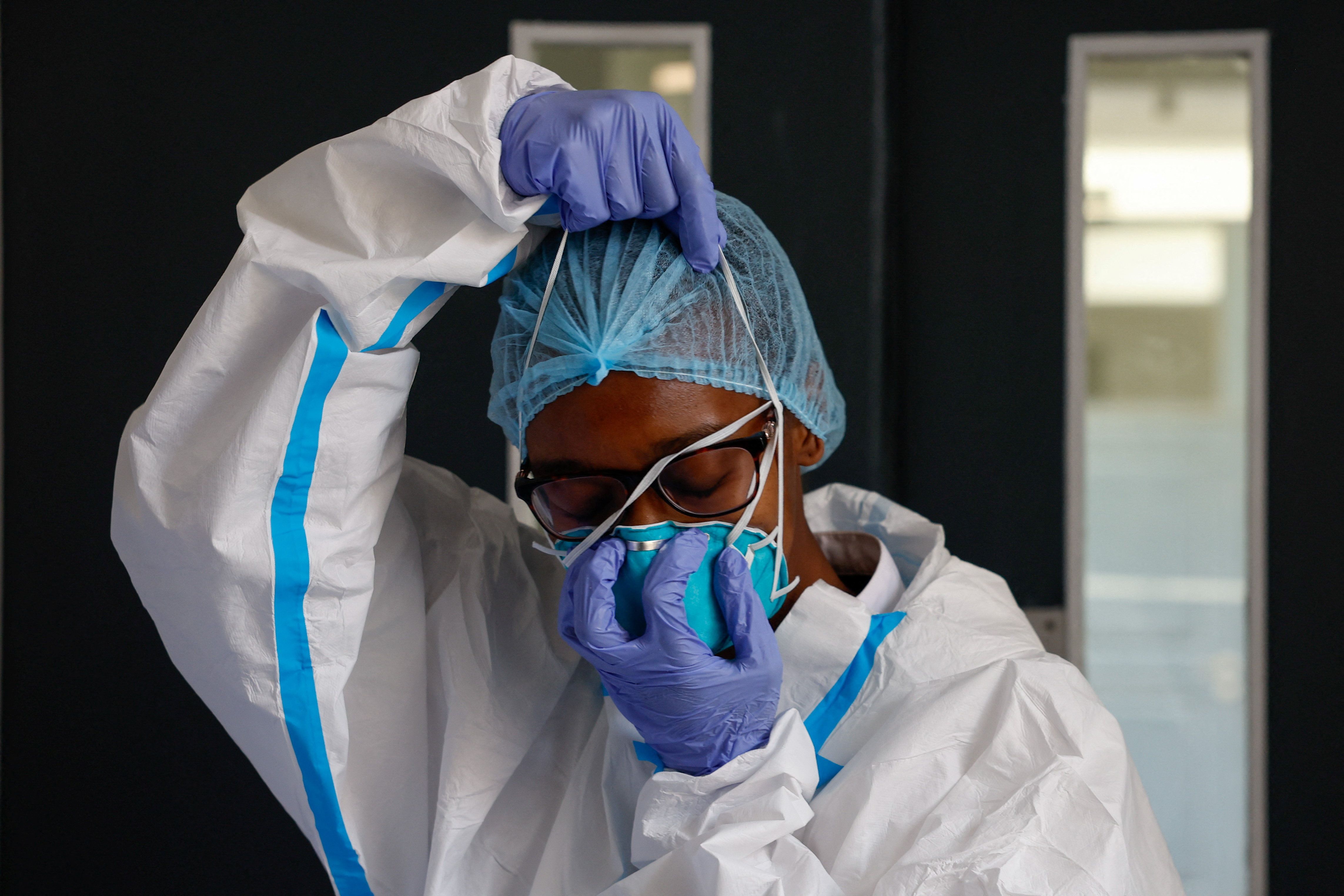
On May 28, about two weeks after DRC declared an outbreak of Ebola in the eastern Ituri province, Uganda closed its western border in a decision that reflected growing fears of cross-border contagion. Exceptions were made only in emergency cases, including for the outbreak response, humanitarian, cargo or security reasons.
But in recent days, as the spread of Ebola in eastern Congo appeared to outpace the response, authorities in the Ugandan frontier district of Kasese have tightened the measures.
Fish spoils
Traders say they are frustrated by the slow movement of cargo trucks. Some at the Mpondwe border post told The Associated Press that while they knew the tough measures are provoked by fear of Ebola contagion, they felt that holding up the trucks was excessive.
Sylvia Asiimwe, a clearing agent, pointed to the queue of trucks stretching over a mile on the Ugandan side. At least seven were carrying fish imported from China and destined for the Congolese cities of Beni and Butembo.
Asiimwe was adamant those Congolese towns are in the province of North Kivu, not the Ebola epicentre of Ituri. “The fish is going to spoil,” she said. “So much money.”
The Uganda-DRC border is several hundred miles long and crossed by numerous footpaths beyond formal border posts. Trade is often booming along the route up to Mpondwe, and there is kinship between the Bakonzo people on the Ugandan side and the Banande on the other side.
‘Ebola wasted our work’
Mpondwe is Uganda's top border post for informal exports that were valued at an estimated $131 million in 2023, according to the Uganda Bureau of Statistics.
After the recent border closure, some shops were shuttered and young men, deprived of casual work, sat on stools dolefully.
“The situation is bad,” said Ismail Mumbere, who often works as a vendor of roadside snacks on the Ugandan side. “A lot of people earn from here, in many businesses. But now the government has told us there is Ebola. Ebola has wasted our work.”
The current outbreak in DRC is suspected to have infected over 1,000 people. The number of confirmed cases is much lower because many suspected victims succumb to their symptoms outside hospitals and without firm proof they had Ebola.
The World Health Organization, while declaring the current outbreak a public health emergency of international concern, discouraged border closures. But the UN agency also acknowledged that neighbouring countries are at high risk of contagion.
“With movement of cargo, and maybe trucks, is mobility of people, and we want to reduce that,” said Arafat Bwambale, a surveillance officer for Kasese, defending the measures.
‘We will not go back’
Officials were trying to stop Congolese nationals from crossing to Uganda by way of more than two dozen footpaths along the Mpondwe border, he said.
Ugandan authorities are cautious after 15 confirmed cases Uganda has confirmed 15 Ebola cases, all linked to the outbreak in the neighboring country after some Congolese nationals sought treatment in the Ugandan capital of Kampala before it was known there was an outbreak.
Masika, the plantain dealer, said she would not order more goods from Congo until the current outbreak was over. But she would be in trouble if the cargo already in transit didn’t reach various locations in and around Kampala, where the fruits, deep fried or boiled, are a staple of breakfast menus in restaurants.
Masika said she couldn’t countenance a loss of 50 bags, each worth roughly $44.
“We are begging them to help us and open (the border),” she said. “We will not go back to Congo.”